A three-day journey through heat, history and horizon
What next? It is a question that often propels us forward, from one destination
to another. In Broome, perched on the far north-western edge of Australia, that question begins to lose its urgency. Here, time stretches in the heat, the tides reshape the land twice daily and stories linger long after the sun has set. Over three days, Broome reveals itself not as a list of highlights, but as a place to slow down and listen.
Day 1 – Arrival and the pull of the horizon
The first thing we notice is the heat. It wraps around us the moment we step outside. Humid, insistent and inescapable. Within minutes, we are damp with sweat. And yet there is something unexpectedly liberating about it. The climate dictates the pace here, and we instinctively surrender to it.
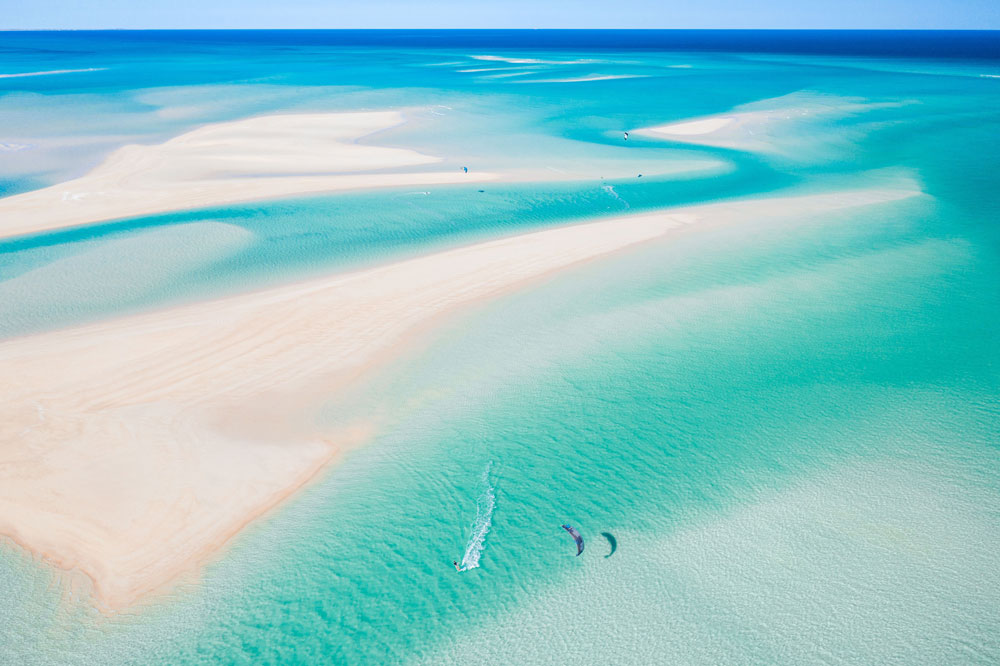
Broome is often described as the gateway to Kimberley, but it does not feel like a threshold. It feels complete in itself. A place where land and sea meet in bold, elemental contrast. Nowhere is that more evident than at Cable Beach.
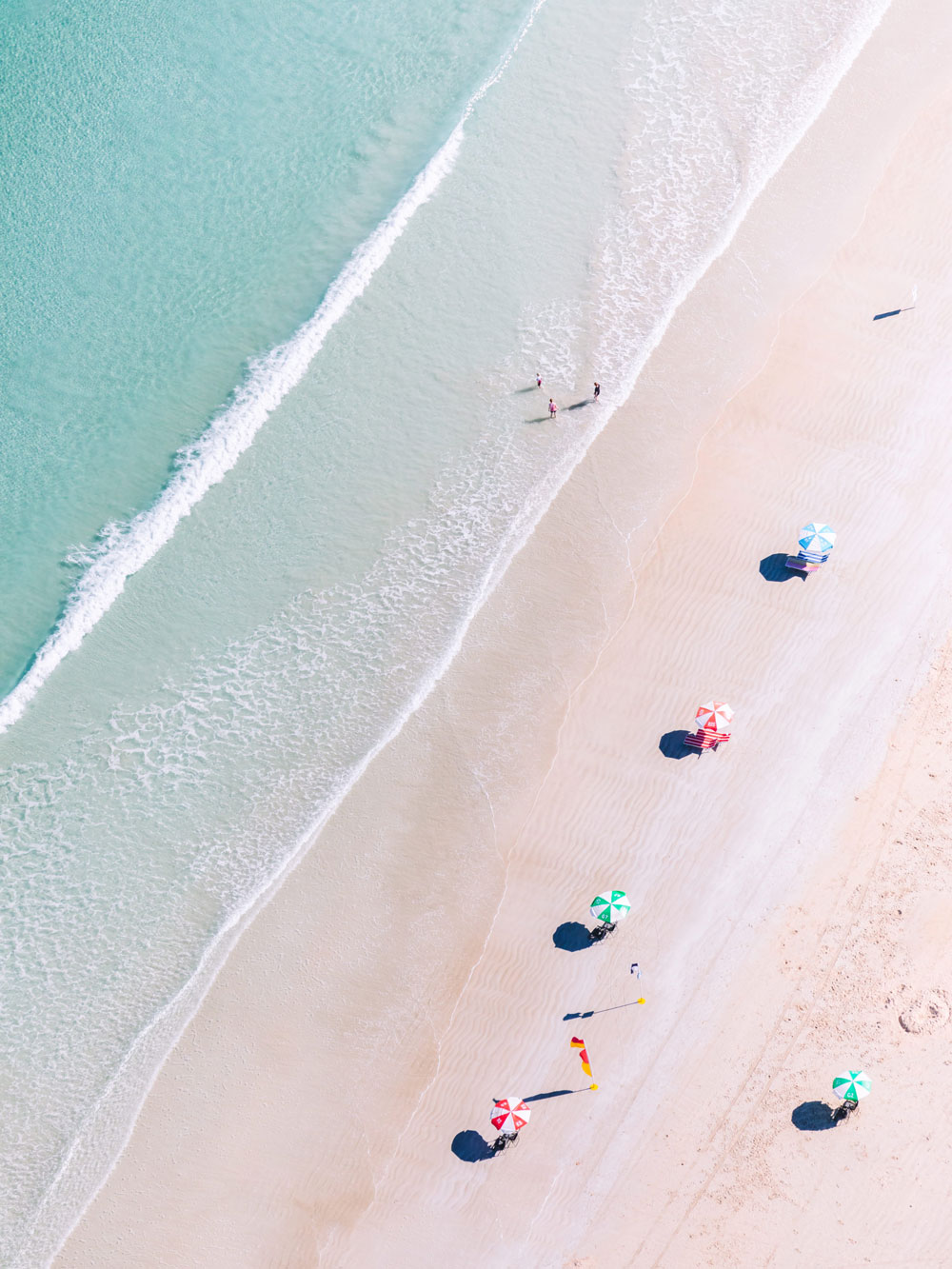
We set out along its vast sweep of powdery white sand, the turquoise waters of the Indian Ocean gently folding onto the shore. Walking south across the firm tidal flats towards Gantheaume Point, we are struck by the sheer sense of space: expansive, uncluttered and quietly powerful.
As we continue, the colours intensify. The sea shifts through endless shades of blue, while ahead the cliffs glow in deep rust-red hues. It feels almost unreal.
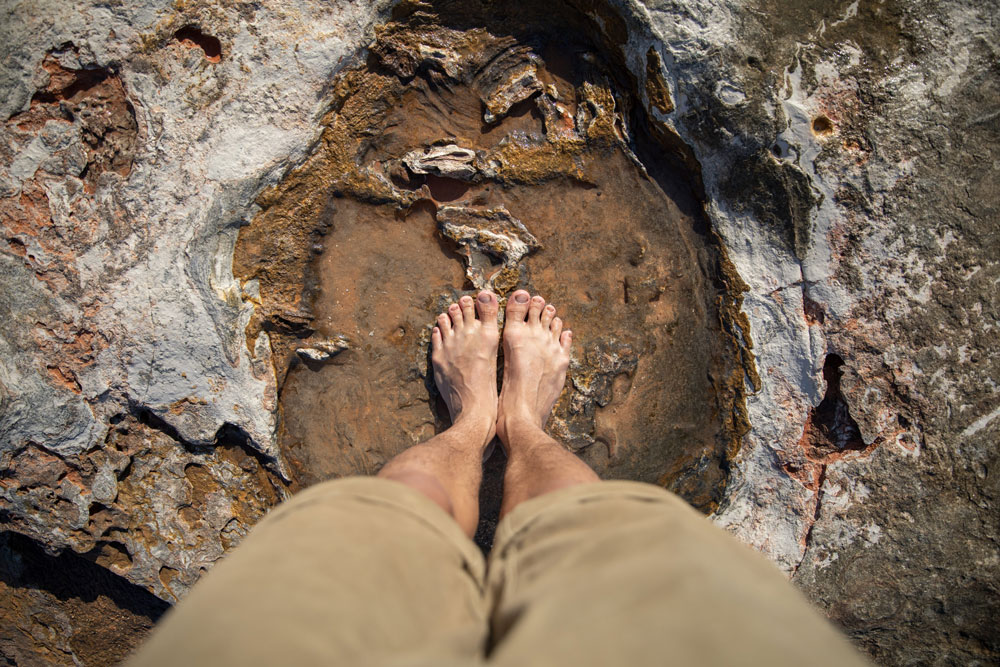
At low tide, we pick our way across the rocks and find the fossilized dinosaur footprints embedded in the reef. Some are immense, a reminder that this coastline once belonged to another age. Time seems to collapse in on itself: the prehistoric and the present coexisting in a single frame.
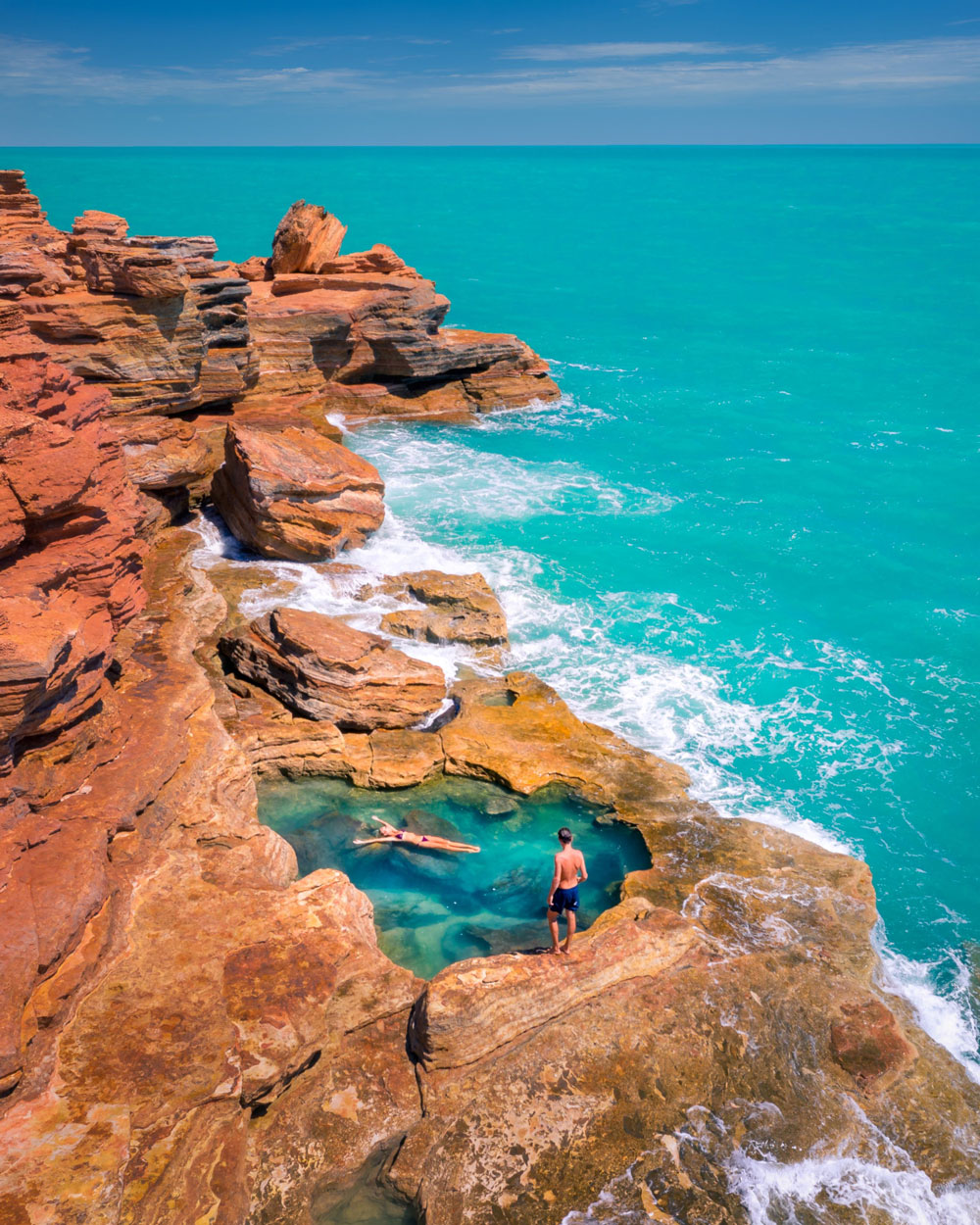
Nearby, Anastasia’s Pool sits carved into the rock, filling with seawater as the tide rises. It is modest in scale, created by a lighthouse keeper for his wife. Yet it carries a quiet poignancy. A human imprint within an ancient landscape.
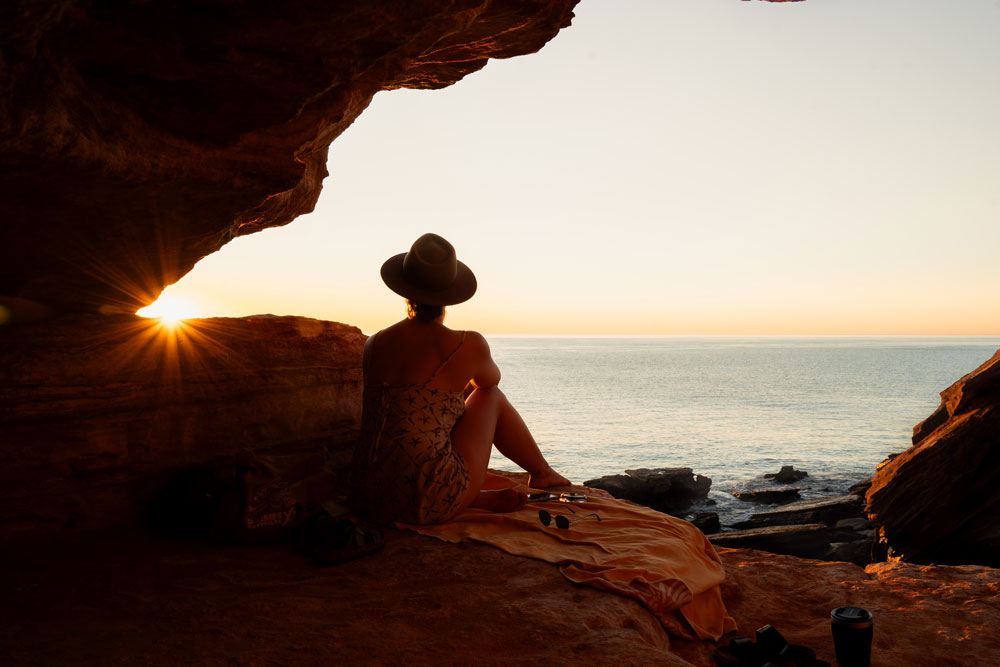
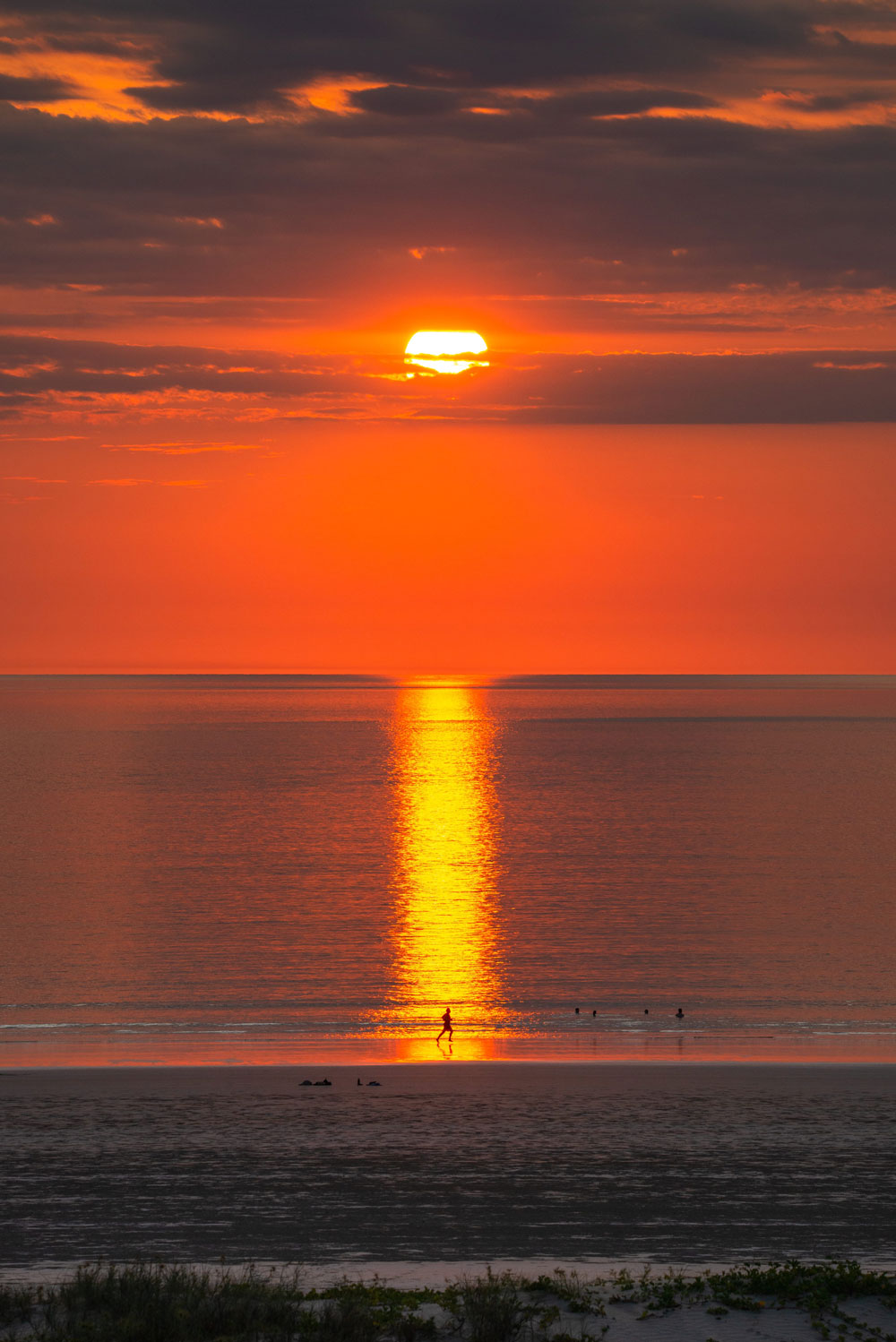
By late afternoon, we return to the open beach. The light softens and people begin to gather. Camels appear in the distance, their silhouettes moving slowly along the shoreline. Then the sun begins its descent.
The sky ignites. Gold deepening into orange, then soft pinks and violets. Conversations fall away. Cameras are raised, then lowered again. For a few suspended moments, everything feels still. We sit in the sand with a chilled drink with a chilled drink and watch the sun slip beneath the horizon. No one rushes. In Broome, even endings unfold slowly.
Day 2 – Pearls, people and layered histories
If the first day belongs to landscape, the second belongs to story.
We begin in Chinatown, the historic heart of Broome. Today it is a relaxed grid of low-rise buildings filled with cafés, galleries and pearl boutiques. Yet beneath this calm surface lies a far more complex past.
We join a walking tour led by a local Aboriginal guide. His connection to this place is immediate, lived rather than interpreted. “You don’t hear the full history unless you walk with someone from here,” he tells us, gesturing towards the streets around us.
Broome, we learn, was once a rough and industrious pearling town – “built on buttons”. In the late 19th and early 20th centuries, it supplied most of the world’s mother-of-pearl, harvested not for jewellery but for buttons, combs and cutlery.
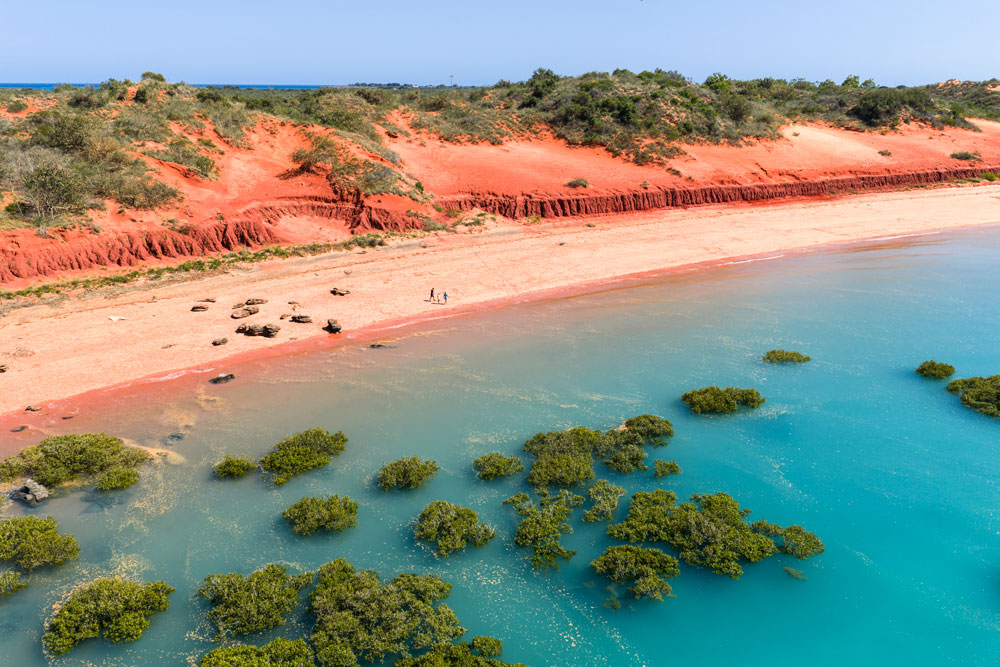
We walk towards Streeter’s Jetty, where a new timber structure stands beside the weathered remains of the original. From here, shells were shipped across the globe. Mangroves stretch out in muted greens, their roots submerged in tidal mud.
“At first, Aboriginals divers did the work,” our guide explains. “Then came indentured labour from Japan, Malaysia and China.” He pauses briefly.
“People stayed. They had families. That is why Broome is what it is today.”
The town’s multicultural identity is not incidental, it is foundational.
The descendants of those early divers remain, shaping the culture, cuisine and rhythm of daily life.
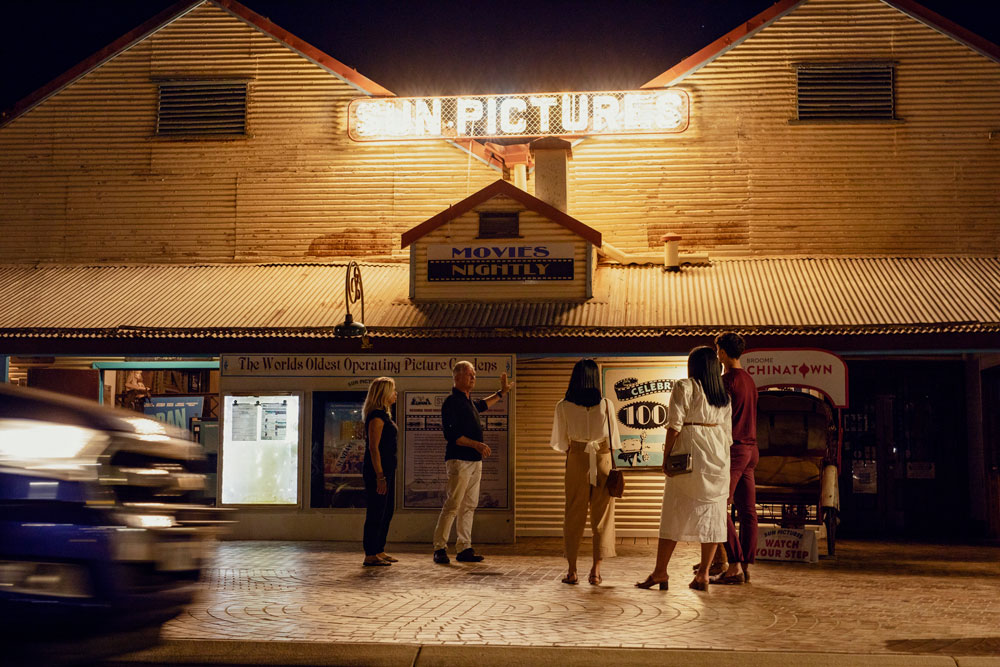
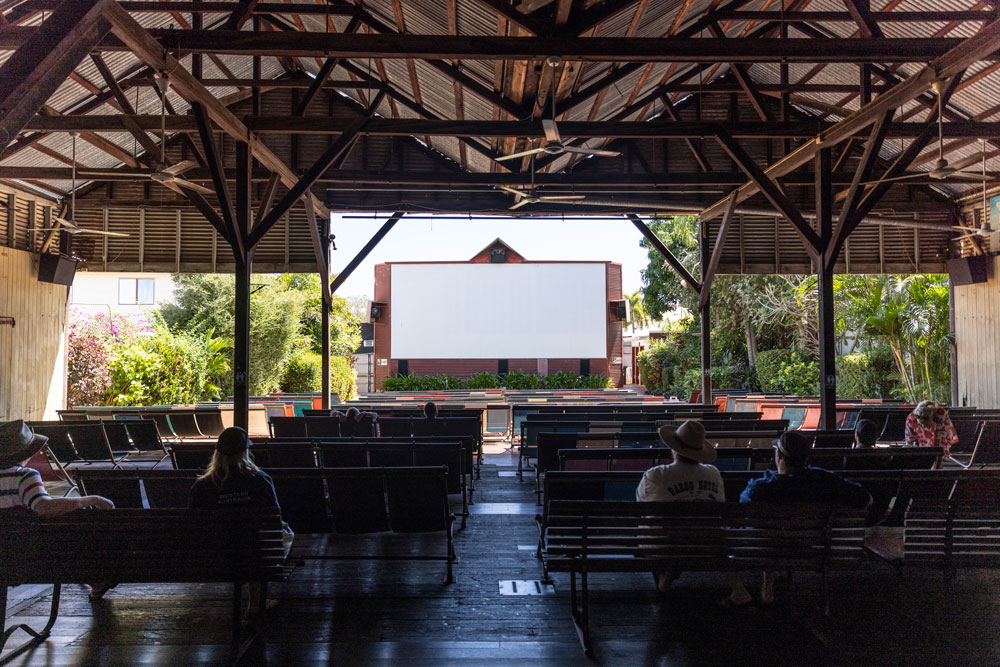
We pass the tin-roofed Sun Pictures, widely regarded as the world’s oldest operating outdoor cinema. Opened in 1916, it has endured cyclones, war and decades of change. In its early years, high tides would flood the seating area, leaving audiences to watch films with water lapping at their feet.
A short walk away stands the Roebuck Hotel, a reminder of colonial-era divisions. Our guide speaks candidly about segregation.
Of permits once required for Aboriginal people to enter pubs and even then being refused service. These histories are not always visible, but they remain present. “Things have changed,” he says. “But we remember.”
Later, we visit the Pearl Luggers Museum, where restored vessels and original equipment reveal the realities of the pearling industry. The heavy diving suits and air hoses speak to the danger involved. Many who went down did not return.
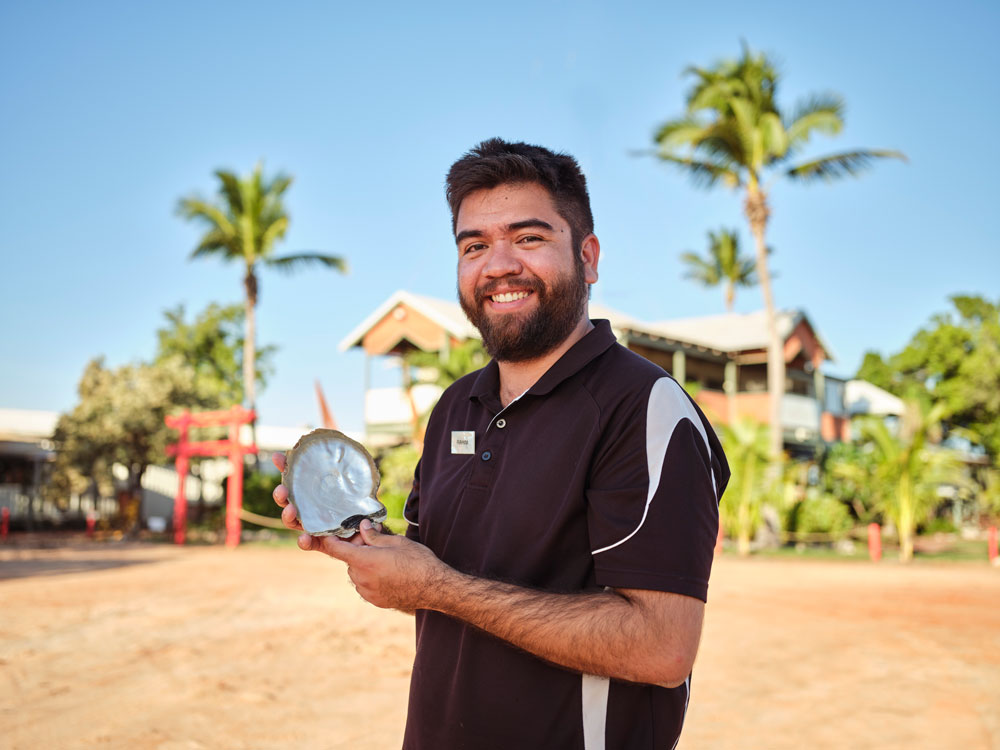
By midday, the heat intensifies and we retreat indoors for lunch. Broome’s culinary scene reflects its cultural layers. Asian influences, fresh seafood, bright and uncomplicated flavours.
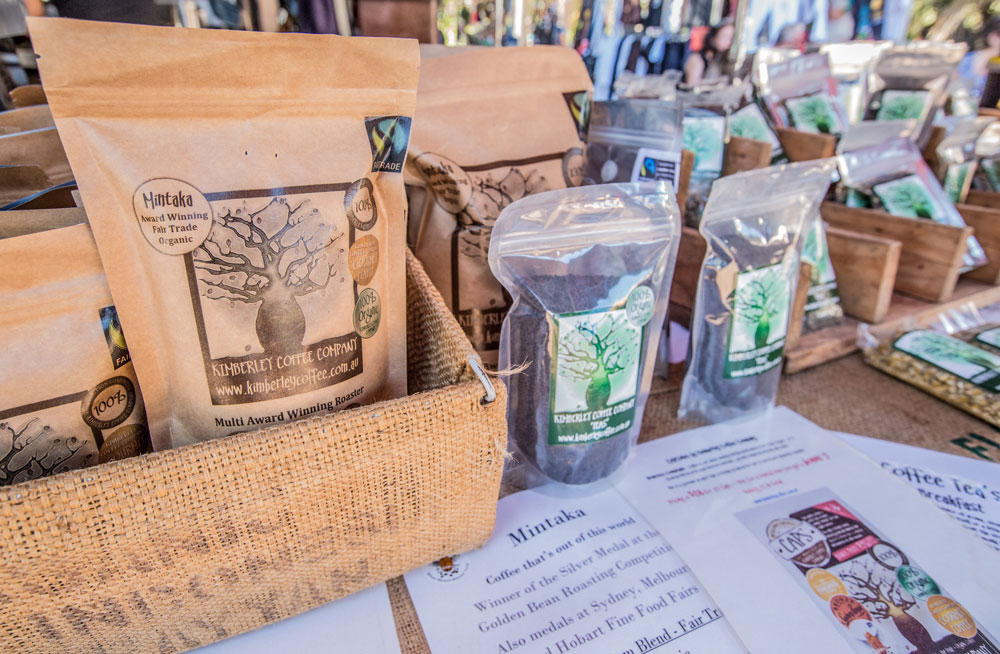
In the afternoon, we drive along a red dirt road to Willie Creek Pearl Farm, some 30 kilometres from town. The journey itself feels quintessentially Kimberley: vast, open and shimmering with heat.
At the farm, the atmosphere shifts. Calm turquoise water replaces dust and glare. We learn how South Sea pearls are cultivated. It’s a process requiring patience, precision and, above all, time.
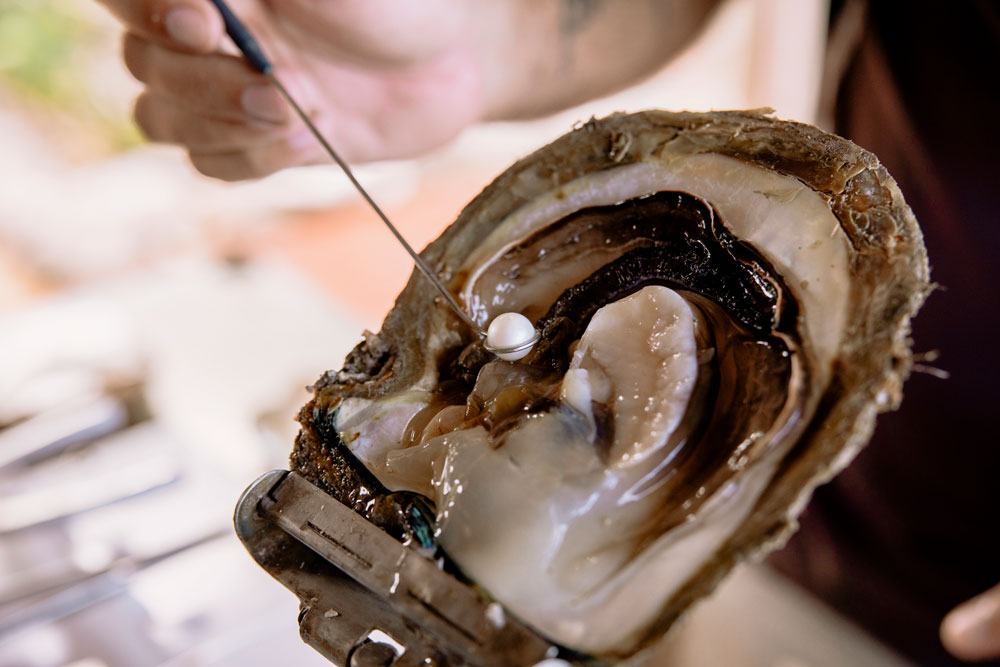
We take a boat out onto the creek, where oysters hang beneath the surface.
The water is still, almost mirror-like. It is difficult to reconcile this tranquility with the perilous history of the industry.
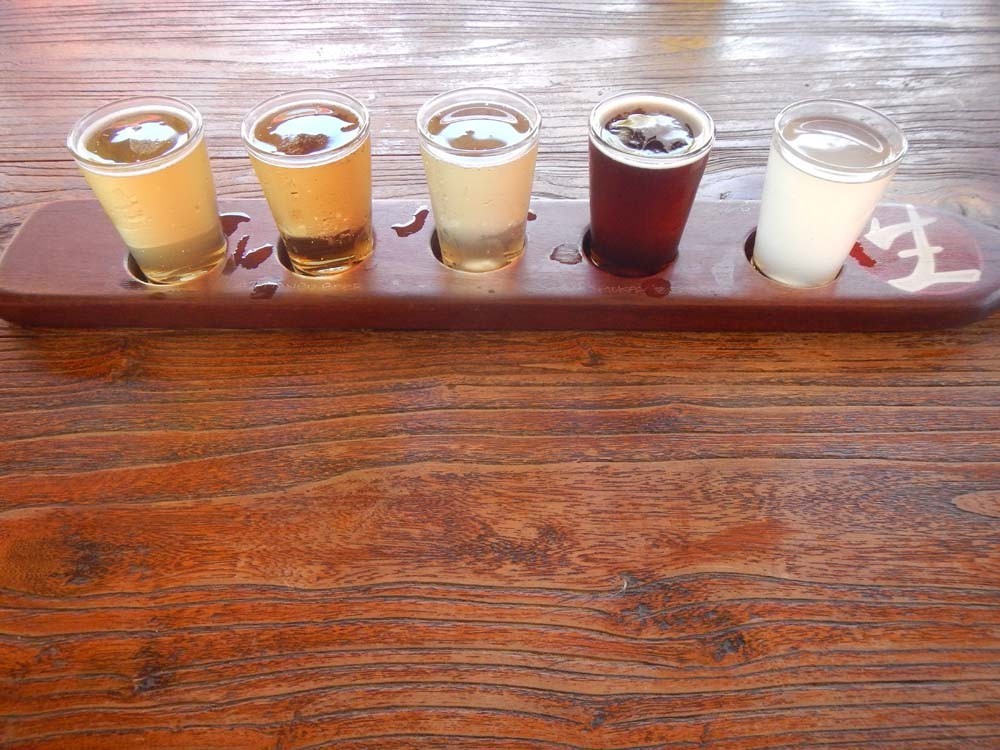
Back in Broome, we spend the evening at Sun Pictures. Watching a film beneath an open sky, with a warm breeze and the occasional aircraft passing overhead, feels both nostalgic and immediate. Dinner follows at Matso’s Brewery, a much-loved local institution set in a heritage building. Here tropical flavours carry through to the glass and reflect Broome’s character. Think house-brewed ginger beer, mango beer and chilli-infused ales, as unexpected as they are refreshing.
Day 3 – Nature, stillness and the night sky
We begin our final day early, before the heat takes hold. Behind Cable Beach lies Minyirr Park, a coastal reserve managed by the Yawuru people, the traditional custodians of this land. Walking trails wind through red sand dunes and native vegetation, offering a quieter perspective on the landscape.
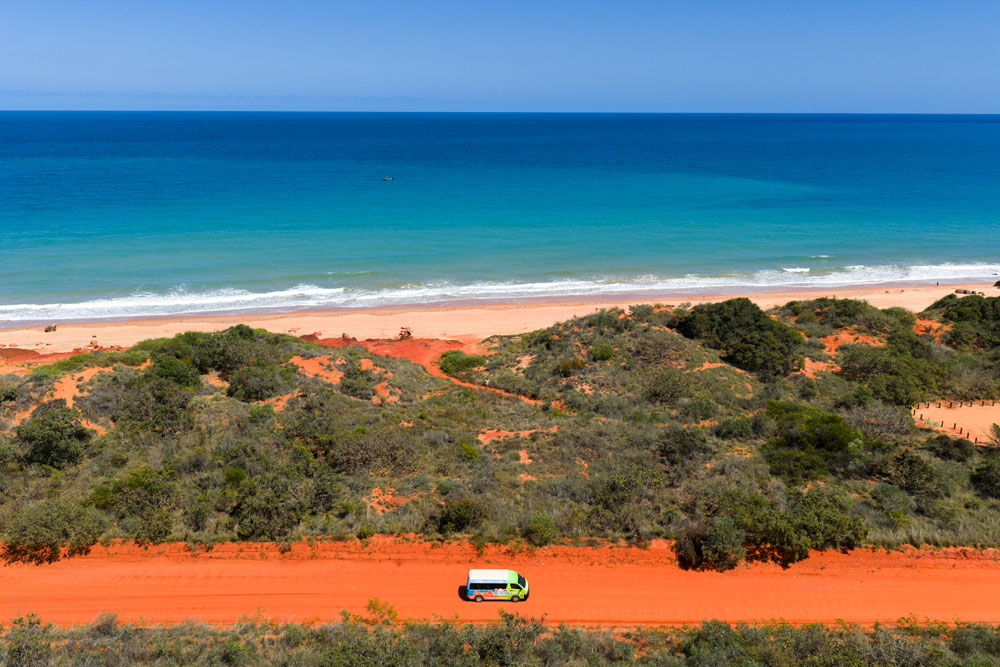
We follow the Nagula Walk Trail, a short route leading to a more secluded stretch of coastline. Along the way, interpretive signs share insights into Yawuru culture and connection to Country. This is not simply a landscape to observe; it is one to understand. The further we walk, the quieter it becomes. Ghost crabs dart across the sand, birds call from the scrub and the horizon remains uninterrupted. Even a brief walk here feels grounding.
Later, we return to the coast. The tide has shifted again, revealing a wide expanse of reflective sand. In Broome, the landscape is never static; it is shaped continuously by water and light.
As evening approaches, we head to Town Beach. Locals and visitors gather for the “Staircase to the Moon”, a natural phenomenon that occurs on select nights between March and October. As the full moon rises over the exposed tidal flats, its reflection creates the illusion of a luminous staircase ascending into the sky.
We wait quietly as the moon lifts above the horizon. Gradually, the shimmering path appears. Subtle, then unmistakable. Around us, a night market hums with activity: food stalls, music and families. Yet attention remains fixed on the water, on the light, on the moment itself.
Departure – What remains
Three days in Broome feel both complete and insufficient. Not because there
is too much to see, but because the place asks something different of us.
It asks us to pause, to observe and to move in flow with heat and tide.
This is not a destination defined by activity. It is defined by space: physical, cultural and emotional.
As we leave, the red dust clings to our shoes and salt to our skin. Yet it is
the sequence that lingers the most: slow mornings, expansive afternoons and
long luminous evenings. Broome may be a gateway to the Kimberley, but it is also a place that resists departure. And perhaps that is its most enduring quality.