Where elephants have right of way
The first thing we notice is the silence.
Not the absence of sound, because the African bush is constantly alive here: crickets calling from the savannah grass, wind moving softly through it, the brittle crack of branches beneath something heavy and unseen. But there are no voices trying to overpower the landscape. Only space, and the awareness that nature makes its own arrangements here. This is how safari begins. Not with spectacle, but with silence.
Set within the UNESCO-protected Waterberg Biosphere, Welgevonden Game Reserve is defined as much by what it refuses as by what it offers. There are no self-drive safaris and strict limits govern the number of vehicles allowed at wildlife sightings. Wild animals move first; we adjust ourselves accordingly.
For travellers familiar with larger safari areas, Welgevonden feels noticeably different. Smaller in scale, quieter and deliberately restrained in visitor numbers. Safari here feels less like theatre and more like something intimate.
Jacob, our ranger, prefers it that way. “In Kruger, it sometimes feels like driving in traffic with lions,” he says. “Here, the bush still has the final word.”
By the time we arrive at Elephants Crossing Lodge, high above a wide valley, we understand exactly what he means. This is a place to wait. To watch. In a daily life often ruled by schedules, screens and constant distraction, the stillness of the bush feels almost unfamiliar. What begins as a holiday quickly becomes something else entirely: a form of recalibration. A return to a pace we seem to have lost somewhere along the way.
Before lunch is even served, a giraffe folds itself awkwardly down to drink below the deck. Before we have finished eating, a herd of elephants emerges from the bush.
And before the first game drive has even begun, our fifteen-year-old daughter – normally inseparable from her phone – has stopped checking it. Our eleven-year-old son who has never shown much interest in screens anyway, is already leaning over the railing with binoculars, scanning for movement below.
Part of the reason we are here is simple: we want our children to know this landscape not as an abstract idea, but as something real. That may be the rarest sighting of all.
Arrival: Learning the pace of the bush
We are collected from the Main Gate of Welgevonden Game Reserve. The guarded entrance marks the gateway to the fenced reserve, where the cheerful Jacob stands beside an open safari vehicle the colour of brick-red dust.
He has worked in Welgevonden for eight years now, and within minutes it becomes clear that safari rises or falls on the quality of its guides. It does not matter how elegant the lodge is, or how perfectly the gin and tonic tastes at sunset.
Without a ranger who can read the bush – and who still enjoys doing so after thousands of drives – the reserve remains little more than scenery.
Jacob has knowledge of the bush in abundance. Patience, however, is another matter.He drives fast, and reverses with a confidence that suggests great faith in both instinct and the jeep’s suspension. His enthusiasm is infectious. His version of waiting is mostly getting to where wildlife has been spotted as quickly as possible.
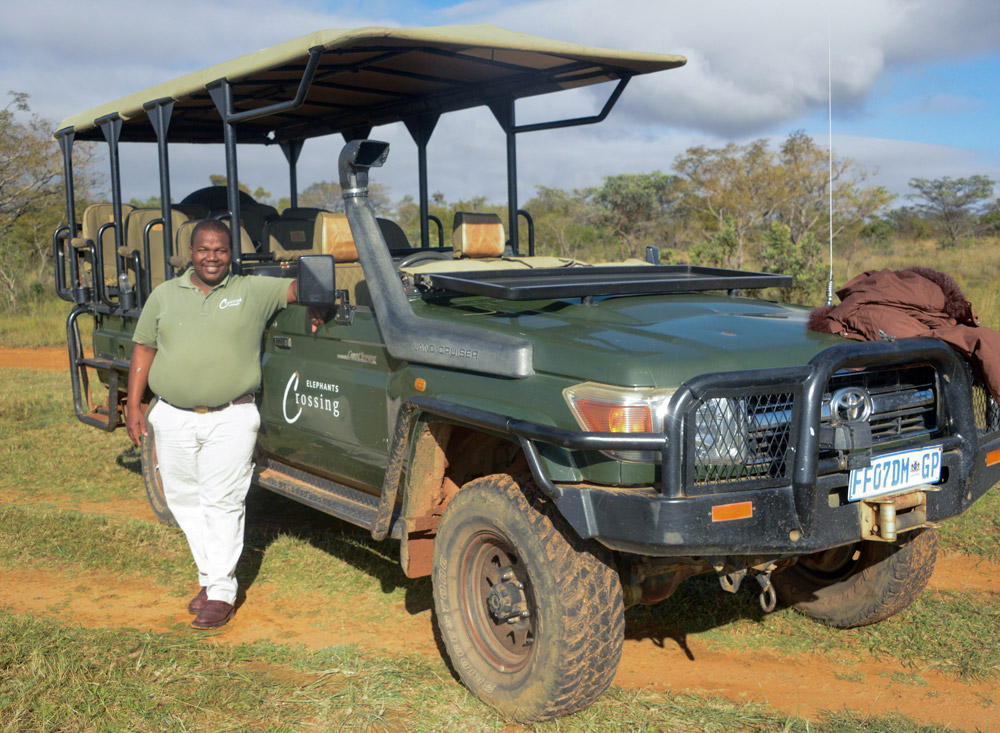
Before we leave, we wait for another couple arriving by helicopter. They are South African, celebrating their sixteenth wedding anniversary, and their daughter has gifted them this trip. The helicopter has been arranged by their employer, apparently one who believes anniversaries should arrive with rotor blades. Our children are far more interested in another detail.
The radio call sign for Elephants Crossing Lodge is 67. “67 Ellie’s… standby.”
This immediately causes hilarity. “Six-seven” has become a TikTok joke among teenagers, complete with a hand gesture our daughter insists we are far too old to properly understand. She and her younger brother burst into laughter every single time Jacob uses the number over the radio. For the next three days, it becomes the soundtrack of the trip.
The road to the lodge climbs slowly towards a plateau, and our progress is almost immediately delayed. A resting white rhino has decided the road belongs to him.
Jacob switches off the engine. He lies there in complete indifference, like an elderly landlord unimpressed by late-arriving guests. Dust settles around us. We admire his prehistoric appearance. Eventually, with visible reluctance, he gets to his feet and wanders into the bush, as though granting us passage is an administrative inconvenience.
Our first lesson in safari etiquette arrives early: the bush decides.
A lodge built around looking
We are welcomed with effortless warmth. “Welcome family, good trip?”
From the main deck – and from the private plunge pools of the freestanding suites – the landscape opens into long, uninterrupted views across the valley. Animals appear here not as entertainment, but as part of the daily pace: giraffes around midday, elephants towards sunset, zebras and the usual safari suspects as brief interludes in between.
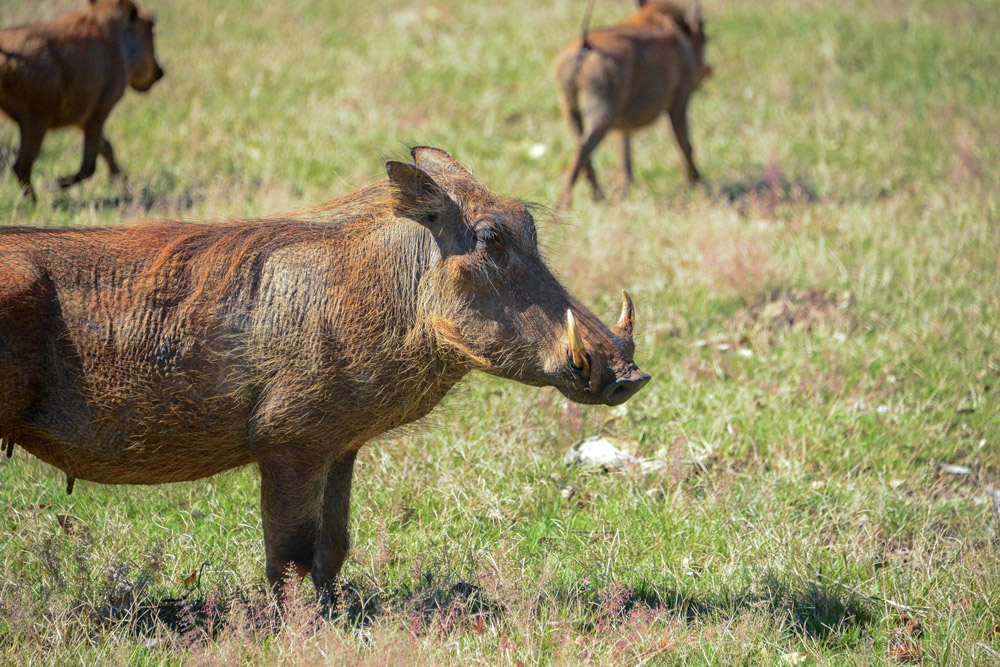
Warthogs trot through the dry grass with their tails held bolt upright, as though someone somewhere invisible has pressed an alarm siren. Our son immediately names them “antenna pumba’s”, because of those little tails.
Lunch is grilled salmon with curry noodles, served while below us a giraffe bends down delicately towards the water. Elegant and faintly absurd at the same time. Then the elephants arrive.
They appear without announcement, as though the landscape has simply decided to make them visible. Calves remain protected within the herd. They drink, linger for a while and then move on again. It feels less like a sighting than an introduction to the days ahead.
Our bush villa stands apart from the other suites, deliberately private, with floor-to-ceiling openings that pull the outside in. Stone, wood and soft textures anchor the design to its surroundings. The en-suite bathroom flows into an outdoor shower. Outside, a fire pit waits for stargazing. It feels like permission: to sit still, to look longer, to let nothing happen for an hour and discover that, in fact, everything is happening.
Meals become part of that same rhythm. Dinner begins with roasted bone marrow, rich and savoury, followed by slow-cooked oxtail so tender that a knife is barely necessary. Every plate feels thoughtful and refined. Less bush dining, more something approaching fine dining and near Michelin level.
The same applies to the hospitality. Nothing is loudly announced here. Staff seem to appear at exactly the right moment. Coffee arrives before sunrise without needing to be requested; the fire is already burning before the evening chill sets in; breakfast orders are remembered before they need to be repeated.
Jacob turns out to be not only ranger, but also master of quiet logistics: tracker, storyteller, and sometimes part of the service team, helping with the same natural ease with which he reverses at full speed towards a cheetah sighting. In the bush, job descriptions turn out to be remarkably flexible.
By late afternoon, we climb back into the jeep for our first game drive.
First game Drive: at eye level
At first, we see almost nothing. A family of warthogs. Antelope. A kingfisher.
Safari requires the slow retraining of city eyes. The bush is a master of camouflage: shades of yellow and brown softened by recent rain, flashes of green between thorn trees, movement that disappears the moment you look directly at it. And then, suddenly, there are buffalo.
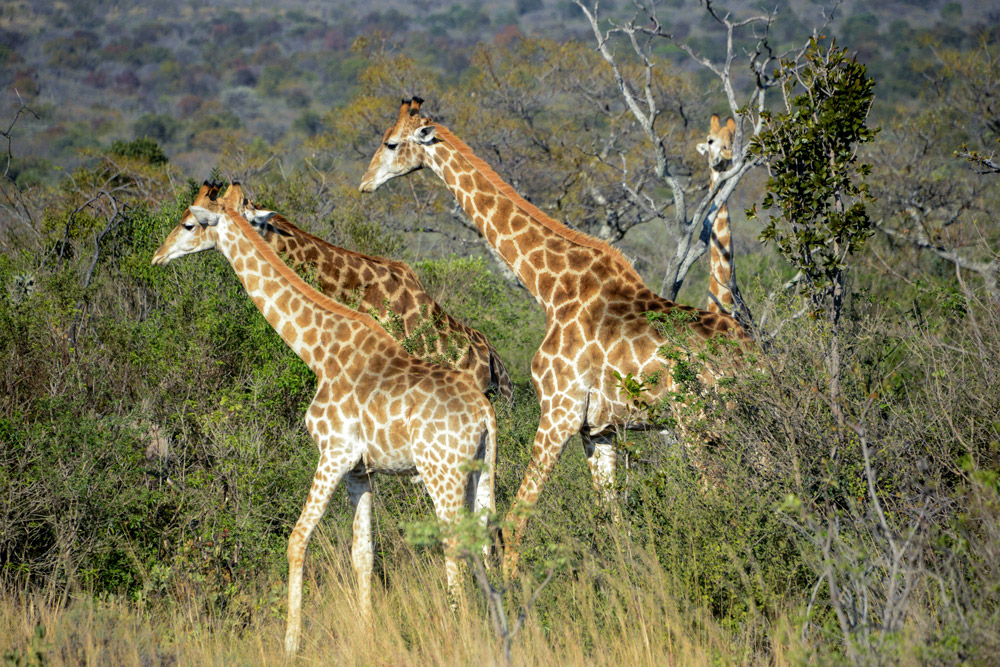
A heavy group stands in the middle of the road chewing, with the vague indignation of people interrupted during lunch. Leaves stick out of their mouths like comic props. They look at us as though wondering who exactly invited us. Then come giraffes. Impossibly tall and yet somehow invisible until they move. They are Jacob’s favourite animals; he recognises certain individuals by the unique pattern of markings across their necks and shoulders. Next, we see several white rhinos, wildebeest, and a serval.
As darkness begins to settle on the drive back to Elephants Crossing Lodge, Jacob moves the spotlight slowly across the bush like a patient lighthouse beam. To our left, the light catches the outline of an elephant. He is young, but enormous.
The bull stands motionless, his ears turned towards us, branches cracking beneath his mouth like dry biscuits. He lowers his head once, then again, as though trying to bring himself down to our eye level.
“When you look into the eyes of an elephant,” Jacob says softly, “you see intelligence.”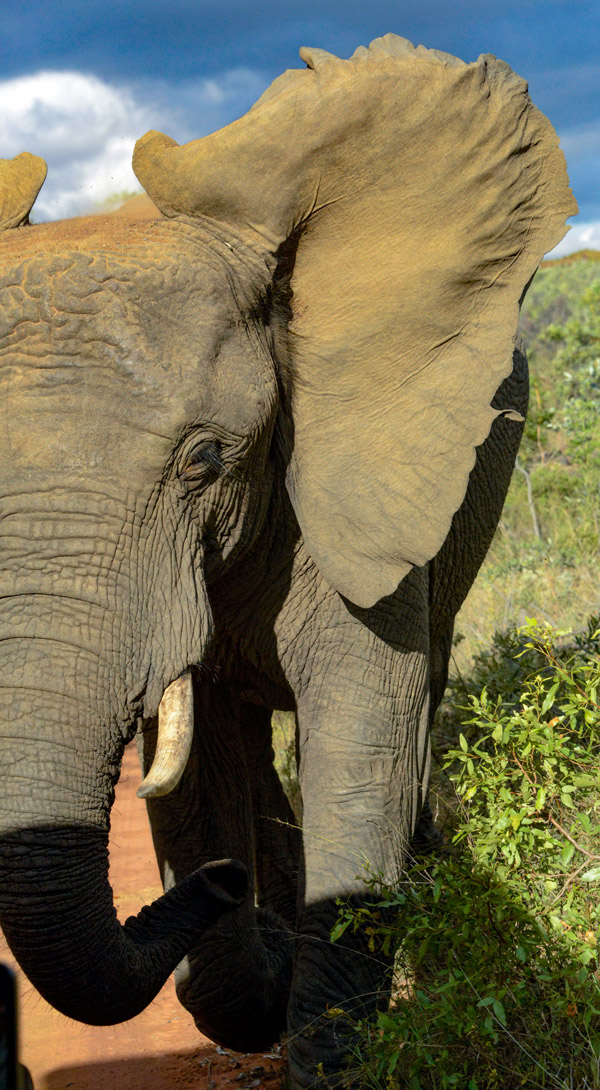 The bull comes closer. Closer still. Until his trunk brushes along the front bumper of the jeep.
He looks straight at us and begins to shake his head, his ears unfolding wide like heavy canvas sails. His skin is metallic grey and deeply folded. Moisture runs from the temporal glands at the sides of his head.
“He is in musth,” says Jacob, suddenly less relaxed. “A bull in musth can be very unpredictable.” He has a twinkle in his eyes, but immediately puts the jeep into reverse. My wife and our children are staring with wide, frightened eyes, heart rates visibly elevated, now practically sitting on top of one another. Our son forgets to breathe. I, meanwhile, am mostly fascinated and far too busy trying to take a photograph of an elephant at this distance.
It is difficult to describe the intensity of seeing an elephant from so close. For a moment, he remains still. Then he turns and disappears back into the darkness. Back at the lodge, the story grows slightly around the campfire, as all good safari stories do. It becomes an unspoken rule that danger may be exaggerated by roughly ten per cent for dramatic effect.
Millions of stars illuminate fragments of the savannah. The African sky seems endless. Somewhere beyond the light, hyenas call, while an African Scops Owl repeats its patient cry. Safari is also about the people you meet. Connected by landscape, by silence and the ability to spend hours discussing a single sighting as though it were family history.
The mathematics of survival
The following morning, we rise at quarter past five with anticipation. This is the ideal hour to head out, when many animals use the coolest part of the day for hunting.
Soft footsteps. A whispered “Good morning.” Coffee is poured almost in silence. Jacob asks which animal we most want to see. “Leopard, giraffe, hippo, hyena,” we all answer at once. He smiles.
“There is one thing you can be certain of with a leopard,” he says. “There are twelve leopards in Welgevonden. You do not see them. They show themselves when they want to.” Then he adds, with the timing of someone who knows this line always lands: “Safari is like a box of chocolates. You never know what you’re going to get.”
Within minutes, we find buffalo again, followed by a white rhino and her calf grazing alongside zebras in open grassland.
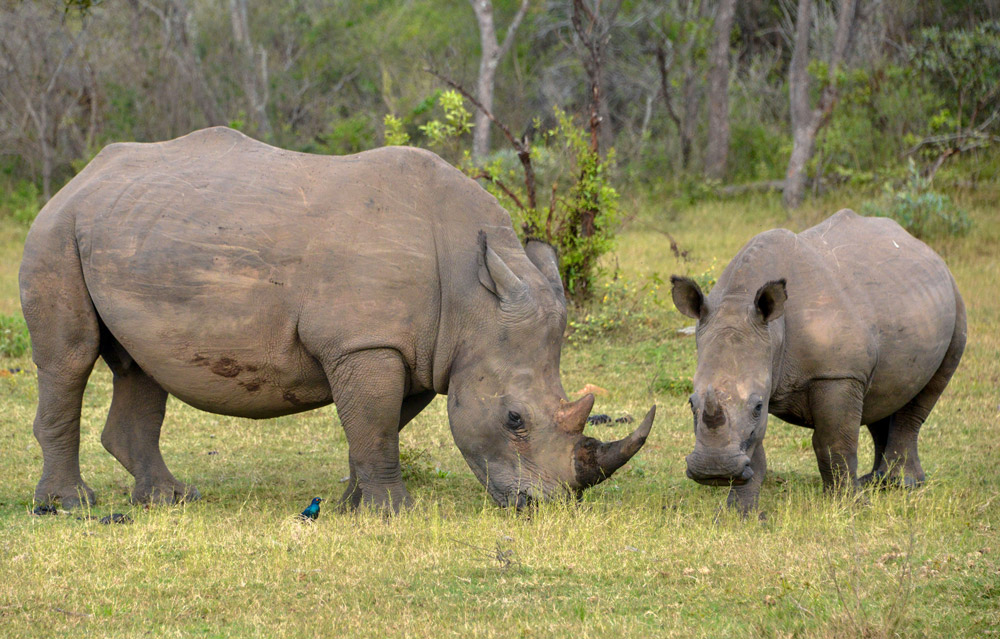
Former farmland here has gradually been restored and rewilded since the 1990s. Open plains give way to wooded valleys, which rise again into rocky escarpments and dramatic ridgelines. What defines this experience is not only the wildlife, but the absence of pressure around it. No convoys of vehicles. No elbowing for the best position. We stay as long as the moment asks us to.
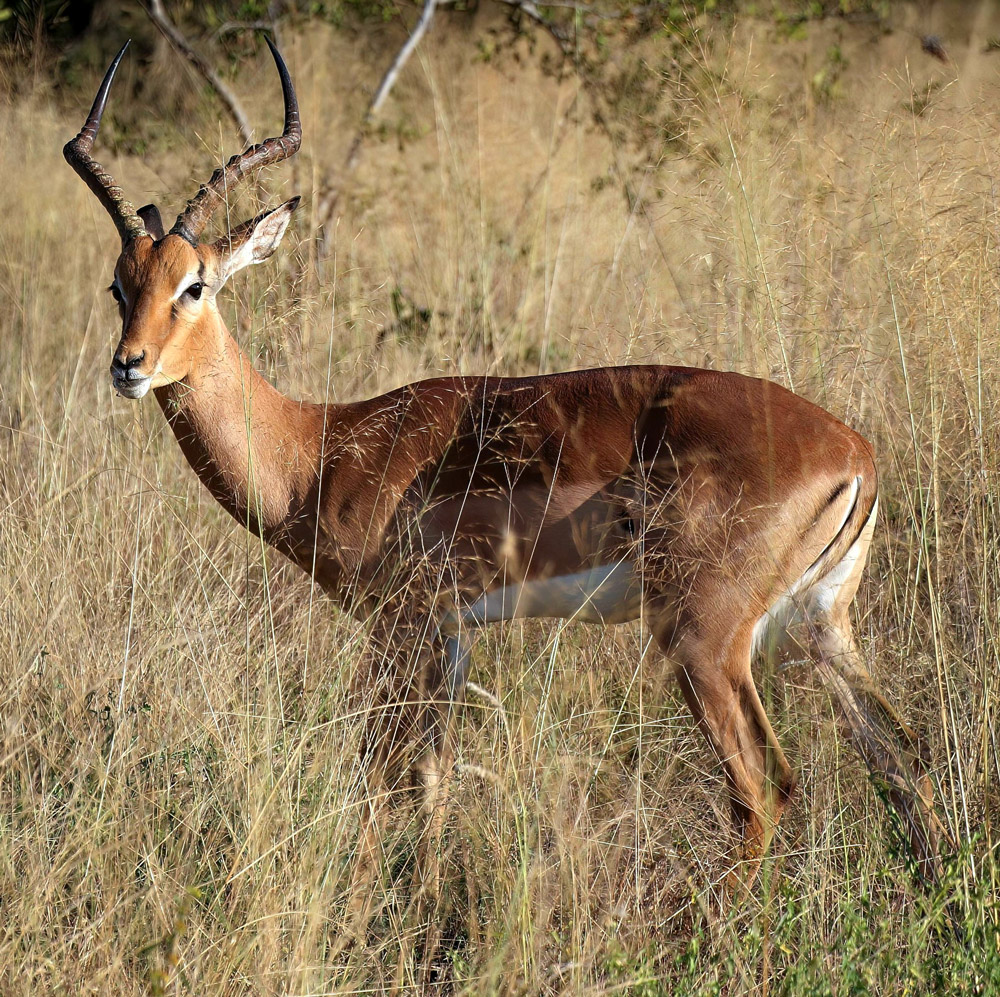
Our daughter unexpectedly decides that the early morning drives are her favourite part of safari. She loves the cold air before sunrise and the way the landscape slowly unfolds in layers of colour. Giraffes move in long, springing strides between acacias in the first morning light. Impalas flash at the edges of the bush.
“Fast food of the bush,” says Jacob.
The black marking on their hindquarters looks like an M. “M for McDonald’s. For predators.” “We do not stop for zebras,” he adds. “Only for zebras being chased.” A few minutes later, the radio crackles. Cheetah sighting.
With impressive speed, Jacob reverses almost fifty metres before swinging the jeep around in a cloud of red dust. “Hold on tight.” We arrive exactly on time.
A young zebra is running at full speed through the tall grass and rocks, chased by a cheetah gaining ground with astonishing speed. Only four vehicles are allowed at a sighting at once, and somehow, there we are: front row seats to the mathematics of survival.
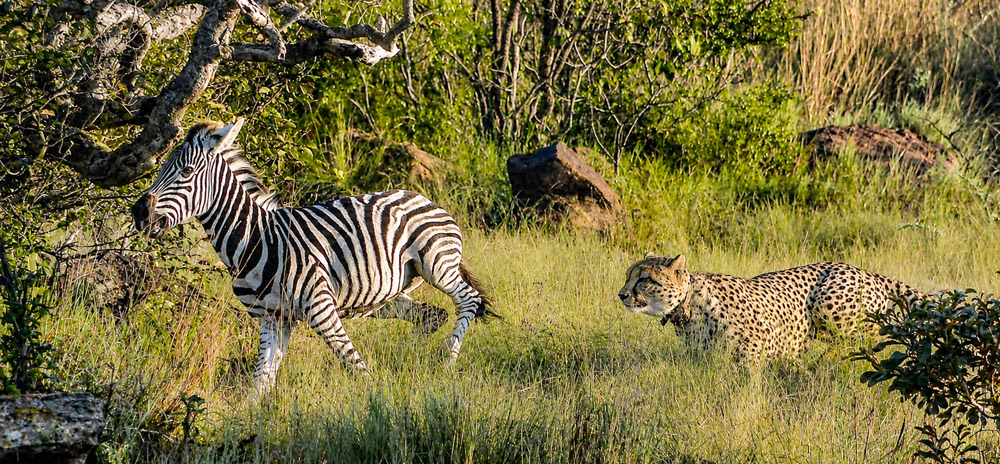
Then both animals disappear into the dense scrub. Jacob switches off the engine. We wait. Listen. No one says anything. These are the moments photographers dream of. Not necessarily the kill, but the collision of pure instinct. Predator and prey. Speed against speed. Life compressed into a single decision.
Eventually, the bush exhales again. “I haven’t seen that in a while,” says Jacob. Neither have we. In fact, never.
No matter what the people say
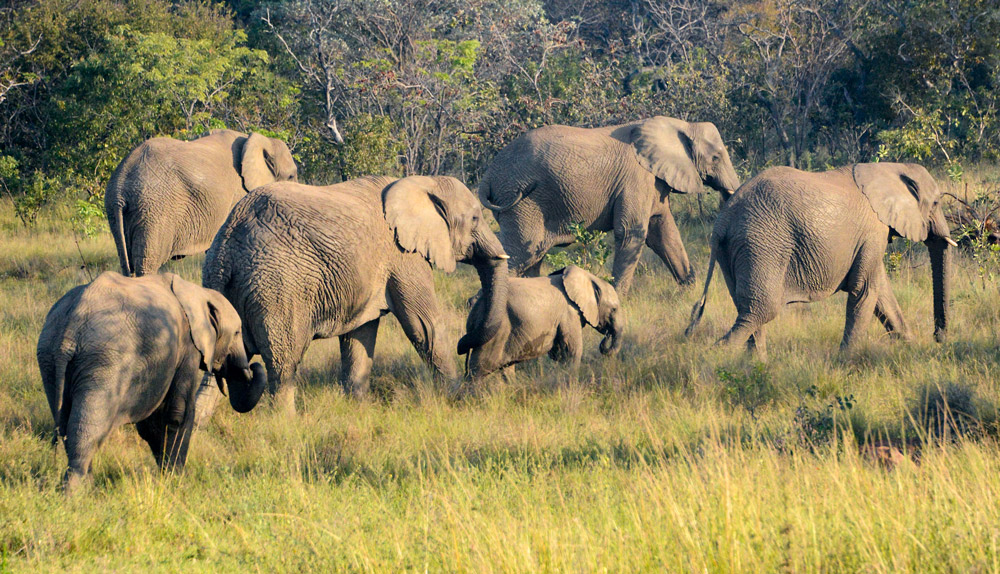
Later that morning, we stop once again to allow a herd of elephants to cross the road.
A calf, still carrying the light reddish fuzz of youth across its back, waddles forward like a round toy with oversized ears. Its trunk swings back and forth with determined uncertainty, as though it is not yet entirely convinced by the mechanics of being an elephant.
Our children are completely captivated. Our son leans so far forward that we instinctively pull him back by his shirt, while our daughter – normally so careful to preserve her teenage indifference – has abandoned all pretence and is smiling openly.
Then another safari vehicle appears on the track ahead of us. The ranger leans out and calls to Jacob. Without hesitation, they begin singing together. “No matter what the people say…” Jacob claps twice, points to the lodge sticker on the front door of the other jeep, and both men continue in perfect synchronisation: “…but Elephants Crossing Lodge is number one!”
There are hand gestures involved, a shoulder movement our children immediately declare disastrous, and enough theatrical conviction to make it clear that this is a well-established tradition. Everyone laughs. It is ridiculous and completely perfect.
For all the seriousness of conservation, tracking, and animal behaviour, safari is also this: long days in the bush, friendships carried over the radio and grown men singing loyalty songs for lodges in the middle of nowhere.
Then one of the female elephants turns towards us. She walks directly towards us, ears spread wide, trunk raised. We are close enough to see her eyelashes. She trumpets loudly. Not aggression, Jacob explains, but theatre. She wants to make an impression. And she succeeds. For a moment, we feel exactly how small human beings are.
Jacob claps his hands sharply and waves his arms wide. She stops, then turns away with magnificent indifference and rejoins the herd. Behind her, young elephants play mischievously with branches, while the matriarch leads them with complete calm. The road belongs to them. We are merely passing through.
Reading the landscape
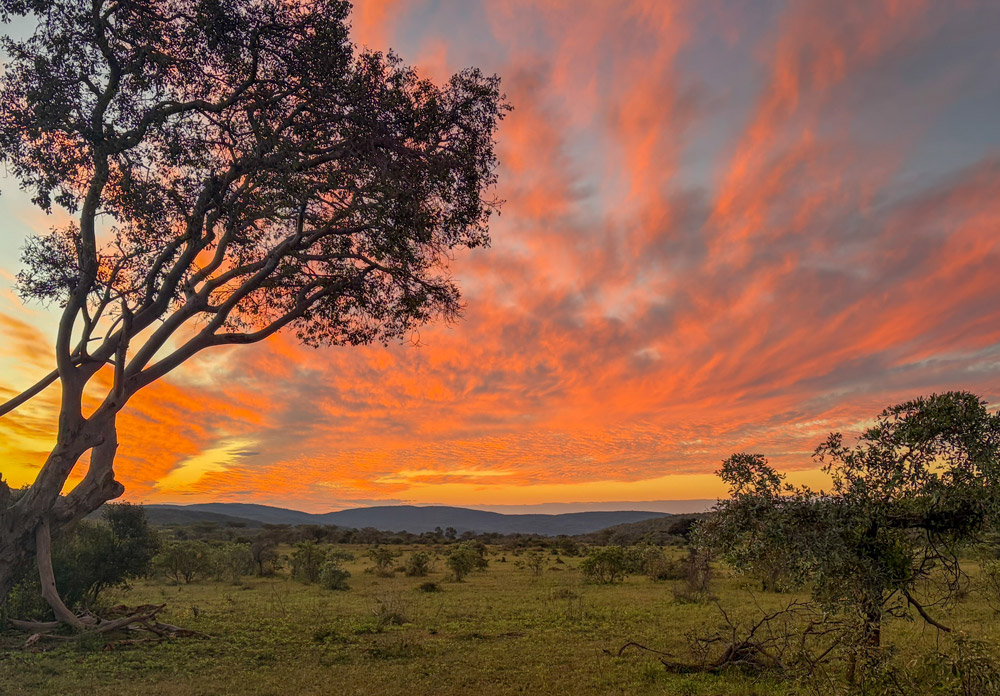
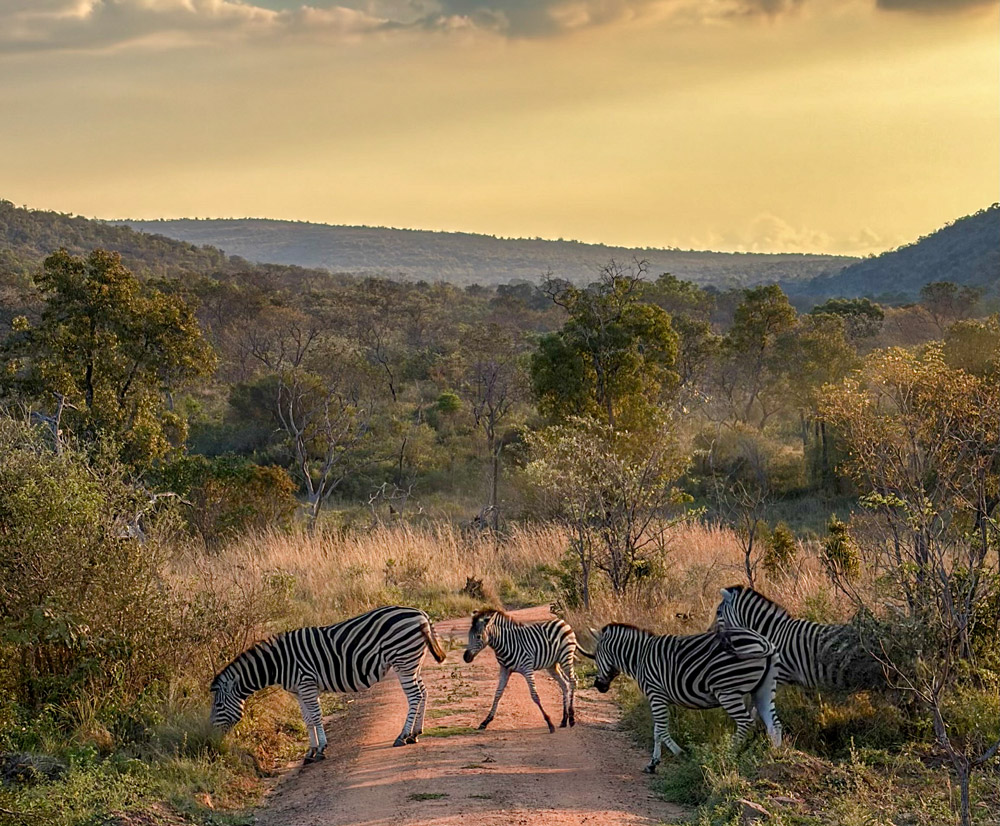
By the third morning, we no longer ask what we hope to see. The reserve itself has become enough. We drive into a rougher part of Welgevonden Game Reserve, where rock formations rise sharply from the bushveld and the landscape feels older, almost elemental. Sunrise changes everything here by the minute. Grass shifts from silver to gold. Trees darken first and then begin to glow. Wildebeest bound across the plains as though performing exaggerated warm-up exercises for the day ahead.
It is quieter in terms of wildlife.mAnother jeep passes us. “Penguins, polar bears and a unicorn just ahead,” the other ranger calls. It turns out to be a kudu. Its spiral horns rise above the grass like corkscrews, its movements slow and improbably elegant.
During our coffee stop, Jacob tells us he used to be a firefighter and once studied forensic investigation. It makes immediate sense. “The bush is one giant crime scene,” he says. “Everything leaves clues.” The warning call of an impala. A snapping twig. The scent of a carcass carried on warm air. Once you learn to read tracks, the reserve becomes a constantly unfolding detective story. Who killed the impala? Which direction did the lion go? How fresh are the tracks? “The elephant,” he adds, “is the worst criminal. Leaves evidence everywhere.” Like a bulldozer, he says, it clears paths for everything that follows.
Around a bend, several stones lie overturned on the road. “Baboons,” he says. “Looking for scorpions.” At that exact moment, a troop appears, striding confidently along the track, babies clinging tightly to the bellies of their mothers. Once they pass, zebras follow in their wake. The bush never really stops moving.
Following lions
During sundowners that evening, there are signs before there are lions. Fresh tracks in the sand and jackals with their long brush-like tails moving with suspiciously purposeful intent. Jacob slows the jeep. The tracks point like a compass needle.
“Look here,” he says, leaning over the side of the jeep. “A lion walked here. A female. You can tell by the size of the paw print.” He is constantly in radio contact with other rangers driving in the same area. Their voices crackle through the reserve in short updates. Sightings are shared, movements tracked and possibilities narrowed down. It is part instinct, part fieldwork and part collaboration. Then Jacob suddenly accelerates.
Once animals have been spotted, the journey to reach them can be surprisingly physical. A hard, fast drive across rough terrain, the jeep bouncing so violently that conversation becomes impossible. We hold on to the railings and to each other as we are shaken through dry riverbeds and over rocky tracks as though we are loose luggage.
And then, just as suddenly, silence.
The engine switches off. Conversations fade. Cameras are raised. Ahead of us, where the grass gives way to scrub, two lionesses lie almost invisible in the final light of the day.
Their stillness is extraordinary. They are visible only because Jacob has taught us how to look. “There,” he says, peering through his binoculars. “Two lions doing what lions do best. Sleeping.” We spend almost forty minutes with them, hoping they will move. They do not.
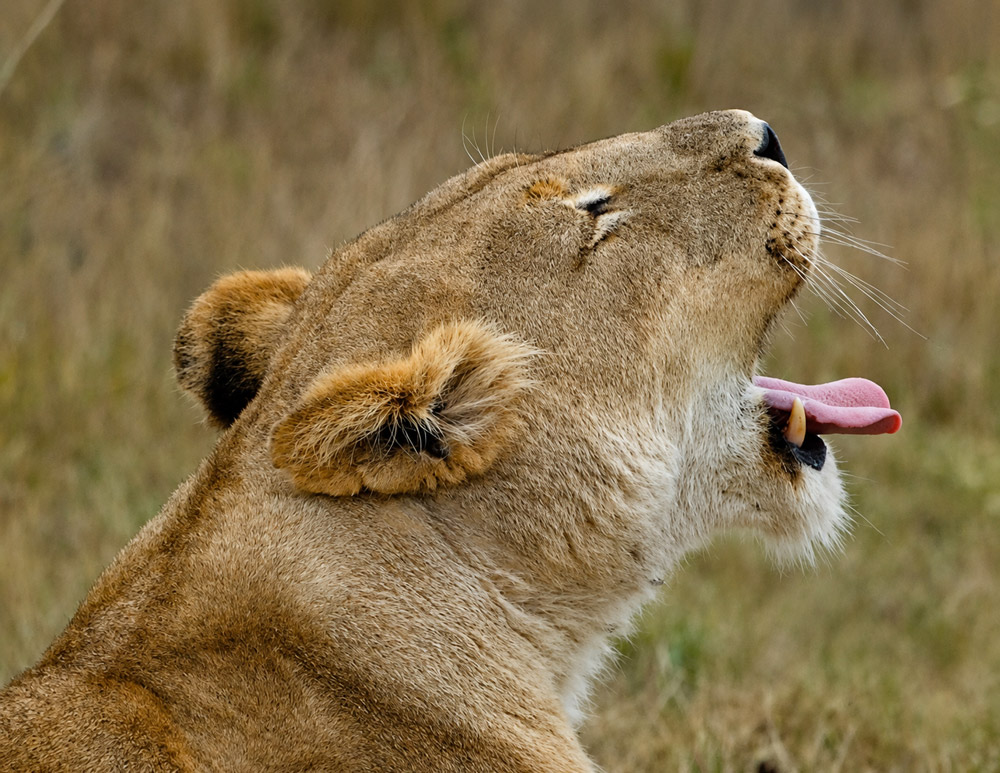
And somehow, that feels exactly right. Predators are not always cinematic. Sometimes they are simply resting in the heat, conserving energy for a hunt we will never see. Above us, a fish eagle lets out one final cry into the vivid red evening sky. Slowly, the light drains from the grass. No one wants to leave. This is what you hope for before a journey begins.
What safari leaves behind
On the final morning, the need to complete a checklist has disappeared. Still, we hope for one more animal: hippos. During our last game drive, before breakfast and just before departure, we get exactly that.
In a quiet dam, they lie almost completely submerged, as though the water has only half revealed them. Only their faces break the surface. Eyes that seem to see everything, nostrils just above the water, the rest hidden in the muddy stillness. They barely move. It feels as though we are looking at a secret that is allowing itself to be seen only briefly.
A little later come giraffes and white rhinos. And then, almost like one final signature from the reserve, an elephant slowly crosses the track in front of us. His curved tusks gleam in the sunlight. He takes his time. Jacob simply smiles. “It’s called for a reason.”
Yes, in three days we have seen elephant, lion, rhino and buffalo. Everything except the leopard. The Big Five are all here. But behind that apparent inevitability lies years of careful conservation management. Welgevonden Game Reserve invests heavily in anti-poaching, habitat restoration and the protection of white rhinos. Rangers, trackers and specialist teams work every day on something visitors often barely notice: preserving a landscape where wildlife can not only survive, but truly flourish.
But that is not the only thing that stays with us. It is the way our son already has his binoculars in hand at sunrise. The way our daughter, who on arrival immediately asked for the Wi-Fi password, now finds the early morning drives the most beautiful part of all.
Before we leave, we gather for one final photograph with the lodge team. When we are ready to drive away afterwards, the jeep turns out to have a flat battery. Everyone laughs. The staff – Pearl, Ayanda, Uncle Herbert, and even the talented chef – do not just wave us goodbye, they help push-start the jeep as well. Even saying goodbye happens together here.
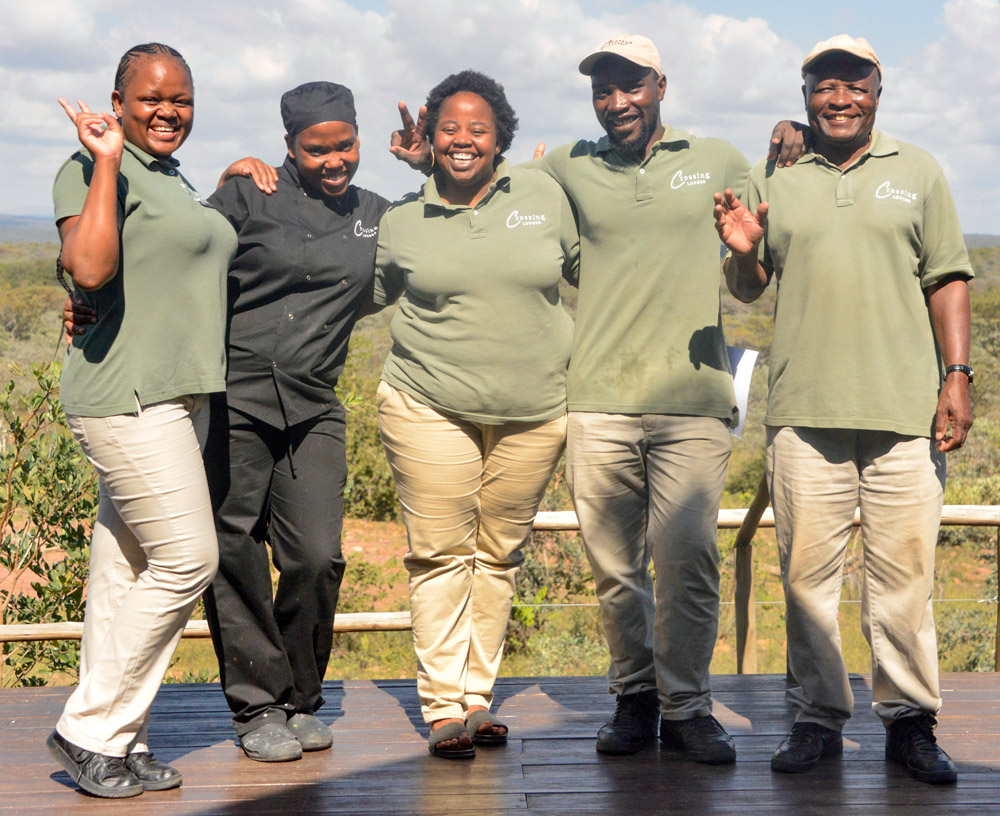
It feels less like departing a lodge and more like stepping briefly out of a small family with a beautifully practiced rhythm: coffee before dawn, dusty roads, radio chatter and the daily passage of elephants.
We wanted to show our children both the beauty and the fragility of African nature. In an increasingly virtual world, sometimes distance is required to feel real closeness. To landscape, to silence and to something that is not filtered through a screen.
But safari does more than that. We notice it in small things: how natural silence becomes, how little a phone still matters and how long you can look at something that refuses to be hurried.
This place, this feeling and this stretch of days will slowly settle into memory. One we will carry together for the rest of our lives. And perhaps, twenty years from now, all it will take is for someone to say: “67 Ellie’s… standby.”
And all four of us will immediately know exactly where we are again: on the veranda of Elephants Crossing Lodge, above that valley, in that first silence. Waiting for the elephants to appear.