After meeting a tulip grower on a flight home from South Africa, we follow the flower beyond the postcard fields and into the uneasy balance between beauty, business and the price of perfection.
Somewhere above the Sahara, between the last gold of the African evening and the first suggestion of a Dutch dawn, Johan taps the number on his boarding pass and smiles.
“Seventeen,” he says, settling into the window seat beside us on the overnight flight to Amsterdam. “I always try to book row seventeen if it’s available.”
At first, we assume it is superstition. Aviation has plenty of that. But he shakes his head. “No, not luck,” he says. “Tulips.” He says it as though the explanation should be obvious.
Johan is a tulip grower from the Netherlands, returning home from a business trip in South Africa. His hands are broad and browned despite the polished shoes, airport lounges and export meetings. Hands that still belong outdoors.
As the cabin lights dim, he scrolls through photographs on his phone before stopping at one image: a pale pink tulip, soft at the edges, its petals flushed like morning light through cloud. “Our number seventeen,” he says. “Bella Blush. We grow it ourselves.”
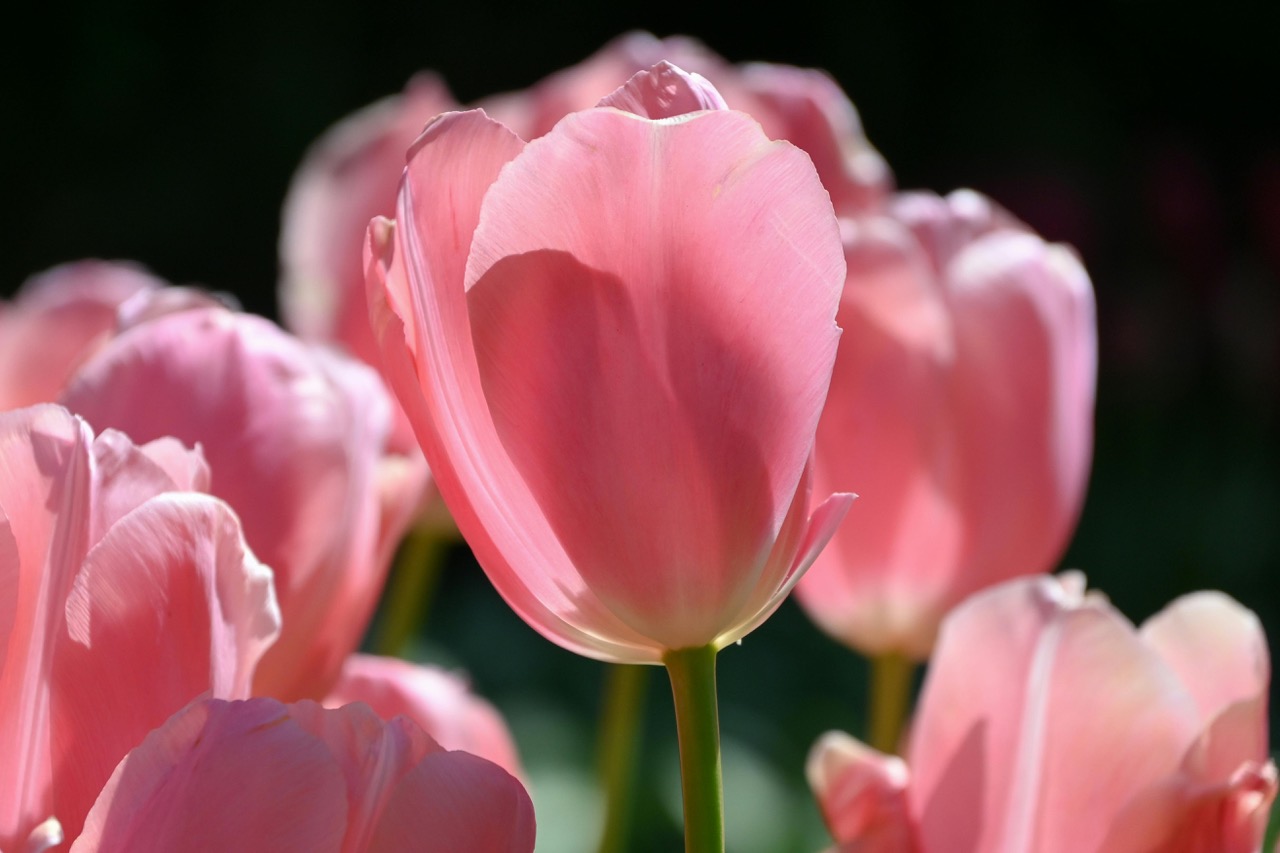
Every tulip variety, he explains, carries both a commercial name and a breeding number. It’s a quiet administrative system hidden behind all that springtime romance. Growers, exporters and researchers rely on it to avoid confusion across borders. Even beauty, at scale, requires cataloguing.
We ask why this one matters. For the first time, Johan pauses. “My grandmother always kept pink tulips in the kitchen,” he says. “Never red. Never yellow.
Pink only. When Bella Blush arrived, she said: finally, someone understands spring.” He smiles briefly. The last season she saw was tulip season.
Outside the window, Africa disappears into darkness below the wing.
We ask whether tulips grow well in South Africa. Johan laughs softly.
“Of course,” he says. “But not like home.” And somewhere over a continent where tulips are never meant to bloom naturally, the conversation begins to shift: from flowers to systems, from colour to control and from postcards to the complicated machinery behind them. By the time we land in Amsterdam,
we are no longer thinking about tulips as decoration.
Entering the landscape of colour
In the Netherlands, tulips are not simply seasonal. They are infrastructure.
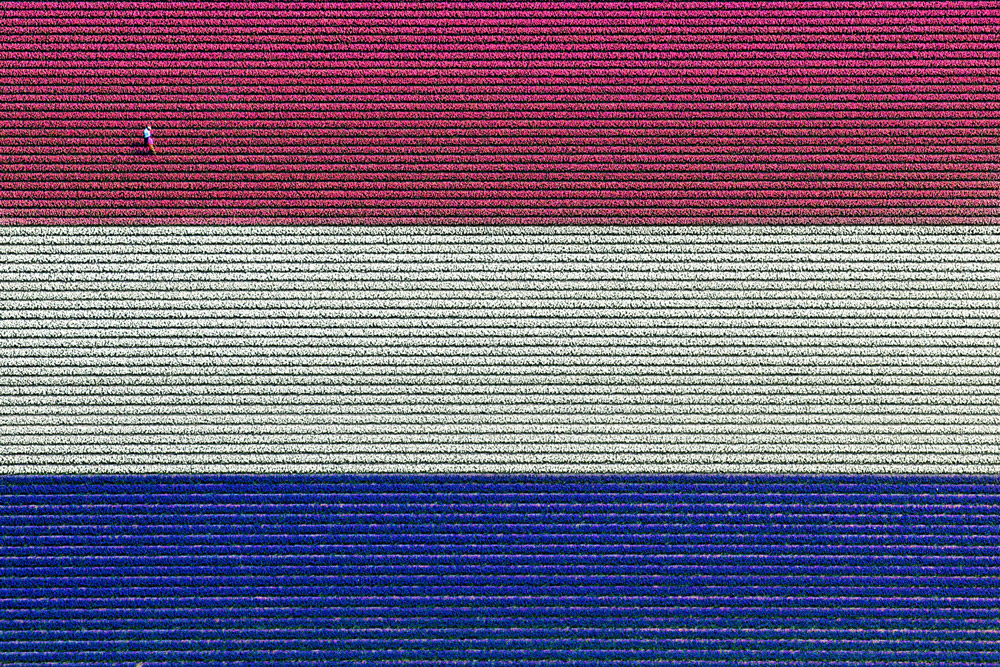
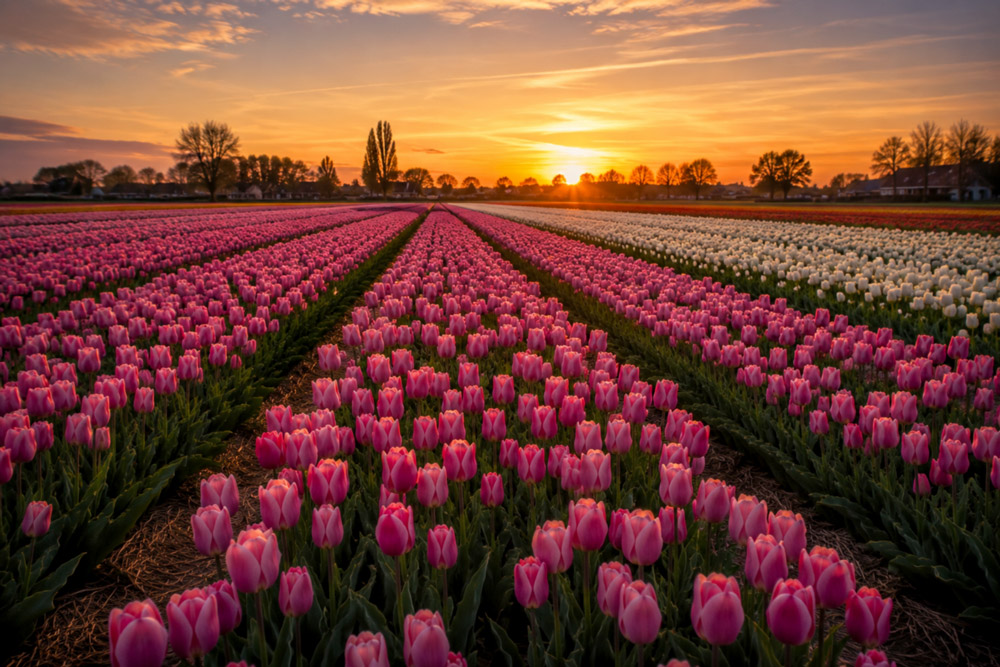
During the weeks between late winter and spring, the country begins to change colour. Fields emerge in impossible bands of crimson, violet, yellow and white, stretching between canals and villages with such precision they appear painted onto the land.
The most famous region lies between Haarlem and Leiden, curving gently towards the North Sea. The Dutch call it in the Bollenstreek, the Bulb Region, and every spring it becomes both agricultural engine and global spectacle.
Tourist arrive by the busload. Cyclists weave between fields. Rental cars slow unexpectedly at roadside lay-bys as people step out into the cold air searching for the same photograph: themselves framed by perfect symmetry and impossible colour. A few days after meeting Johan, we drive into that landscape ourselves.
Rain freckles the windscreen. Greenhouses appear beside narrow canals.
Low brick farmhouses sit close to the road beneath a sky so grey it seems almost structural. Then, suddenly, the fields arrive. Even after all the photographs, they remain starling.
Rows of pink and scarlet cut across the earth with near-industrial precision.
Yellow bands flare against dark soil like electrical current. The colours are beautiful, certainly, but also strangely disciplined as though spring here operates according to blueprint and schedule rather than season. Along the roadside, damp soil releases the mineral scent of recent rain while irrigation pipes tick softly somewhere beyond the fields. Johan warns us about this. “From above,” he says on the plane, “it looks like paradise. From the ground, it’s mostly invoices.”
The flower that becomes a nation
The strange thing, of course, is that tulips are not originally Dutch.
Their wild ancestors grow in the mountainous regions of Central Asia before travelling west along ancient trade routes into the Ottoman Empire, where the flower becomes associated with status, refinement and imperial wealth.
By the late sixteenth century, tulips bulbs reach the Netherland through the botanist Carolus Clusius, who plants them at Leiden’s Hortus Botanicus.
The Dutch climate proves ideal. Sandy soil, cool springs and maritime air allow the flower to thrive. Then comes obsession.
During the seventeenth century, rare bulbs begin changing hands for extraordinary sums. At the height of Tulip Mania, certain varieties reportedly equal the price of an Amsterdam canal house. Whether every story surrounding the frenzy is true hardly matters now. The mythology takes hold regardless.
Not merely the tulip as flower, but the tulip as projection: beauty, prestige, perfection and wealth. It never quite loosens its grip. Today, flowers move through the Netherlands with the speed and precision of currency. At the vast Auction halls of Royal FloraHolland in Aalsmeer, metal carts glide beneath fluorescent lights before dawn while traders make decisions in seconds.
Prices rise and collapse almost instantly. Millions of stems pass daily through refrigerated logistics systems calibrated with the efficiency of financial markets.
The romance remains real. So does the machinery behind it.
Johan’s fields
Johan’s farm lies deeper within the Bollenstreek, where the roads narrow and the houses seem to settle lower against the wind. His family has grown bulbs here for three generations.
His father still walks the fields every morning with his hands folded behind his back, commenting mostly on soil quality. His mother manages the accounts but distrusts software entirely. His teenage daughter, Johan tells us with mock despair, is more interested in architecture than agriculture. “She says flowers are beautiful,” he says, “but she doesn’t want to spend her life discussing fungus.” Fair enough.
He takes us first to Bella Blush. In daylight, the pink appears subtler than it does beneath aircraft cabin lights. Less romantic, more exact. Johan crouches beside the row and brushes loose soil from the stems with the care of someone adjusting his collar before a portrait photo. Winds moves quietly across the fields, carrying the faint chemical sharpness of a recently sprayed section nearby. “This is the misunderstanding,” he says. “People think tulips are delicate. Actually, tulips are demanding.”
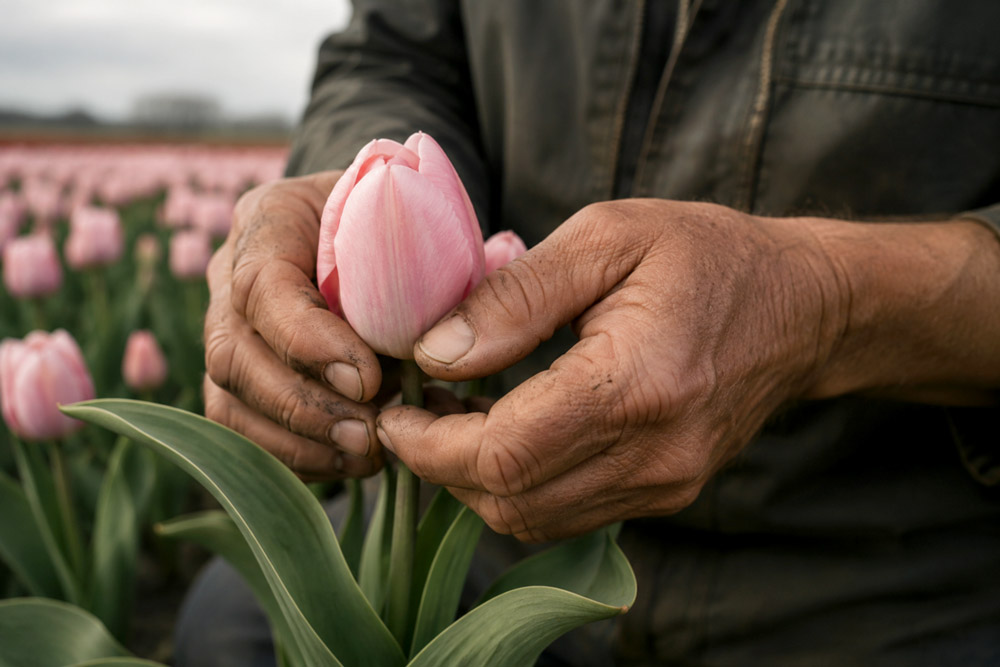
The export market requires consistency bordering on obsession: identical stem length, uniform flowering time, perfect colour and zero disease. A single fungal outbreak or viral blemish can destroy an entire shipment before it even leaves the country. Perfection here is not aesthetic. It is logistical.
Last spring, Johan tells us, fungus sweeps through one section of the farm and wipes out nearly an entire variety. What he remembers most is not the financial loss itself, but the silence at dinner afterwards. His father cutting potatoes while nobody mentions numbers because everyone already understands them.
“It’s strange,” he says after a while. “Visitors stand here and say how peaceful it looks. I stand here and calculate risk.” He says it calmly, almost matter-of-factly, as though weather and economics have gradually become the same language.
Beauty and chemistry
From a distance, Dutch tulip fields resemble serenity itself. Up close, they tell a more complicated story. Bulbs are cultivated densely in monocultures, leaving them vulnerable to fungi, moulds, insects and disease. To maintain the perfection international buyers expect, conventional tulip farming becomes heavily dependent on chemical crop protection.
The sprayers moving methodically through the coloured rows are as much a part of spring as the flowers themselves. Across parts of the bulb-growing region, concerns about pesticide drift continue to grow. Residents speak about chemicals reaching gardens, waterways and school grounds. Scientists question the long-term impact on biodiversity, groundwater and pollinator populations.
Insects disappear. Soil changes. The postcard acquires a chemical aftertaste. Johan does not dispute any of it.
Instead, he walks us towards the edge of a canal reflecting the flat grey sky and says quietly, “Most growers know this cannot continue forever.” The difficulty, he explains, is transition. Margins are narrow. Export demands remain unforgiving. Growers are expected to reduce chemical use while still delivering flawless bulbs to markets that reject imperfection immediately.
“They say: use less chemistry,” Johan says. “Good. I agree. But if one bad season destroys your farm, who helps then?” There is no self-pity in his voice, only arithmetic. As visitors, it is easy to romanticize change. Harder when mortgages are involved.
A different kind of field
Later that afternoon, Johan introduces us to Marieke, a neighbouring grower experimenting with organic tulip cultivation. Her fields look different immediately. The rows are softer, less severe. Wild grasses edge the pathways. Small flowers bloom between sections where conventional farming sees only weeds. The place feels less curated, more negotiated.
Marieke works with compost rather than synthetic fertilisers. Biodiversity is encouraged to attract natural pest predators. Weeds are removed mechanically or by hand. Skylarks move above the fields while mud gathers thickly around our boots. It is slower, messier and riskier than conventional growing, through Marieke speaks about the work with the certainty of someone no longer interested in perfect symmetry.
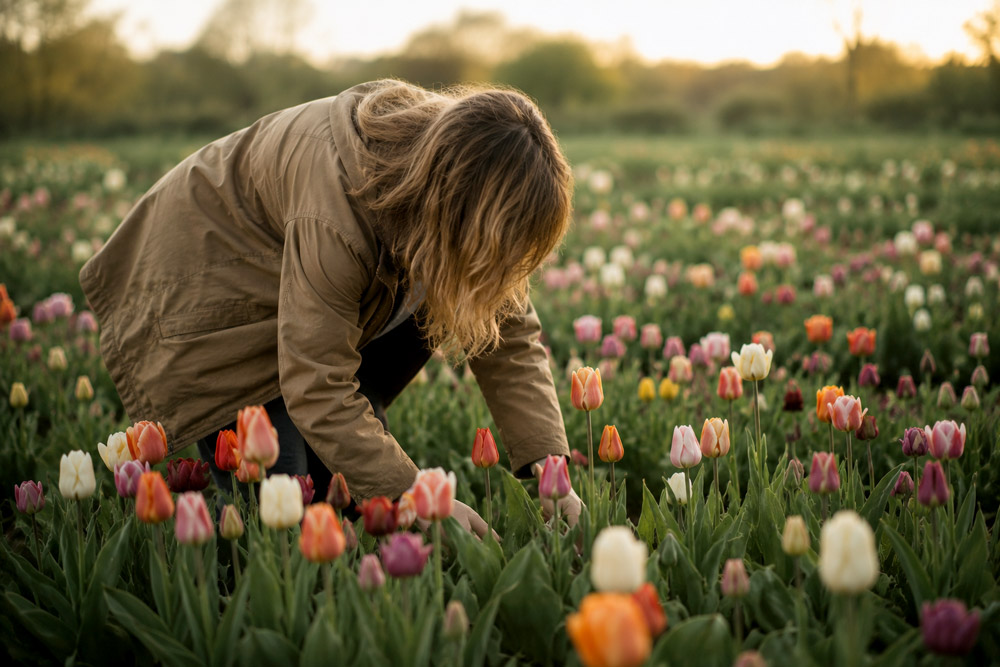
“People love the postcard version,” she says, leaning against a wooden gate. “Straight rows. Bright colours. No imperfections. But nature isn’t interested in neatness.” She bends, lifts a bulb gently from the soil and turns it in her hand. “This survives better,” she says. ‘Maybe it photographs worse. But it survives better.”
Her tulips are not less beautiful. They are simply less obedient. Standing there beside the uneven rows, we realise how much of beauty depends on conditioning. We are taught to trust symmetry, to associate control with success and uniformity with health. Perhaps resilience deserves better marketing.
The theatre of spring
At Keukenhof, meanwhile, the performance continues uninterrupted.
Visitors queue for stroopwafels and photographs beside oversized wooden shoes. Couples pose beneath cherry blossoms while gardeners quietly replace flowers that bloom too early of fade too quickly for the season’s choreography. No one comes here searching for agricultural nuance. They come for colour. And honestly, so do we.
Tulips are meant to delight. Their brightness after winter feels almost medicinal in norther Europa. It’s like a brief collective agreement that darkness has lasted long enough.
Yet after meeting Johan and Marieke, the gardens feel subtly altered. We begin noticing what remains outside the frame: failed harvests, fungal outbreaks, export deadlines, sleepless nights spent tracking weather forecasts and marker prices. Beauty is still beauty. But beauty is rarely innocent.
Row seventeen, again
It would be easy to end with only the bright version of this story: the colour fields, the spring markets, the improbable sight of flowers reshaping an entire landscape. And none of it would be untrue. It would simply be incomplete.
Because the Dutch tulip exists in contradiction. It is icon and industry, wonder and pressure, perfection and compromise at once. A flower carrying centuries of projection. Some evenings later, we drive once more through the Bollenstreek as daylight drains slowly from the fields. The tourists have mostly gone. Water lies motionless in the canals beside the road, reflecting long ribbons of pink and yellow beneath the low Dutch sky. For the first time, the landscape feels less performative and more exposed.
We think again about Johan in row seventeen somewhere above the Sahara, carrying photographs of Bella Blush across continents. About his grandmother arranging pink tulips beside a kitchen window. About growers balancing beauty against economics season after season, knowing the world expects spring to arrive flawlessly each year.
Ahead of us, the road narrows between the final rows of colour. Wind brushes lightly across the flowers, bending them almost imperceptibly out of alignment. Beyond the fields, greenhouse windows catch the last pale light of evening before slowly turning dark. The pink rows fade gradually into shadow beneath the falling dusk.