Off Western Australia’s remote coast, an encounter with the world’s largest fish becomes a lesson in scale, patience and belonging.
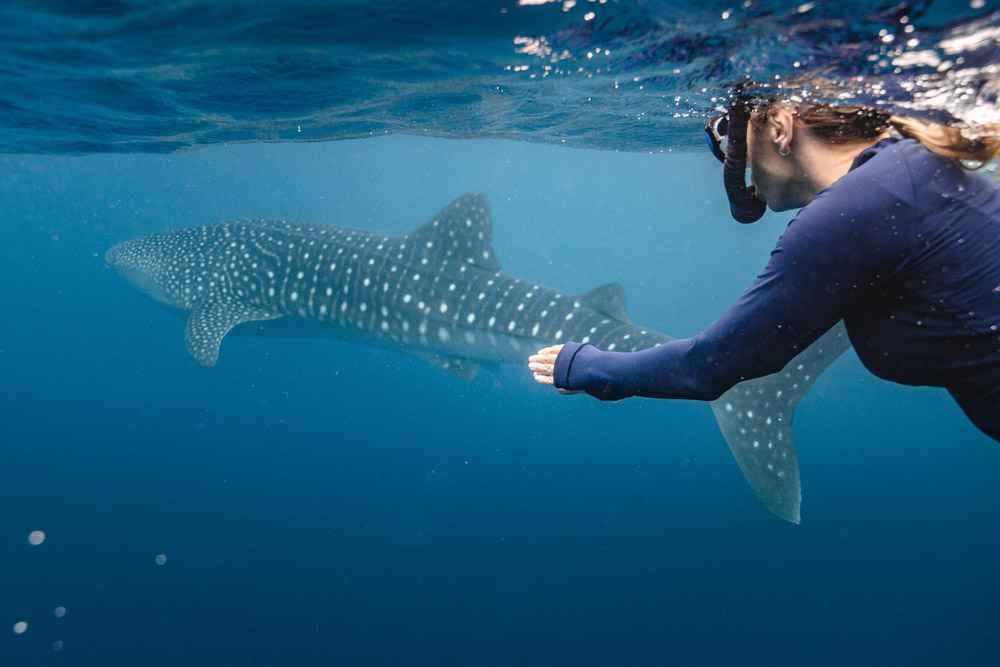
At first there is only blue. Then a shadow appears beneath us, so faint that it seems more imagined than real. For a moment it is impossible to judge its size. The Indian Ocean distorts distance and scale, turning certainty into guesswork. What appears small quickly becomes enormous. Gradually, the shape resolves itself. A broad head. A vast mouth. A body patterned with pale spots that seem to glow beneath the surface. A whale shark.
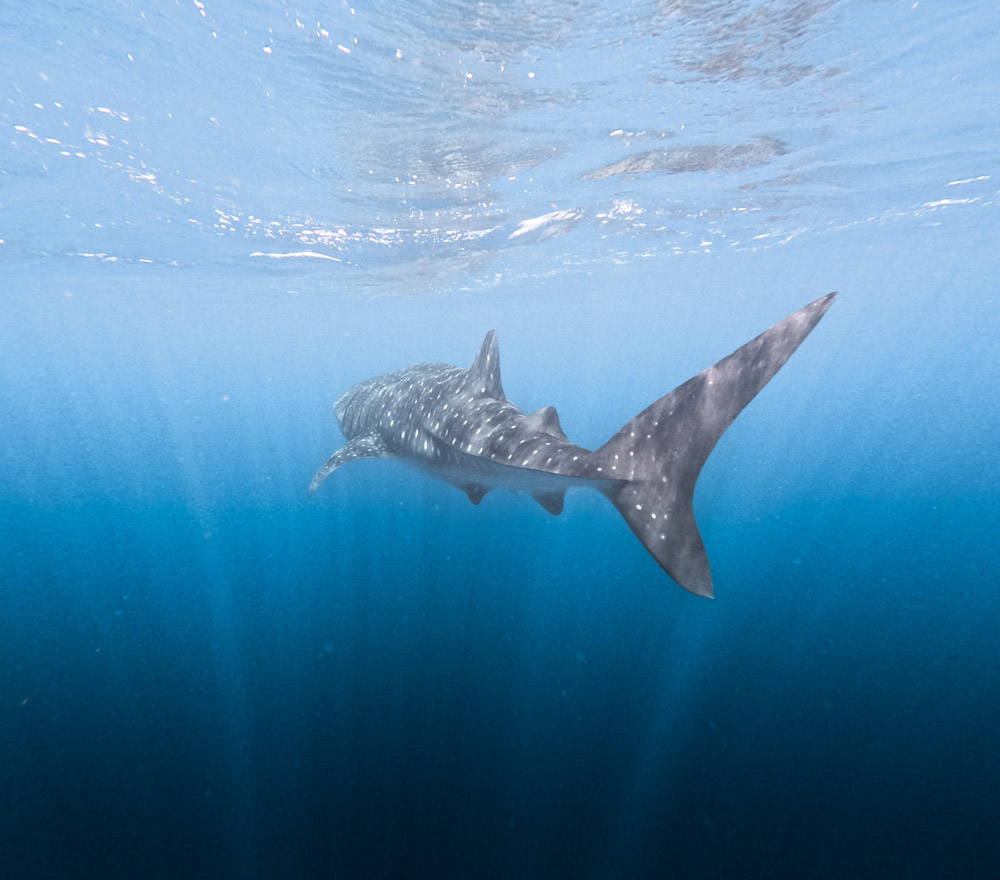
Nearly nine metres long, it moves towards us with extraordinary calm. There is no urgency in its movements, no sense of performance. It simply continues on its way, filtering plankton from the water as it has done for millions of years.
Later, we will remember the colours of Ningaloo Reef, the limestone ridges of Cape Range and a night spent beneath one of the clearest skies in Australia. Yet it is this moment – floating in open water beside the largest fish on Earth – that remains longest.
Hours earlier, before sunrise, we step aboard a boat on Western Australia’s remote North West Cape. We come to Ningaloo hoping to see a whale shark. What we find instead is a lesson in perspective.
Where the reef meets the outback
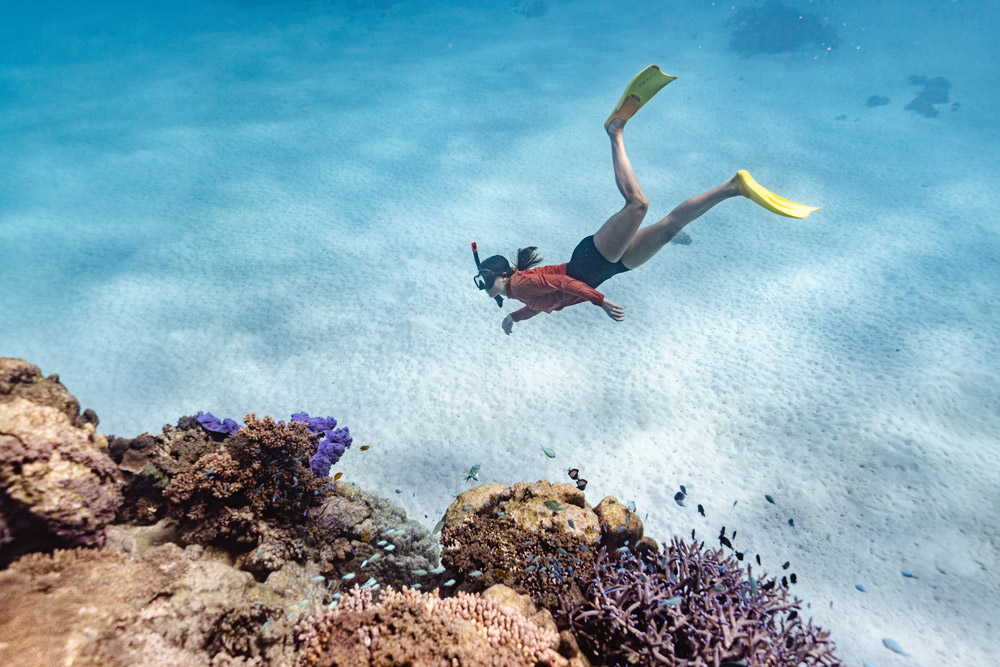
Ningaloo is unlike anywhere else in Australia. While the Great Barrier Reef dominates international attention, Ningaloo feels quieter and somehow more intimate. Stretching for more than 260 kilometres along Western Australia’s coast, it is the world’s largest fringing reef, running so close to shore that extraordinary encounters can begin only a few hundred metres from the beach.
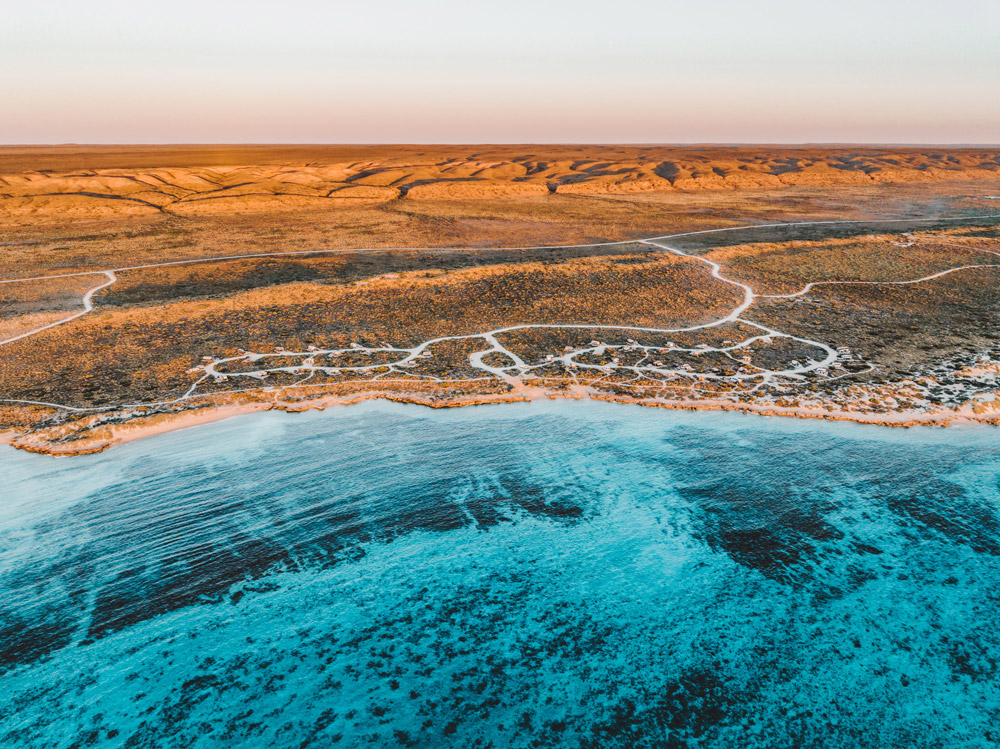
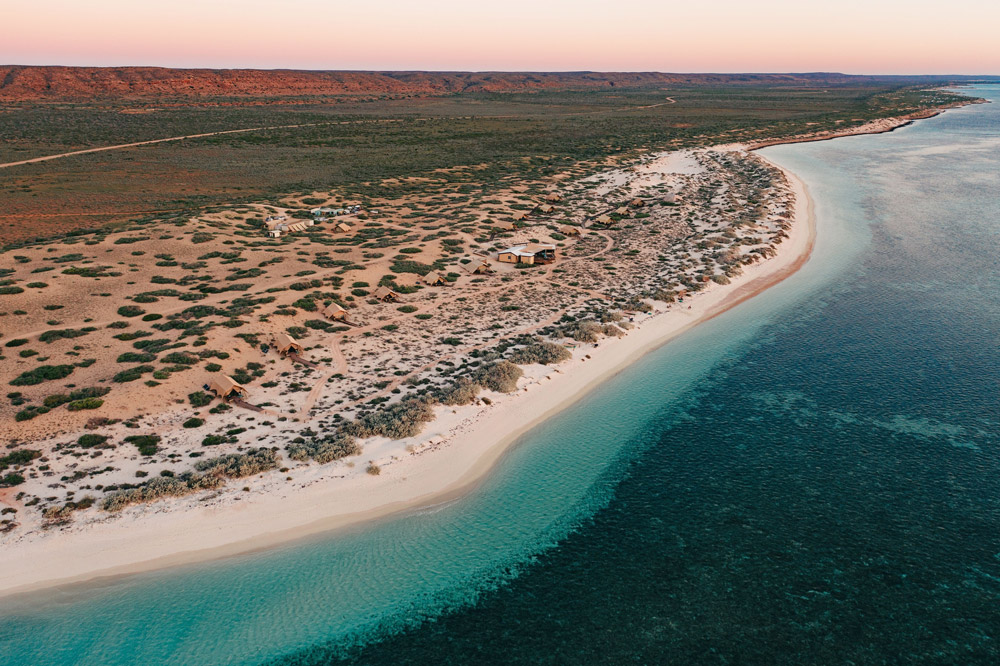
The contrast is striking. To one side lies the Indian Ocean, impossibly clear and endlessly blue. To the other stretches the arid landscape of the outback, where red earth, spinifex grass and limestone ranges absorb the heat of the day. Few places make such different worlds seem so closely connected.
The name Ningaloo comes from the language of the Traditional Owners of this coastline and is often translated as “promontory”. Today, the reef is recognised as a UNESCO World Heritage site, celebrated not only for its biodiversity but also for the unusual accessibility of its marine life.
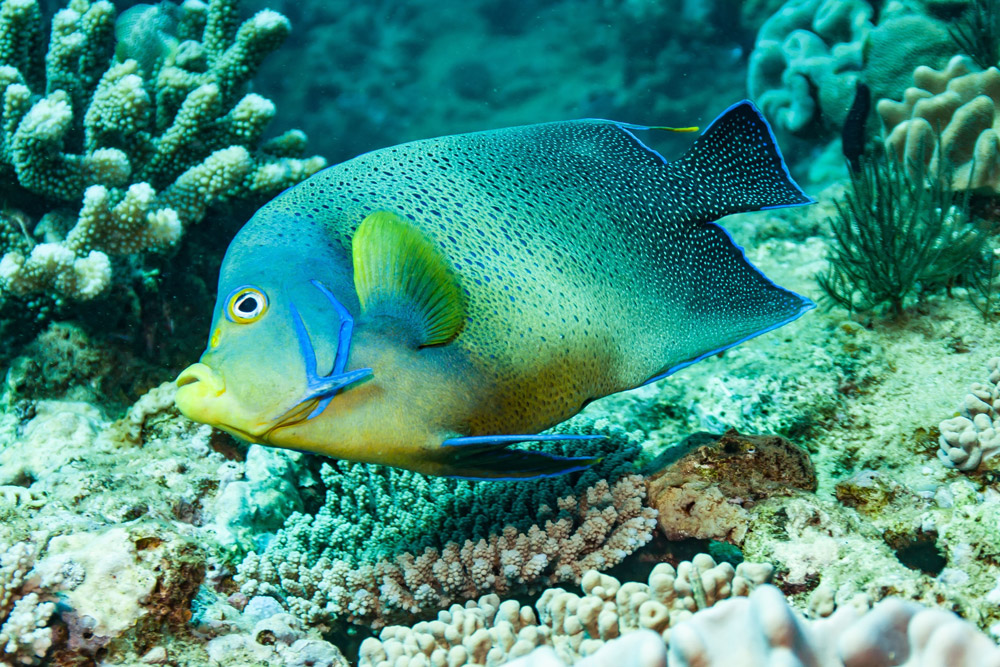
Ningaloo occupies a rare position in the marine world. Few reef systems on Earth combine such accessibility with such extraordinary biodiversity. Here, reef, deep ocean and continental shelf converge unusually close to shore, creating seasonal gatherings of whale sharks, manta rays, turtles, dugongs and migrating humpback whales within a remarkably compact stretch of coastline.
It is one of the reasons marine biologists often describe Ningaloo not simply as a reef, but as an ecosystem where several ocean worlds overlap. Manta rays glide through these waters like underwater birds. Green turtles rise from coral gardens to breathe before slipping beneath the surface once more. During the winter months, humpback whales migrate along the coast.
Yet between March and July, another visitor arrives. The whale shark. Although found throughout tropical and temperate oceans, whale sharks gather here in remarkable numbers, drawn by seasonal blooms of plankton that follow the annual coral spawning events. For travellers, it creates one of the most extraordinary wildlife encounters on Earth.
A whale shark can grow longer than a city bus and weigh more than 20 tonnes, yet nothing about it feels threatening. Despite its size, it moves through the water with an almost improbable gentleness. Perhaps that contrast is what makes the encounter so memorable. The largest fish in the ocean behaves less like a hunter than a drifting giant, seemingly indifferent to its own enormity.
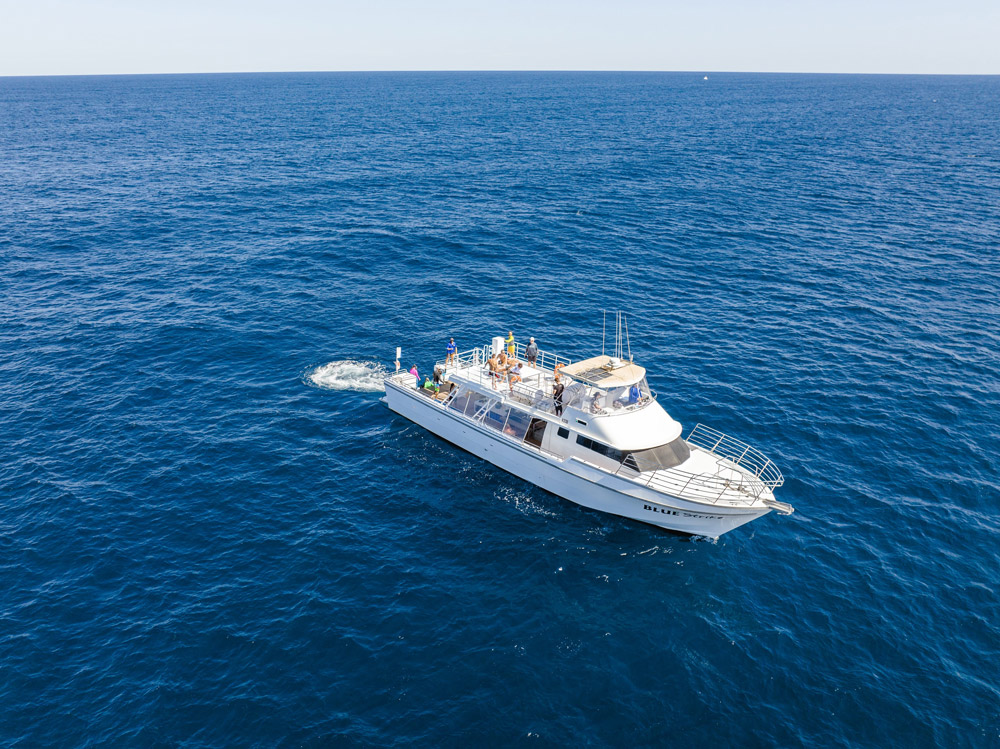
As our boat heads beyond the reef, the mood on board settles into a mixture of anticipation and patience. Fourteen passengers scan the horizon. Crew members move between conversations and equipment checks. Cameras are tested. Masks adjusted. Nobody speaks much about the possibility of not seeing a whale shark, yet everyone is aware of it. Wildlife encounters are never guaranteed. That uncertainty is part of the bargain. The ocean, after all, owes us nothing.
Searching for a giant
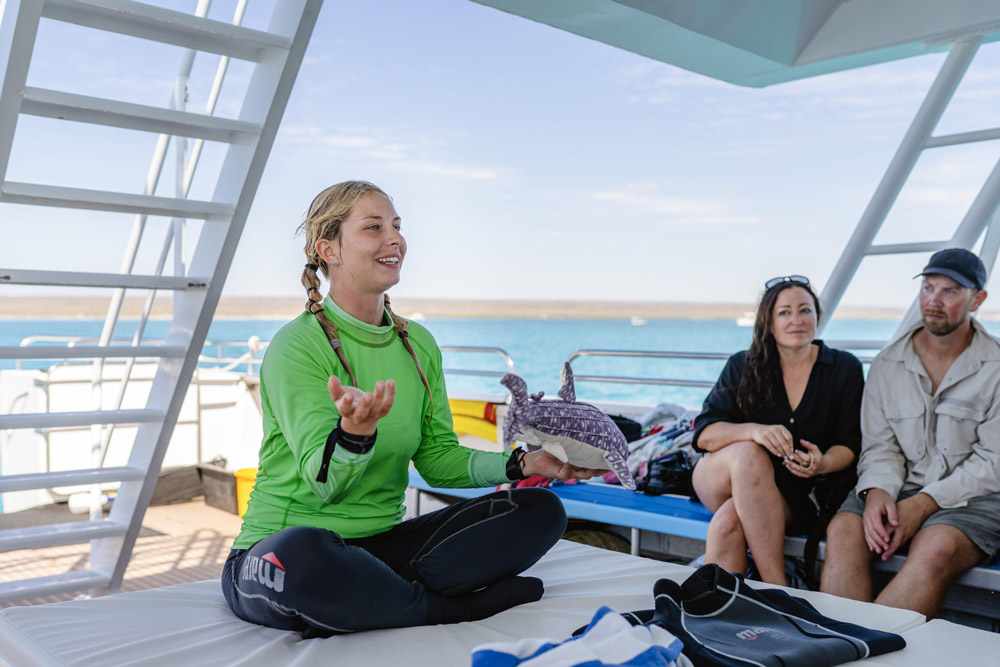
Our guide, Sue, has spent years working on these waters. She delivers the safety briefing with the calm confidence of someone who knows both the animals and the sea intimately. Later, while we wait for news from the spotter plane, she tells us she has guided hundreds of whale shark encounters. Yet every time a sighting comes through the radio, she still finds herself scanning the horizon. “I always want to be the first one to see it,” she says, smiling. The enthusiasm has survived the routine.
Keep at least five metres away. Stay clear of the tail. Never touch the animal.
And remember that we are visitors. “We are guests in their world,” she says. “Act like it.” For a while, nothing happens. The sea stretches endlessly in every direction. Frigatebirds circle overhead. Small swells roll in from the Indian Ocean, lifting the boat gently before lowering it again.
Then the radio crackles. A spotter plane circling high above has found something. The effect on board is immediate. Masks are adjusted, snorkels checked and cameras secured. The relaxed atmosphere gives way to concentrated anticipation. Somewhere beneath the surface, a whale shark is moving through the blue.
Sue slips into the water first, towing a buoy behind her. The first group follows. We wait. Then her voice comes through the radio. “Group B. Ready?” Moments later, we slide into the sea. The water wraps around us in cool silence. Sunlight filters through the surface above, breaking into shifting columns of light. At first there is only blue. Then comes the shadow. And then the giant.
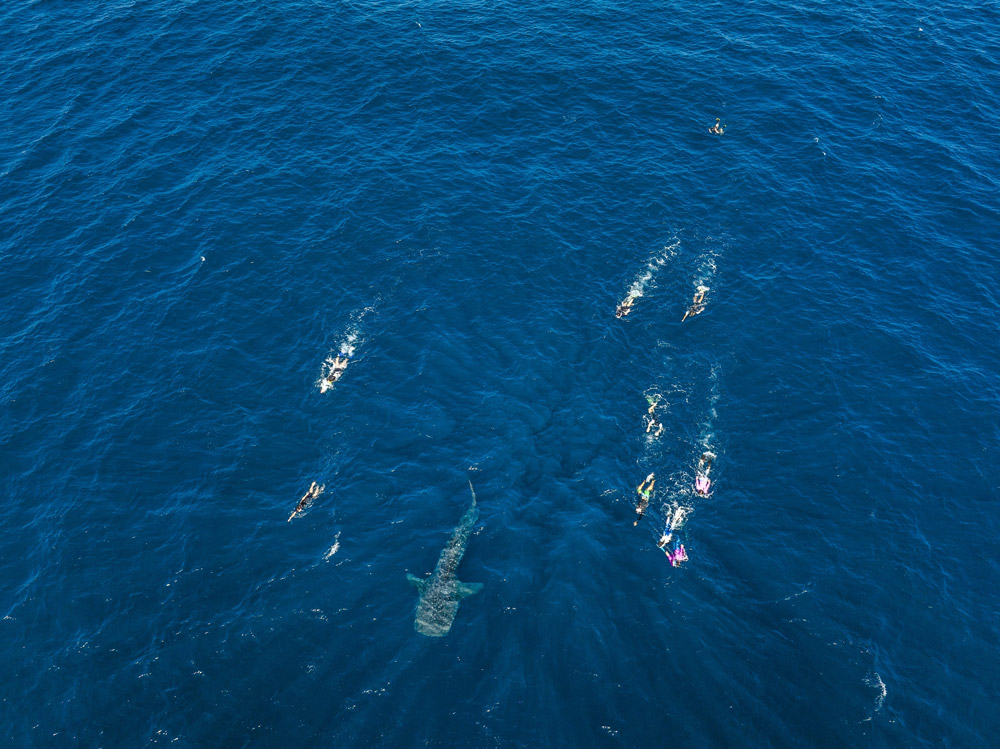
Eye to eye with the largest fish on earth
The whale shark moves towards us with extraordinary calm. Nearly nine metres long, it advances without urgency, filtering plankton from the water as it goes. Every movement appears effortless. Each sweep of its tail generates immense power, yet somehow remains graceful.
Beside us, one snorkeller raises a camera towards the approaching giant. Then he lowers it again. Later, back on the boat, he admits he never takes a single photograph. “I completely forget,” he says. Nobody laughs. We know exactly what he means.
The spots across its skin form a pattern as distinctive as a fingerprint. Scientists use these markings to identify individual animals, tracking their movements across oceans that span entire hemispheres.
Beside the whale shark, our sense of scale changes completely. The ocean suddenly feels larger. We feel smaller. For several minutes we swim alongside the giant, matching its pace as best we can. There is no interaction in the human sense. The animal acknowledges us no more than it acknowledges the fish moving around it. And somehow that makes the encounter even more profound. The whale shark is not performing for us. It is simply being what it has always been.
The spotted flank glides past. Sunlight dances across its skin. Tiny fish accompany it like satellites around a planet.
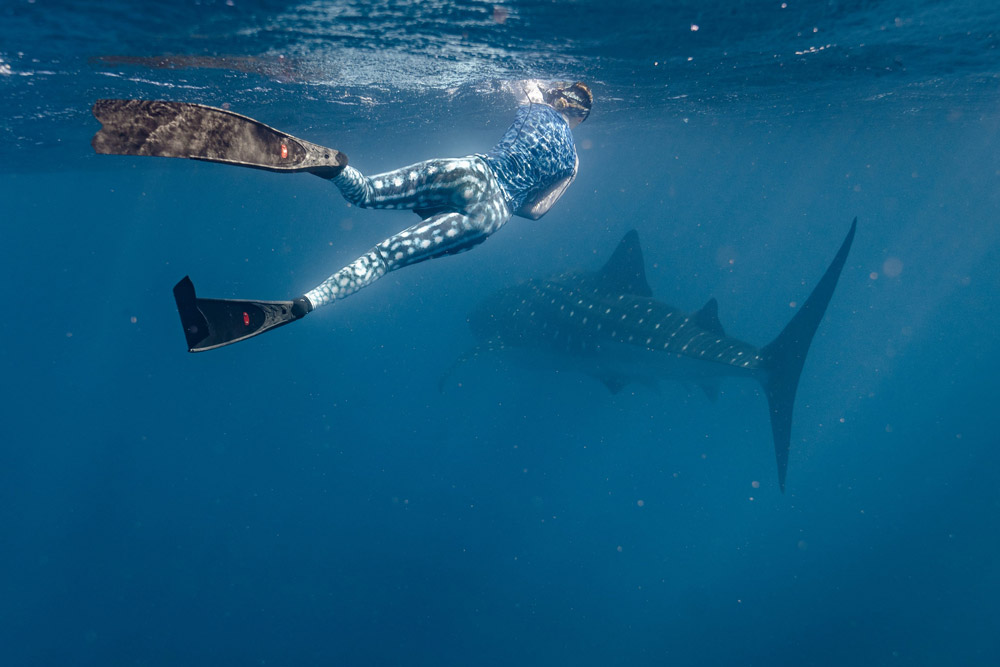
Then, gradually, the spots begin to fade and the outline softens until, within moments, the giant dissolves back into the blue water from which it emerged. The encounter lasts less than fifteen minutes. The memory will remain much longer.
A reminder from the ocean
Not long afterwards, the ocean reminds us who remains in charge. A call comes through from the spotter aircraft: a bull shark has been sighted nearby. The crew reacts immediately, calmly guiding everyone back towards the boat. There is no panic, only awareness. The encounter lasts barely a few minutes, yet it serves as a useful reminder that Ningaloo is not an aquarium. These waters remain resolutely wild. Back on deck, a traveller from Belfast sums up what many of us are thinking. “This is why we travel.” Nobody argues.
The Ningaloo reef beneath our fins
By the time we return to shore, the excitement surrounding the whale shark has settled into reflection. Ningaloo, we realise, cannot be reduced to a single species. The whale shark may be its most famous resident, but the reef itself is the foundation upon which everything else depends.
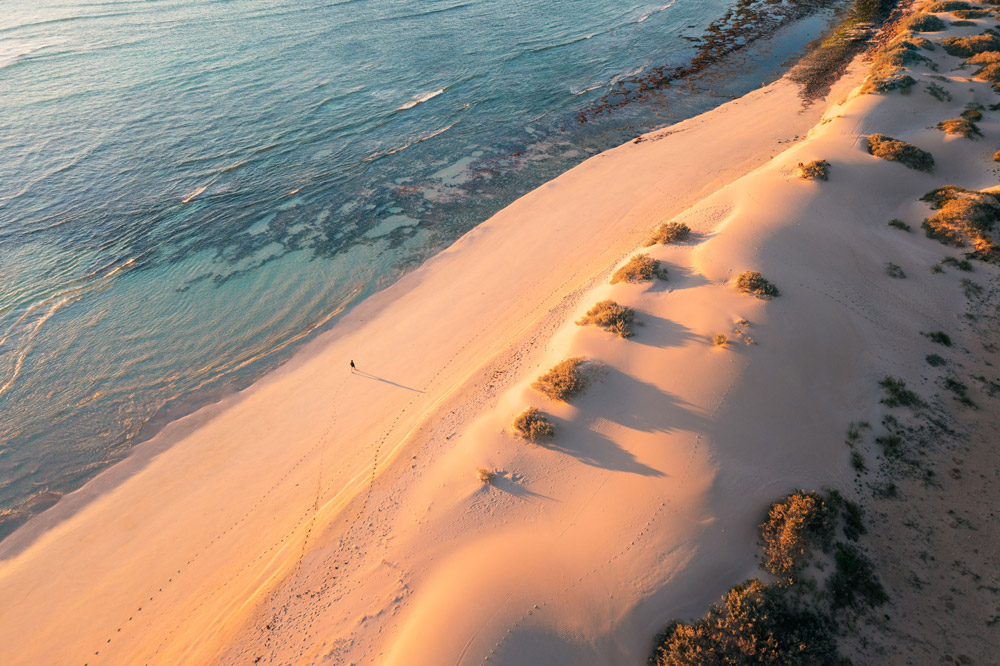
Unlike many coral ecosystems around the world, Ningaloo remains astonishingly accessible. A short walk from shore is often enough to reach thriving coral gardens. We slip into the water once more.
Below us, the reef unfolds in intricate detail. Hard corals branch towards the sunlight. Schools of fish move through the water with the coordination of a single organism. Parrotfish scrape noisily at the reef while tiny damselfish dart between coral heads. The longer we drift, the more life reveals itself. A green turtle surfaces for air before descending once again into the coral. Later, a manta ray glides silently past, its wing-like fins carrying it through the water with impossible elegance. It begins to feel as though Ningaloo is quietly revealing its greatest hits.
Yet the longer we remain in the water, the less we find ourselves searching for particular animals and the more we simply watch. A reef is not a collection of highlights. It is a living system. And the longer we drift above it, the more that becomes apparent.
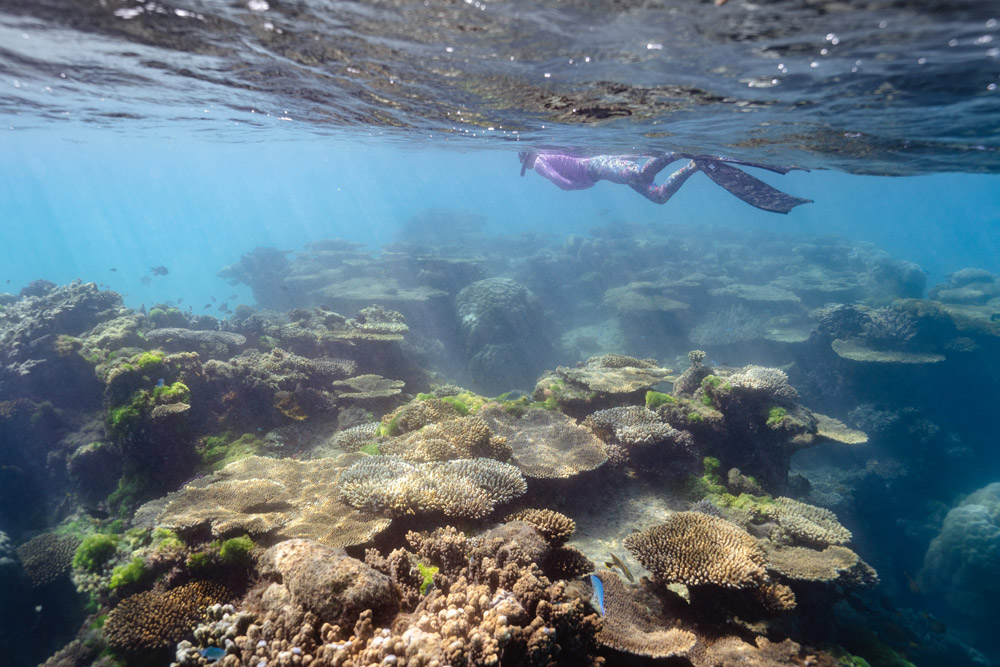
Small fish shelter among coral branches. Larger predators patrol the edge of the drop-off. Sea cucumbers lie motionless on the seabed while clouds of baitfish shift shape in response to unseen signals.
Everything appears connected. Nothing exists in isolation. The longer we observe, the more the reef resembles a city: complex, layered and constantly in motion.
Where two worlds collide
Above the water, the landscape is no less remarkable. The limestone ridges of Cape Range National Park rise abruptly from the coastal plain, their rugged forms creating a striking contrast to the brilliant blues offshore. Deep gorges cut through ancient rock. Kangaroos move through the scrub. Ospreys patrol the coastline.
Here, the Australian outback and the Indian Ocean meet in a collision of colour and geology that feels almost improbable. As afternoon fades, the harshness of the day softens. The sea turns silver. The ranges glow amber. And slowly, the landscape prepares for its final performance.
Beneath the stars
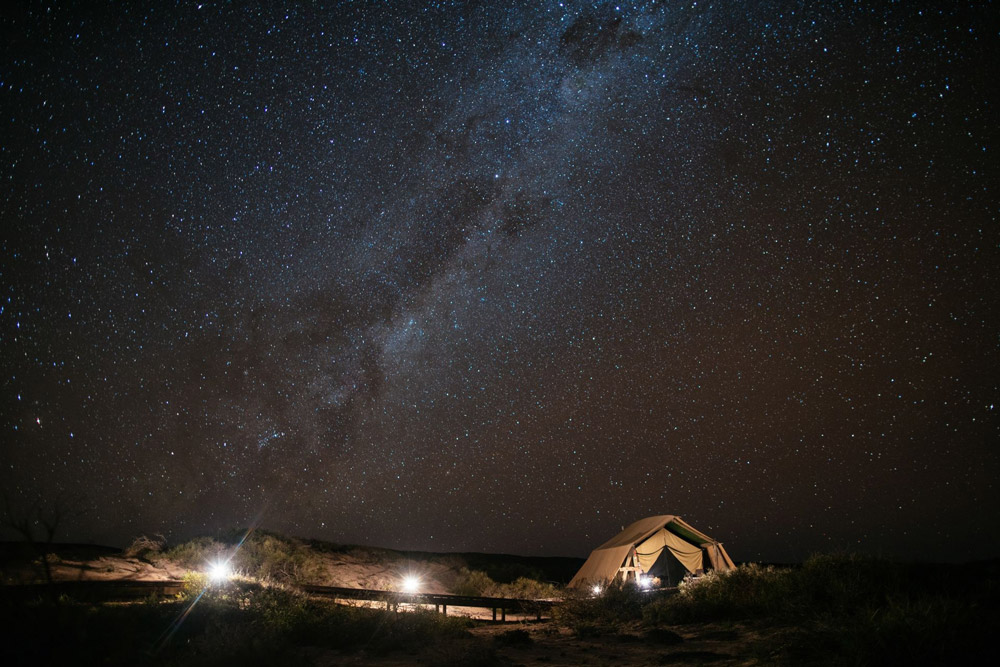
The remoteness that protects Ningaloo by day transforms it after dark. With little artificial light and exceptionally clear air, the night sky becomes a spectacle in its own right. Around a campfire, stories from the day begin to circulate.
Someone admits they became so excited upon seeing the whale shark that they briefly forgot how to breathe through a snorkel. Another laughs at having drifted so far while staring at the giant’s spotted flank that a guide had to wave them back towards the group. The stories are amusing, yet they reveal something else as well. None of us expected the encounter to feel quite so moving. Around the fire, conversations drift naturally back to the whale shark. Curiously, nobody talks about its size first. Instead, people describe its calmness. Its patience. The absence of fear. As though the encounter was memorable not because the animal was enormous, but because it seemed entirely comfortable occupying its place in the world.
Later, wrapped in swags beneath a sky dense with stars, we watch the Milky Way stretch from horizon to horizon. For Aboriginal peoples, these skies have long served as maps, stories and connections between generations. The thought adds another layer to the day. Long before tourists arrive to swim with whale sharks, people are already reading meaning in this landscape.
Long before cameras, wetsuits and spotter planes, these waters sustain life and inspire stories. The stars remind us that we are not the first people to stand here in wonder. Nor will we be the last.
What the sea leaves behind
The next morning, we leave Ningaloo as the first light spreads across the Indian Ocean. The sea appears unchanged. Calm and secretive. Somewhere beneath the surface, whale sharks continue their slow passage along the reef, following rhythms that existed long before tourism, long before roads crossed the outback and long before people arrived here looking for wonder.
We think back to the spotted giant disappearing into the blue. Not the size of it. Not even the rarity of the encounter. What lingers is the indifference. The whale shark never acknowledges us. It does not alter its course, slow its pace or offer the illusion of connection. For a few brief minutes, we enter a world that continues perfectly well without our presence.
In an age when so much travel revolves around access, interaction and experience, there is something unexpectedly powerful about that. Ningaloo offers no guarantees. It offers something rarer. The chance to witness a life unfolding entirely on its own terms. The whale shark slips beneath the surface. The ocean closes behind it.
Above, the reef continues its ancient work. Turtles drift across coral gardens. Manta rays patrol the drop-offs. Seasonal currents carry plankton through the blue, just as they have for millennia. And somewhere beyond the edge of sight, the spotted giant keeps swimming. The story continues without us.