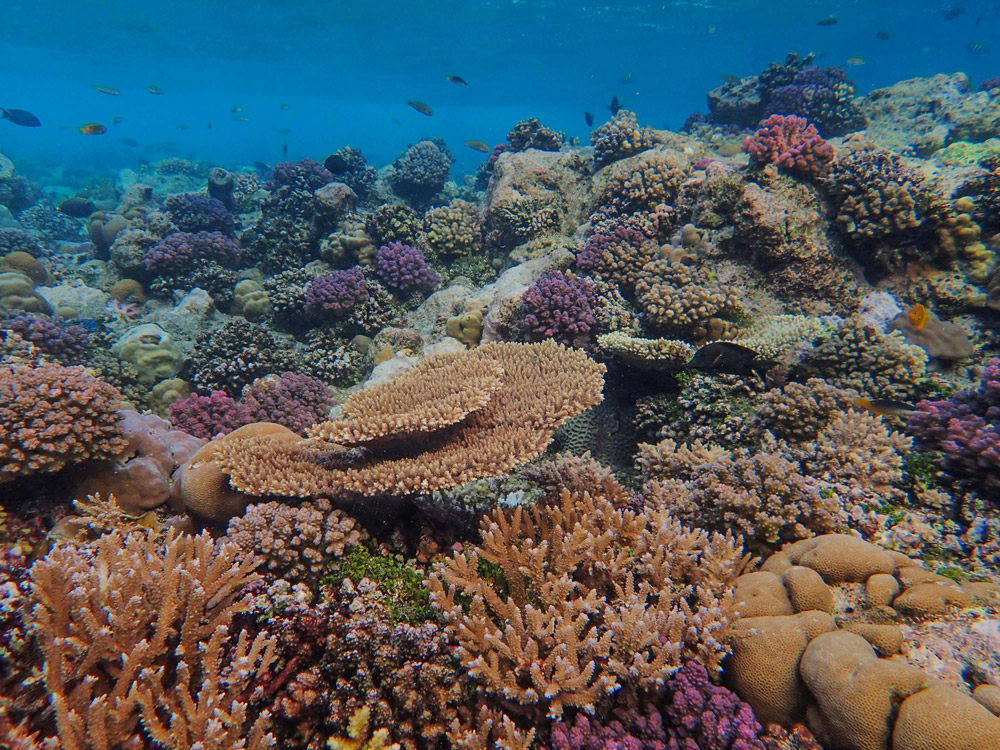
On Curaçao, an island celebrated for its turquoise waters, a quieter story unfolds beneath the waves. It’s one measured not in tourist seasons, but in decades.
We slip beneath the Caribbean Sea just after sunrise, when the water is at its calmest and the coastline still belongs to fishermen, seabirds and divers. From above, the sea off Curaçao appears impossibly clear. Bands of aquamarine dissolve into deeper shades of blue, revealing the faint outlines of reefs below. It looks untouched. Only when we descend does the story begin to change.
At first there is colour. Schools of blue tang drift across the reef. Soft corals sway gently in the current. Parrotfish scrape noisily at limestone, their feeding audible even underwater. Sunlight filters through the surface in shifting ribbons, illuminating the seabed in flashes of gold.
Then, gradually, the palette shifts. Some sections of reef appear fractured. Others seem faded, their structures interrupted by patches of bare substrate. There is no dramatic moment of collapse. No obvious dividing line between healthy and damaged. Instead, there is a subtle sense of absence.
We hover above the reef, suspended between beauty and loss, aware that what we are seeing is not unique. Across the Caribbean, coral ecosystems have declined sharply in recent decades, affected by warming seas, pollution, disease and coastal development. Around Curaçao, live coral cover has fallen significantly since the 1970s.
Giving coral a second chance
Yet beneath us, another story is unfolding. A diver appears from the blue. She moves with practised ease, carrying a rectangular frame no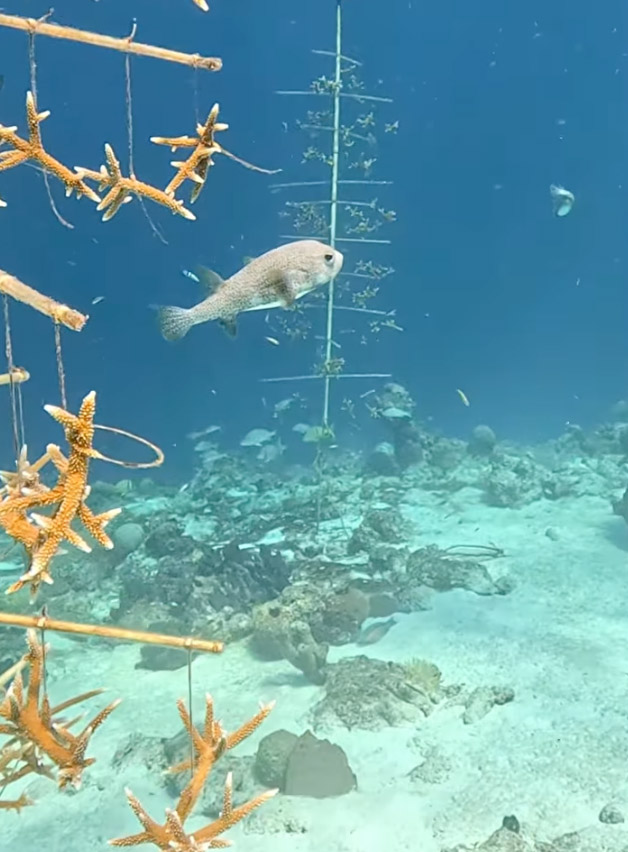 larger than a crate. Attached to it are dozens of coral fragments, each barely bigger than a hand. She signals for us to follow.
A short distance away, similar structures stand anchored on the sandy seabed. At first glance they appear almost industrial and functional rather than beautiful. But as we move closer, their purpose becomes clear. These are coral nurseries.
Back on shore, we meet Laura, a marine scientist with the Branch Coral Foundation. She has spent years studying reef ecosystems around Curaçao and speaks with the calm precision of someone accustomed to thinking in decades rather than news cycles.
“Coral doesn’t recover quickly,” she tells us. “What we’re trying to do is give it a head start.”
Broken fragments that might otherwise die are collected and attached to nursery structures in shallow water. There they are monitored, cleaned and protected from algae and sediment. After months — sometimes years — they are transplanted back onto degraded reef.
Laura is careful not to oversell the process. “It isn’t a quick fix,” she says. “And not everything survives. But survival rates are much higher than if we leave fragments where they fall.” The distinction feels important. In an age of grand environmental promises, reef restoration remains remarkably modest. It deals not in miracles, but in probabilities.
How coral nurseries help rebuild reefs
The following morning, we join the Branch team for an outplanting operation. On the dock at dawn, bamboo poles lie stacked beside steel rods, ropes and bags filled with cable ties. Nothing about the equipment suggests cutting-edge conservation. It looks more like the contents of a hardware store than a marine laboratory. Yet this is how reefs are rebuilt.
At Porto Mari, Kokomo and Sandals, corals grown in nurseries have finally reached a size where they can be returned to the reef. The process is known as outplanting.
At Porto Mari and Kokomo, we swim a considerable distance before reaching the restoration sites. At Sandals, a small boat shortens the journey. Beneath us, the reef slopes away into blue water while nursery structures sway gently in the current.
The hidden life of coral
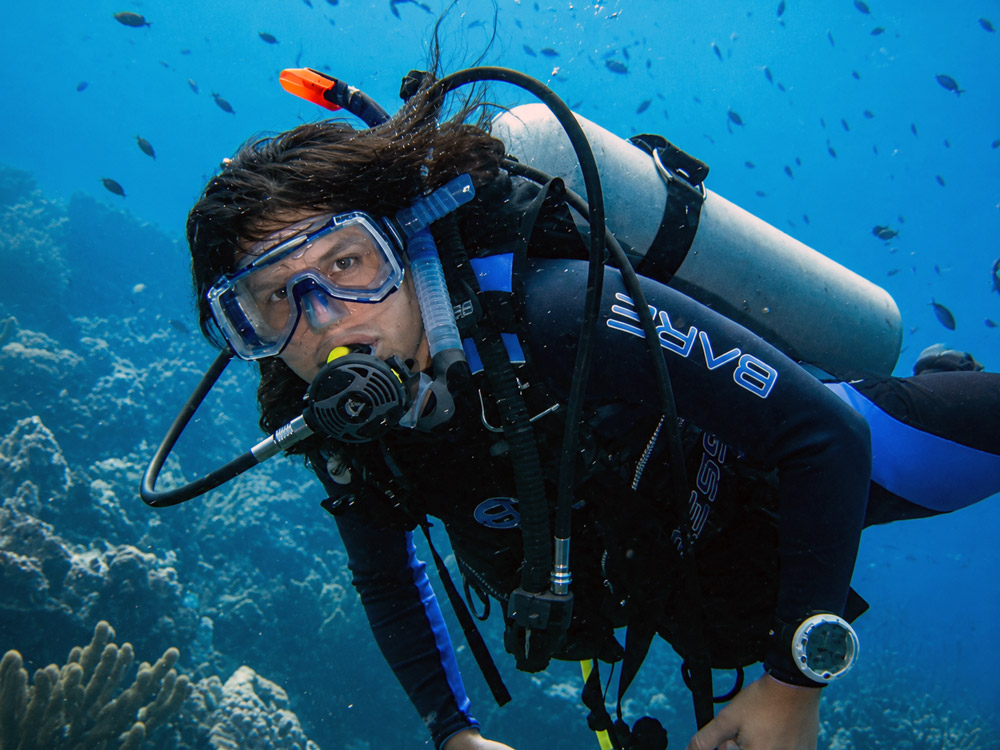
Each fragment has already survived months of careful cultivation. Now comes the next step. As we work, fastening young colonies onto carefully selected sections of reef, Laura explains what exactly we are handling.
“Most people think coral is a plant,” she says.
It is one of the most common misconceptions in marine conservation. Corals are animals. More specifically, they are colonies of tiny marine animals called polyps. Each possesses a mouth surrounded by stinging cells used to capture microscopic prey and defend itself. Together, thousands of these creatures create structures large enough to support entire ecosystems.
What appears immobile is anything but simple. Inside the tissue of every healthy coral lives an even smaller partner: microscopic algae known as zooxanthellae. These algae provide nutrition through photosynthesis and are responsible for much of the reef’s extraordinary colour. Without them, coral would appear almost transparent.
Why Caribbean reefs are under pressure
Their departure explains one of the defining environmental images of our time: coral bleaching. When sea temperatures become too high, corals expel their algae. The brilliant colours disappear, exposing the white skeleton beneath. More importantly, the coral loses its primary food source. A bleached coral can survive for a time. Not indefinitely.
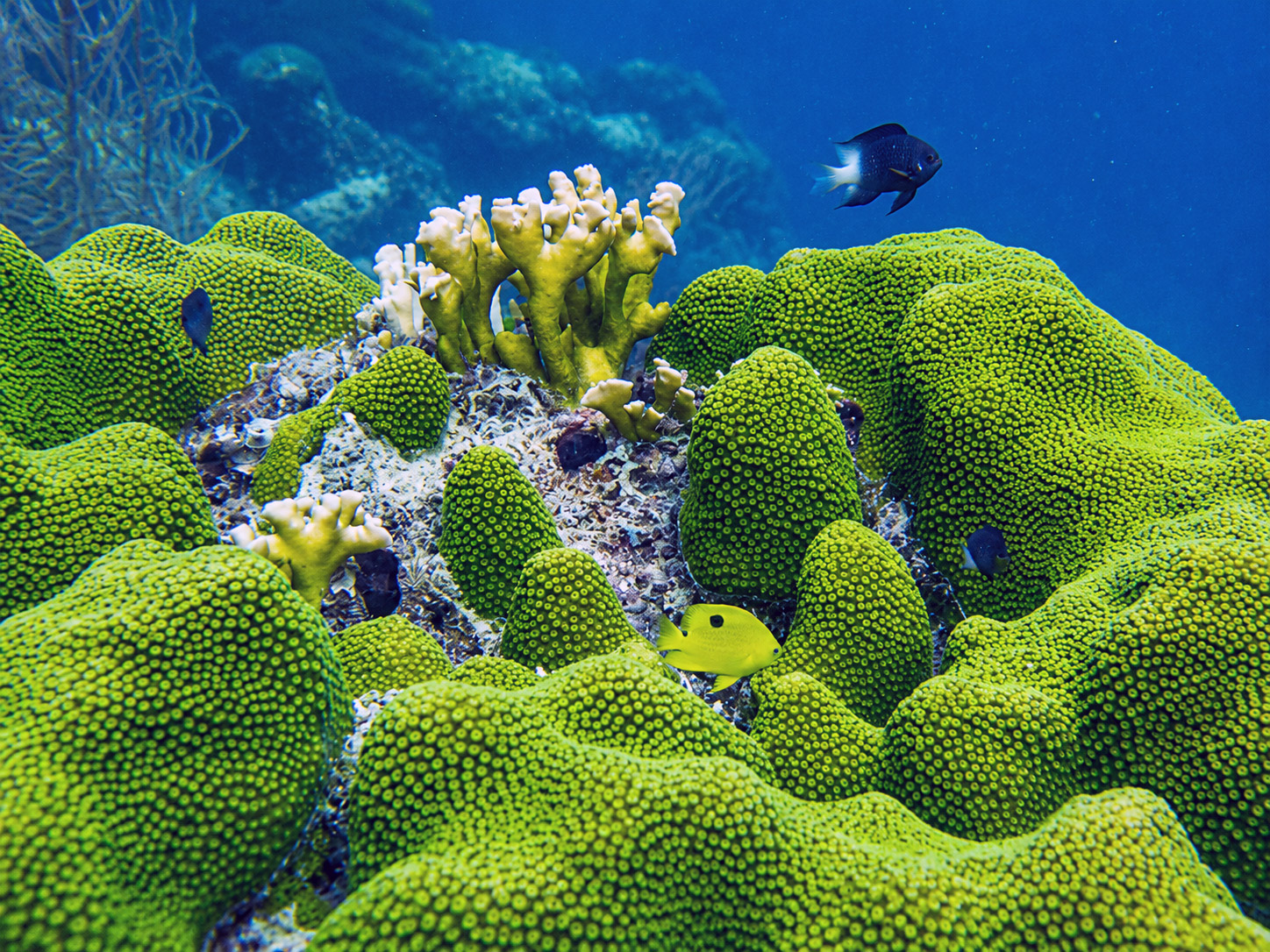
The consequences are visible throughout the Caribbean. Once, staghorn coral dominated reefs across the region. Its branching structures provided shelter for fish, strengthened reef systems and formed the backbone of entire marine communities.
Today, more than ninety per cent of those populations have disappeared. The decline is so severe that restoration projects throughout the Caribbean increasingly focus on helping the species recover. It is also where Branch begins its conservation work.
Despite years of successful restoration, staghorn coral remains under threat. Climate change continues. Disease continues. The ocean continues to warm. Which makes every surviving fragment matter.
As we secure another young colony to the reef, a small branch snaps unexpectedly in the current. For a moment, we freeze. Laura simply retrieves it and turns it carefully in her hand. “That’s all right,” she says. She points towards a nearby nursery. “Most reefs begin with fragments.” Nothing here grows quickly. Yet nothing here is entirely lost either.
Beyond the reef: Curaçao above water
Back on land, Curaçao unfolds at an altogether different pace.
In Willemstad, pastel façades line the waterfront in shades of ochre, turquoise and coral pink. Ferries cross St Anna Bay while conversations drift from cafés onto shaded pavements. Dutch gables rise above Caribbean colours, reflecting centuries of trade, migration and cultural exchange.
The sea is never far away. From almost every street, it remains visible. Sometimes as a glimpse between buildings. Sometimes as a broad expanse of blue stretching towards the horizon. It shapes nearly everything here. Not only the landscape, but the economy as well. Tourism, diving, fishing and coastal development all depend on the same waters. Sometimes comfortably. Sometimes not.
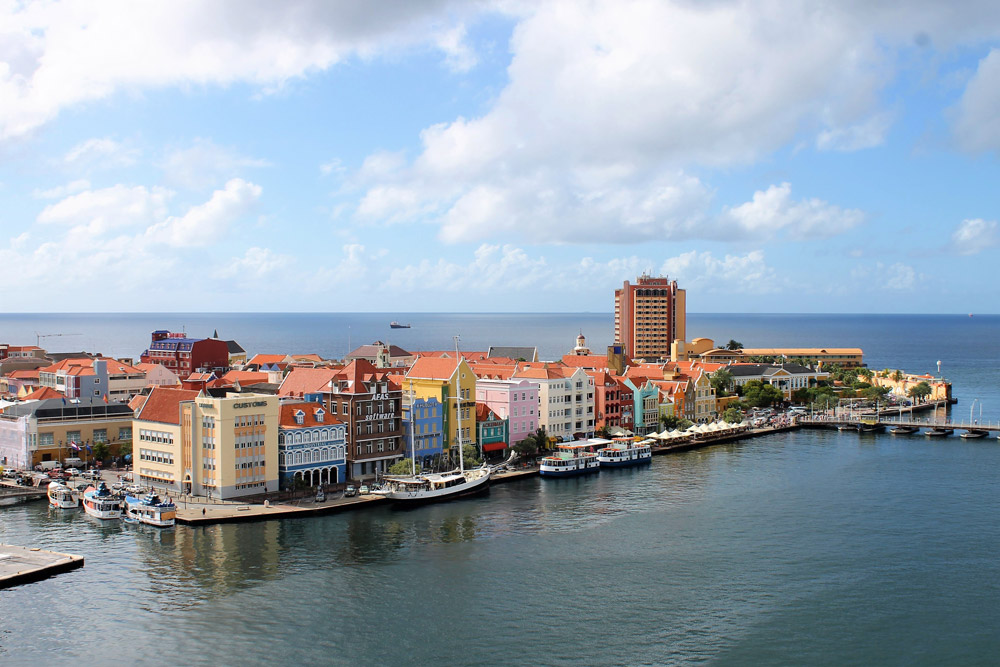
We meet Miguel, a dive instructor who has spent more than three decades guiding visitors along Curaçao’s coastline. He remembers the reefs differently. “There was more structure,” he tells us. “More coral. More fish. You didn’t have to search for it.” He pauses and watches a boat leave the harbour. “Now you have to look more carefully.”
Then he smiles.
“But it’s still here.”
That final sentence carries more weight than the first. Because optimism on coral reefs has become a cautious thing.
Looking for signs of recovery
The following day, we join a guided shore dive, one of Curaçao’s distinctive pleasures. Unlike many Caribbean destinations, much of the island’s reef can be reached directly from the beach. Within minutes of entering the water, the seabed drops away. Before we descend, our guide offers a simple instruction. “Look for what’s growing.”
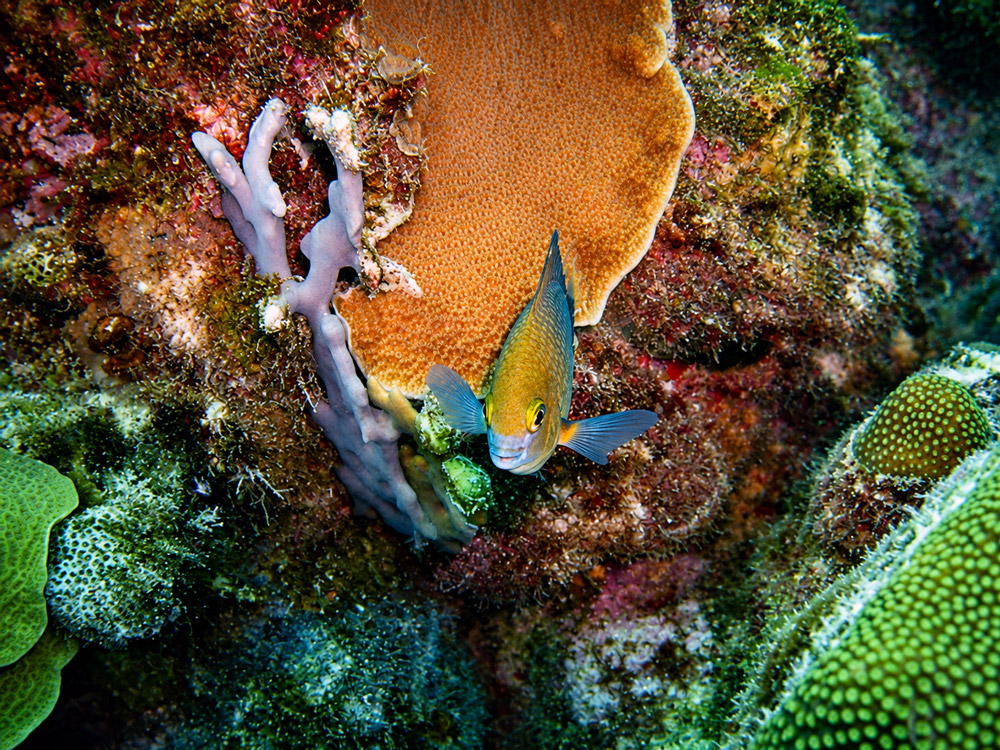
Underwater, those four words alter our perspective. Instead of searching for what is missing, we begin noticing what is emerging. Small clusters of transplanted coral cling to rock surfaces. Pale growth rings mark recent expansion. Tiny fish dart between the branches, sheltering as though the reef has always been there.
Not all of it survives. Some fragments bleach. Others are damaged by storms or disease. The process remains uneven and uncertain. Yet in places, it is working.
Fighting coral disease with innovation
Later, Laura tells us about another challenge facing Curaçao’s reefs: the grooved brain coral. Once widespread throughout the Caribbean, this boulder-shaped reef builder has suffered catastrophic losses from Stony Coral Tissue Loss Disease.
In 2025, Branch launched a pilot programme to help reverse that decline. Using an innovative technique known as microfragmentation, scientists divide surviving corals into tiny pieces and cultivate them under controlled conditions. Some individuals appear naturally resistant to the disease.
Those are the corals given a second chance. The early results are encouraging. More than 500 square metres of reef have already been restored around Curaçao. Ten active nurseries operate around the island, capable of housing around 6,500 coral fragments. Roughly twenty outplanting events take place each year.
A conservation success story in the making
Most remarkable of all is the survival rate. Around ninety per cent. Laura mentions the figure almost casually. For a moment, we wonder whether we heard correctly.
In conservation, ninety per cent feels extraordinary. The number lingers in our minds long after the conversation ends. Because it represents something larger than coral. Not certainty. Possibility.
Hope beneath the surface
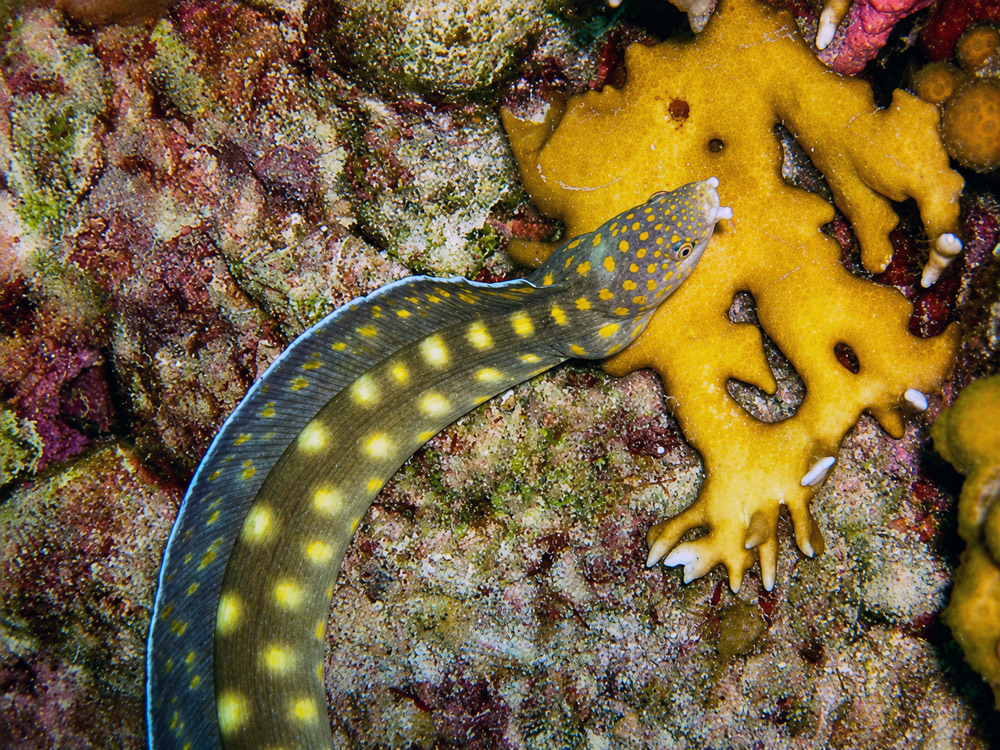
On our final afternoon underwater, the sun hangs low over the Caribbean. Light enters the sea at an angle, illuminating the seabed in long golden shafts. Fish move through the beams like drifting fragments of glass.
The nursery structures remain where we first found them. Steady. Unassuming.
A diver moves slowly between them, checking lines, cleaning growth, making small adjustments. There is no spectacle. No triumphant conclusion. Only work.
When we surface, Curaçao looks much as it always does: bright, warm and inviting beneath the late-afternoon sun. We think about the fragments anchored carefully to those underwater frames. Easy to overlook. Easy to underestimate. Given enough time, some will become colonies. Some colonies will become reef. And reef, in turn, will become habitat, shelter and structure for countless other forms of life.
As the coastline drifts past on the journey back to shore, we glance down one final time. Below us, newly planted staghorn corals sway gently in the current. No larger than a hand.
Not yet a reef.
But no longer just a fragment.