The soul of the Thai capital still lingers in Phra Nakhon, where birdsong drifts through narrow lanes, Muay Thai gyms echo between family homes and traditions continue not as performances for visitors, but simply as part of everyday life.
Between Sam Yot and the Chao Phraya River lies a side of Bangkok that most visitors never encounter. Not because it is hidden, but because it has never sought to be found. In the narrow lanes of Phra Nakhon, birdcages hang above the pavements, children practise Muay Thai between rows of modest houses and flower sellers open their stalls just as their parents and grandparents did before them.
Together with Nuch, who grew up in Bangkok’s Old City, we wander through a neighbourhood where history is not preserved behind glass but remains woven into daily life. What begins as a walk through Old Bangkok gradually becomes a search for the memory of a city and the people who quietly keep it alive.
Where Bangkok began
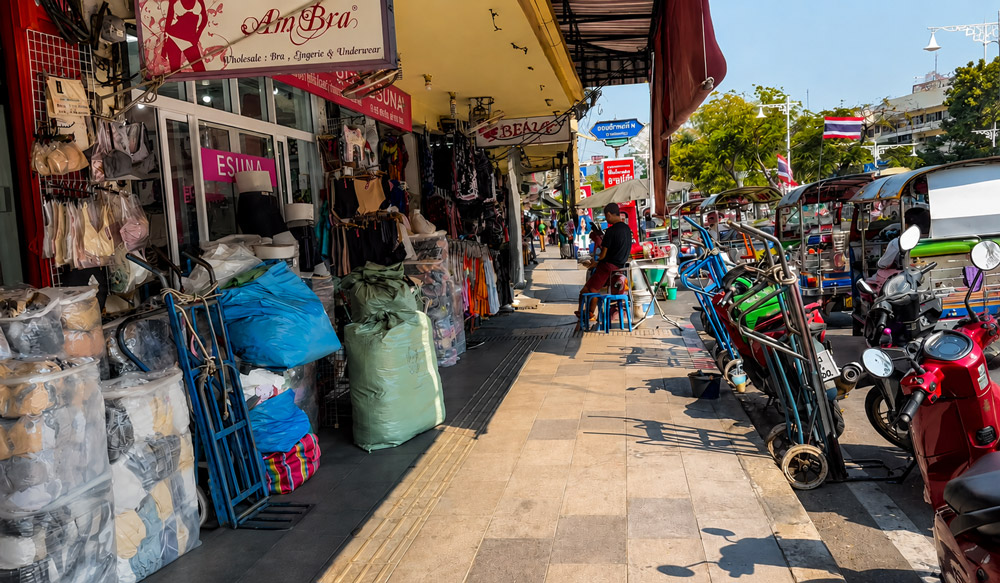
On a humid morning, we step out of Sam Yot MRT Station. Around the exit, Bangkok unfolds with the familiar energy of a working day. Street vendors prepare breakfast, scooters weave between taxis and commuters disperse with effortless purpose in every direction at once.
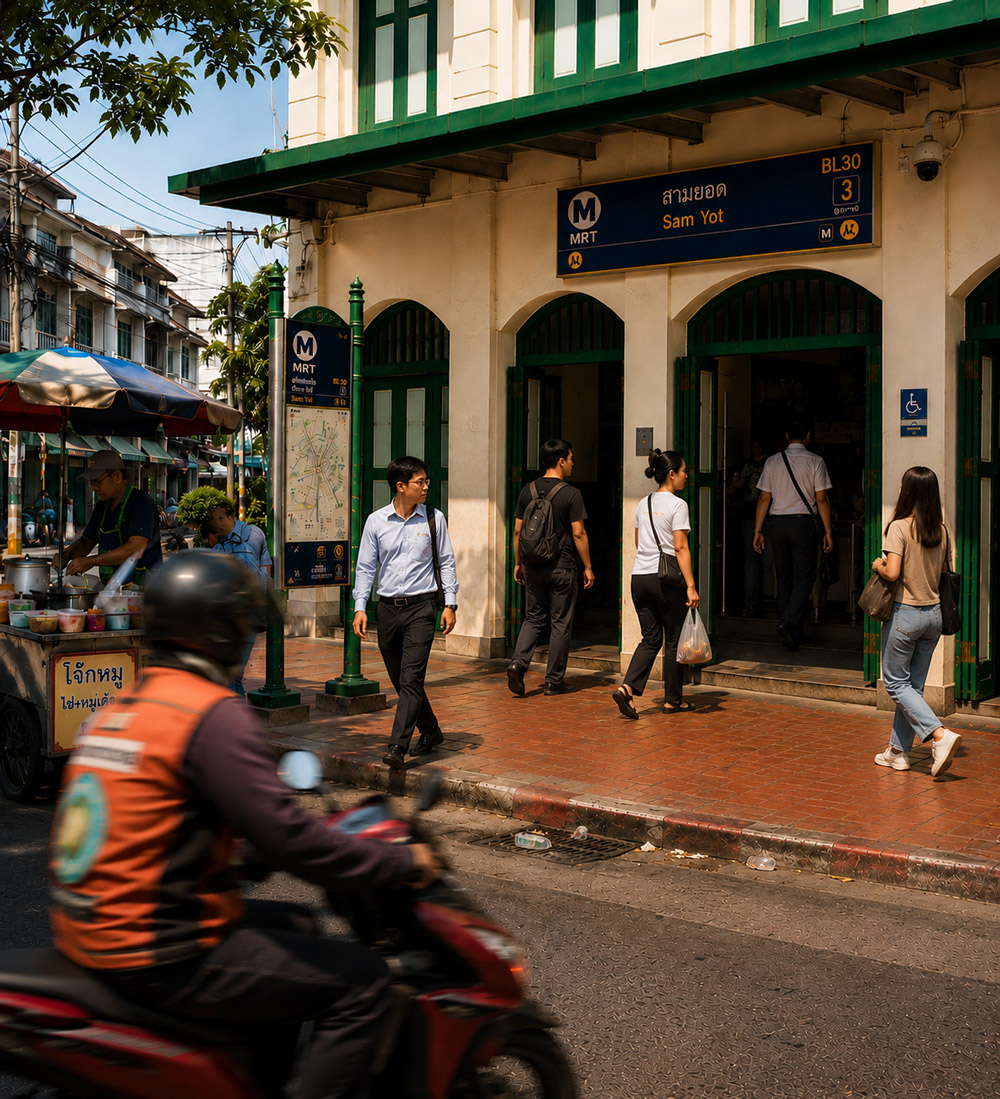
At first glance, little suggests that this was once the commercial heart of Siam. Long before Bangkok expanded towards its modern business districts, trade, wealth and commerce flowed through these streets. Chinese merchants settled close to the river, craftsmen built workshops behind their shopfronts and bustling markets connected the royal quarter with the rest of the city.
Nuch grew up in Phra Nakhon and knows these streets not as a collection of historical facts but as a landscape of memories. “Many people think they know Old Bangkok,” she says as we turn into a narrow side street. Behind us, the traffic noise from Sam Yot fades into the distance. “Usually they only know the monuments.”
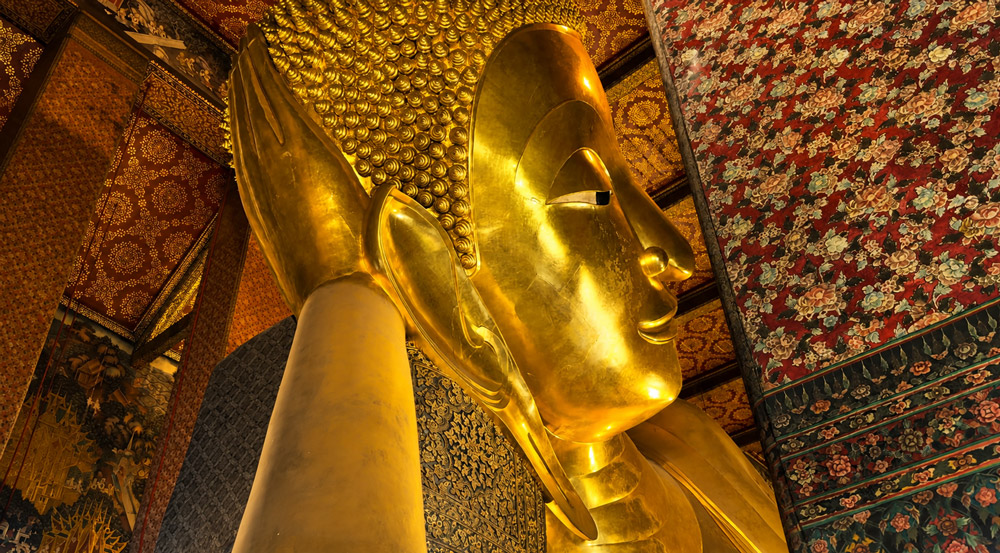
She is referring to the Grand Palace, Wat Pho and Wat Arun. Places that attract millions of visitors every year. But the Bangkok she wants to show me lies in the spaces between those celebrated landmarks.
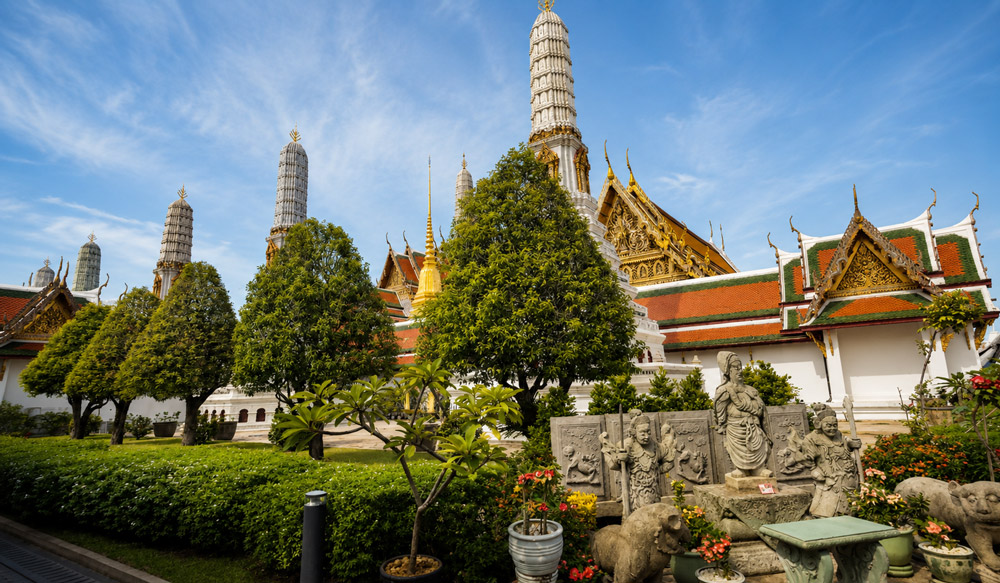
It lives in the narrow alleys, behind weathered façades and wherever residents quietly go about their daily routines, largely unaware that they are part of the city’s living history.
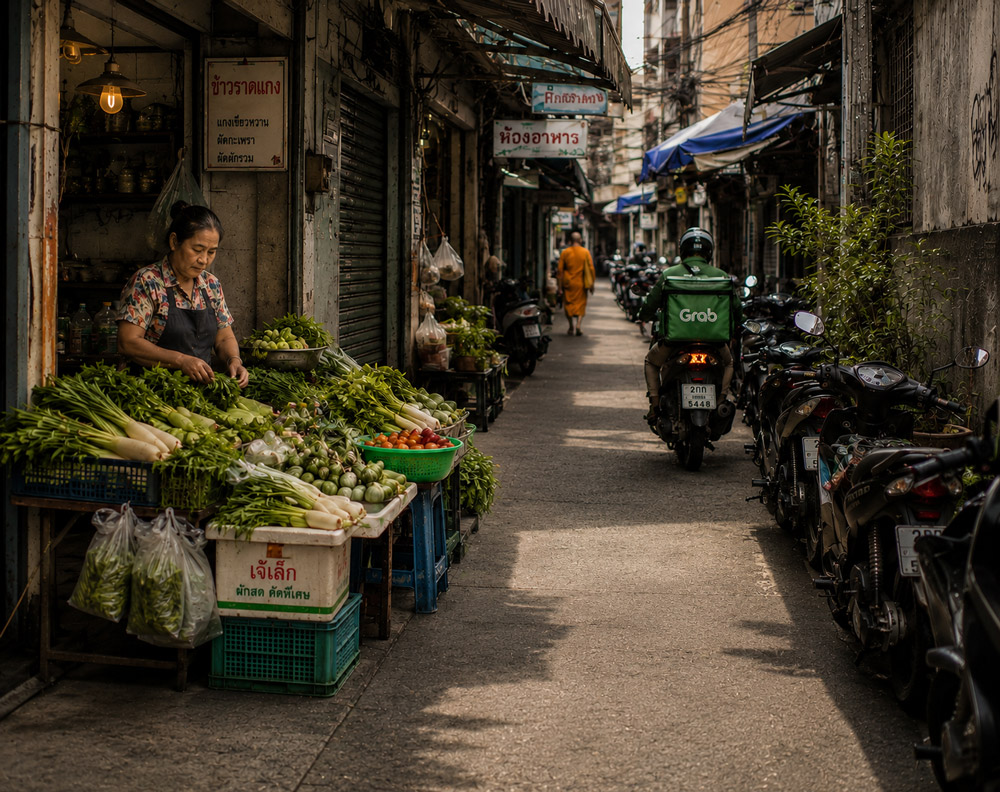
As we continue, the streets become narrower. The aroma of frying garlic drifts from an open kitchen. An elderly woman sorts vegetables outside her doorway while a monk glides silently past. A delivery rider eases his scooter between rows of parked motorbikes. This is no carefully curated heritage quarter. It is simply a neighbourhood. And for that very reason, it feels far more authentic than many historic districts that seem constantly conscious of their own past.
The men and their songbirds
The first thing that changes is the sound. Not because the traffic disappears entirely, but because something else rises above it. Between the old façades comes an unexpected chorus of birdsong, floating above the rumble of scooters before settling among weathered balconies, tangled electricity cables and faded awnings. Beneath those awnings hang dozens of birdcages. Some are plain and functional, while others are elaborately carved, displaying generations of skilled craftsmanship.
Their owners sit below on plastic chairs, discussing the performance of their birds with the concentration of coaches analysing a championship final. To outsiders they are pets. To the men of this alley, they are athletes. “Many of these birds compete in singing contests,” Nuch explains. “A champion can be worth a surprising amount of money.”
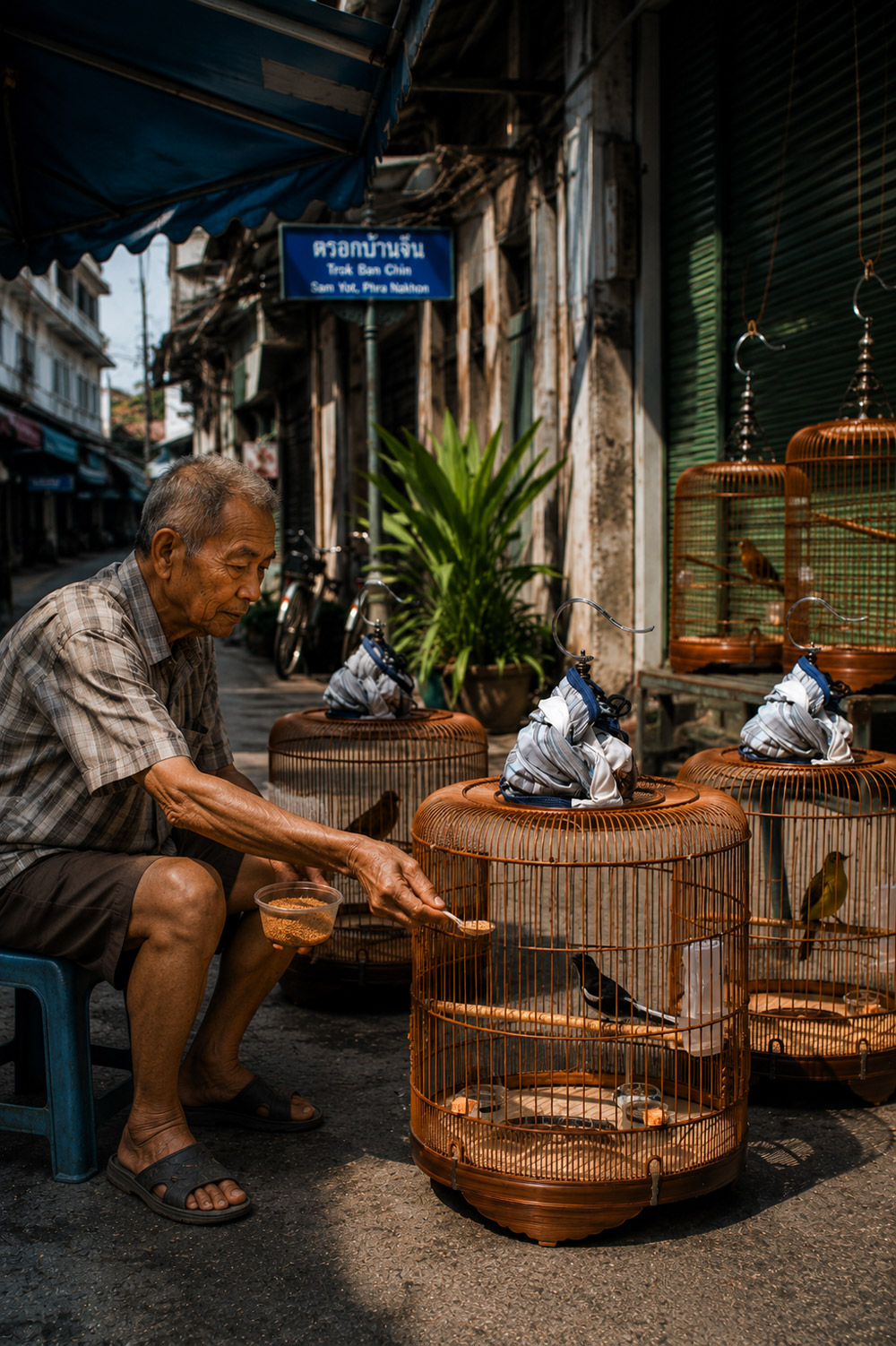 Beneath a faded blue canopy sits Prasert. He is seventy-four and has lived in this neighbourhood all his life. As he slides a spoonful of feed through the bars of a cage, the bird immediately bursts into song. “My father did this too,” he says without looking up. “Every single morning.” He gestures towards the lane. “Years ago you heard this everywhere in Phra Nakhon. Not because anyone thought it was remarkable. It was simply what people did.” A scooter rolls slowly past. Prasert smiles. “The city keeps changing. Fortunately, he doesn’t know that.”
As we continue walking, it becomes clear that the birds are about far more than competition. Men pause to listen to one another’s birds, exchange advice on feeding and training, and discuss the results of contests held elsewhere in the city. The conversations rarely remain solely about birds. Between the cages, memories are shared, worries discussed and neighbourhood news quietly exchanged.
Perhaps that is why the tradition has endured. Not because anyone deliberately set out to preserve it, but because it continues to bring people together.
A city built on water
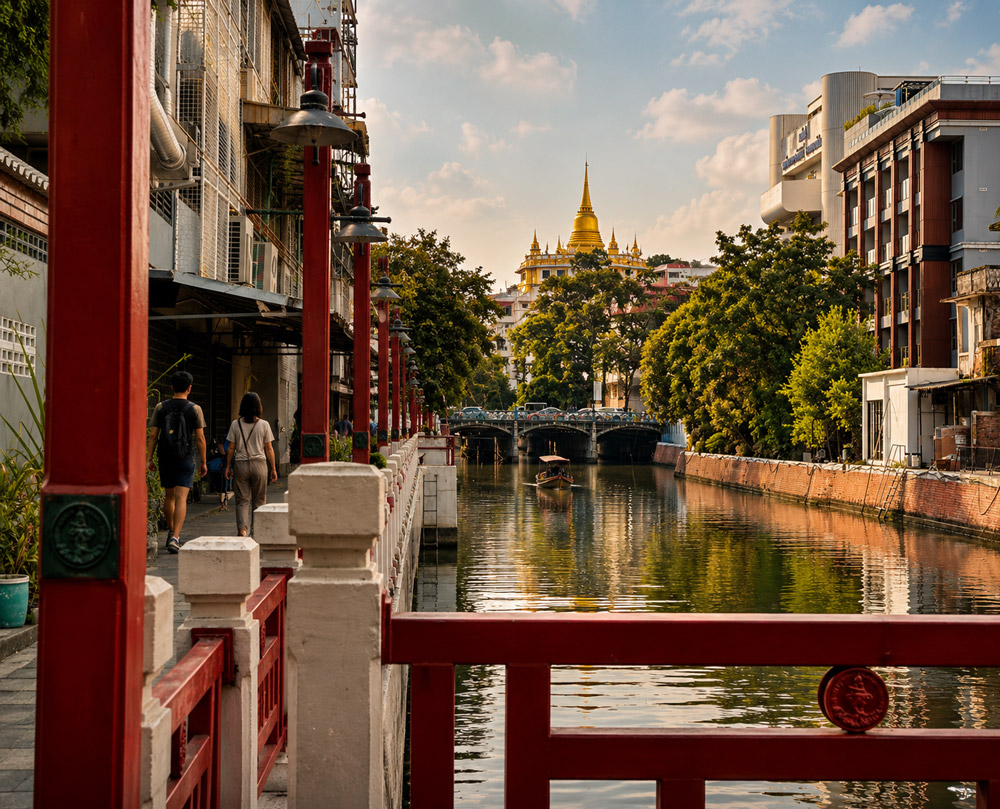
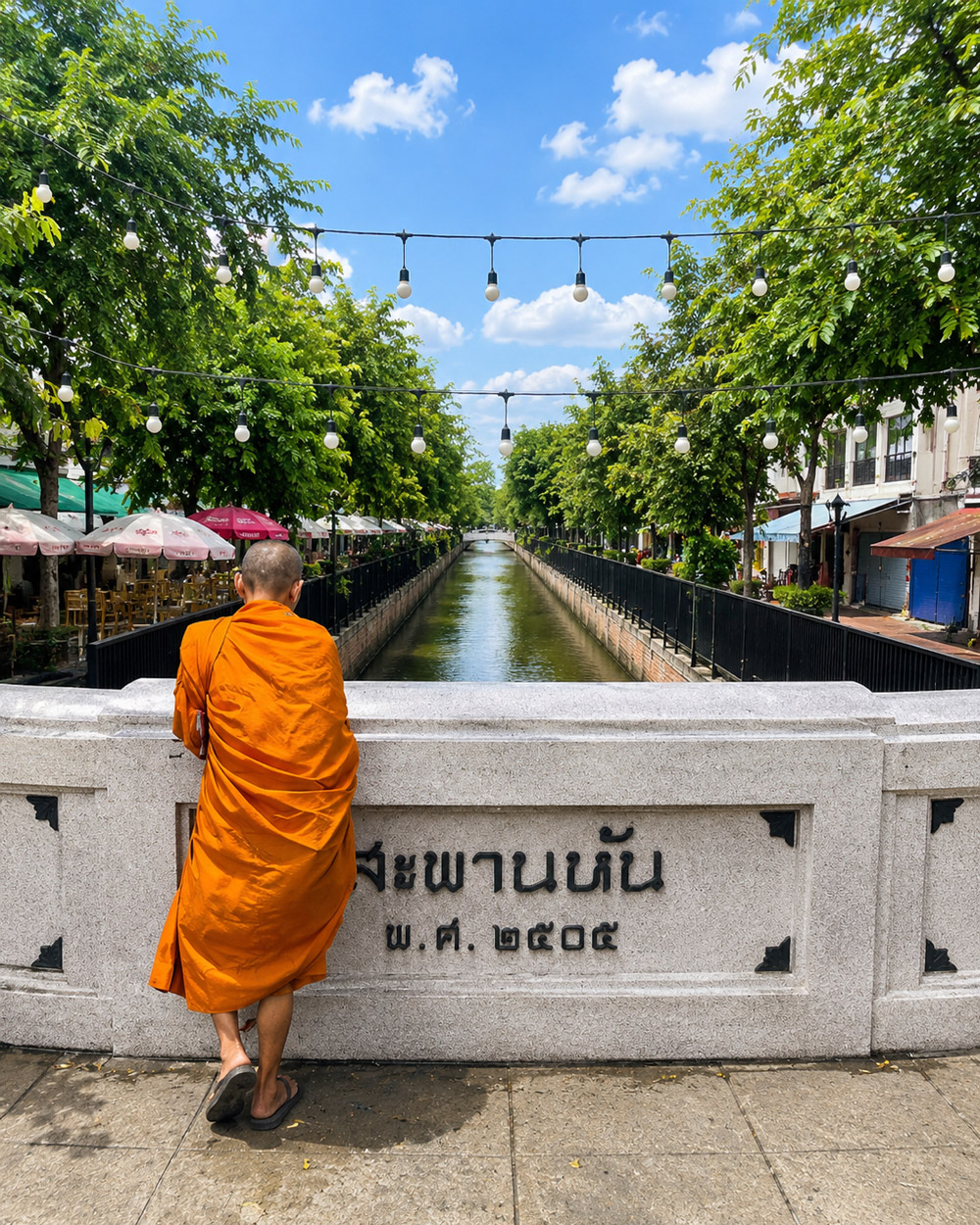 The alley opens onto a broader street leading towards Saphan Han. Beneath the bridge, a narrow canal shimmers between rows of shop-houses that seem almost to lean over the water. Once, this intricate network of waterways formed the very foundation of Bangkok. Long before roads came to dominate the city, people travelled almost exclusively by boat. Merchants transported their goods along canals that linked neighbourhoods, markets and temples.
Much of that watery world disappeared as asphalt gradually replaced the canals, yet in places like Saphan Han the city’s original rhythm remains unmistakably visible. Nuch rests her arms on the bridge railing. “This is why I love this place.” She watches people crossing the bridge. “The city’s history isn’t locked away in a museum.” A schoolboy passes a monk. A delivery rider carefully manoeuvres around an elderly woman carrying bags of groceries. No one appears to notice the centuries of history beneath their feet.
Echoes of Wang Burapha
Deeper into the neighbourhood we arrive in Wang Burapha. Today it is an unassuming district, but during the 1950s it was Bangkok’s most fashionable address. Cinemas, cafés and department stores drew visitors from across the capital, making it the city’s centre of modern life. Little of that glamour survives.
Instead, one stretch of the neighbourhood is now dominated by shops selling shooting sports equipment — an unexpected contrast to Somchai’s workshop nearby. Inside, shelves are packed with radios, cables and spare parts that seem to have survived several generations of technology. “People often ask me where Old Bangkok has gone,” he says. “To me, it’s already disappeared.” Nuch shakes her head with a smile. “You always say that.” Somchai shrugs. “When I was young, I knew every family on this street.” His words reveal something the rest of our walk has only hinted at. Not everything survives. Some changes cannot be reversed. Cities lose more than buildings.They lose memories. Yet Somchai still sits here among his radios and tools, quietly serving as a living bridge between the Bangkok that once was and the Bangkok that exists today.
Incense in the afternoon sun
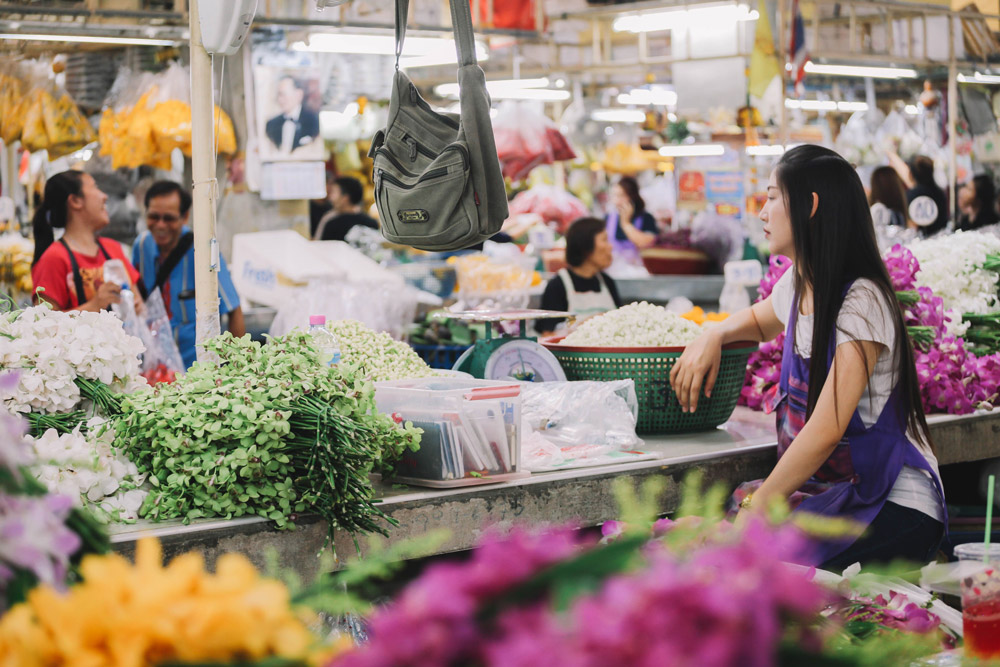
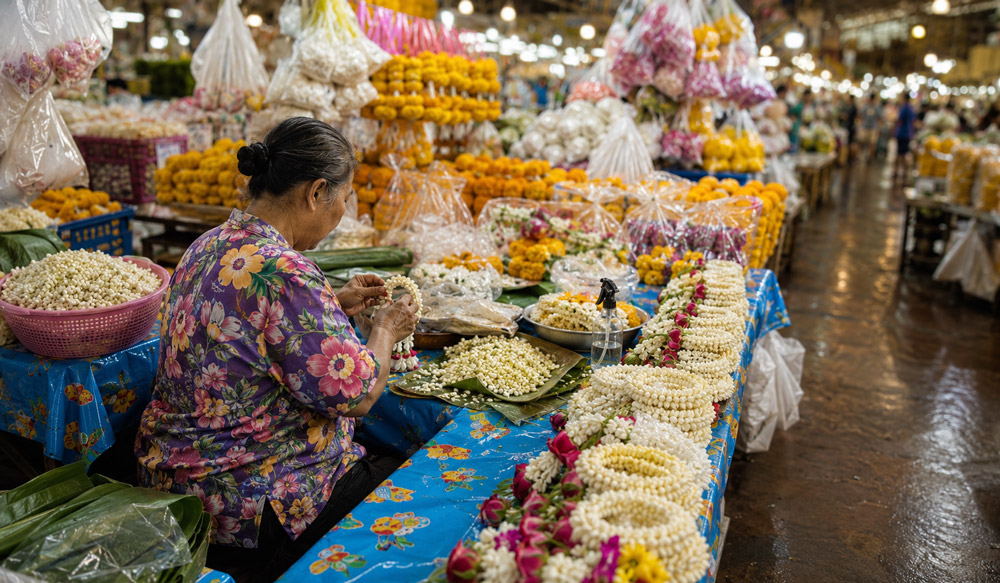
We cross a small square where a bronze statue of King Rama II gazes across Khlong Lod. The scent of incense reaches us before Wat Ratchabophit comes into view. Outside the entrance, women sell garlands, candles and neatly arranged offerings. Residents stop on their way to work, bow briefly and continue with the rest of their day. What strikes me most is the complete naturalness of the ritual. No one is watching. No one is taking photographs. These acts of devotion are not performed for visitors but for the people whose lives give them meaning. Nuch nods towards a woman carrying a floral offering. “She comes here almost every morning.”
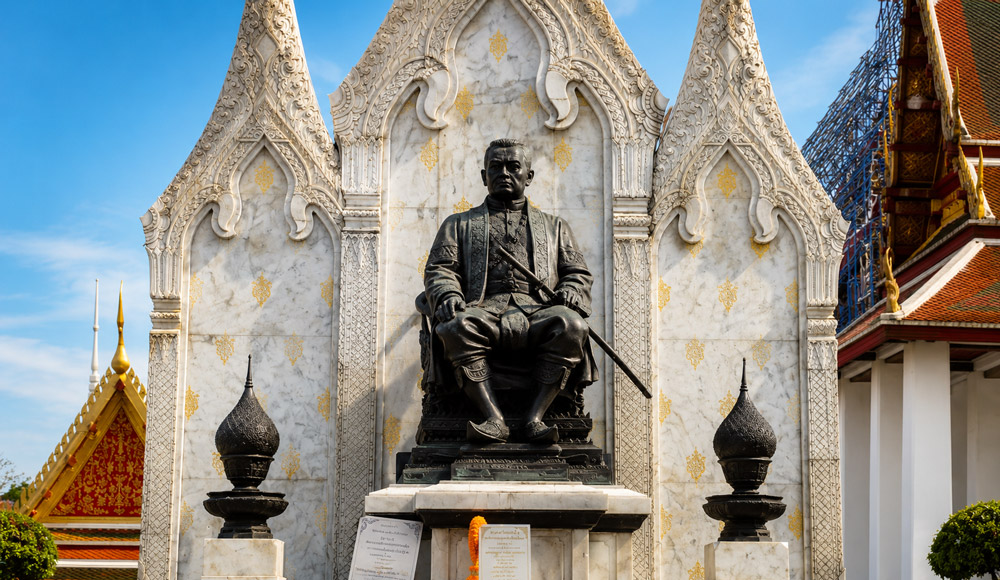
As delicate streams of incense drift upwards between the temple roofs, it becomes clear that religion here is inseparable from everyday life. It belongs to the same living fabric as the songbirds, the markets and the neighbourhood shops. The past does not exist alongside the present. It lives within it.
Chuwattana Gym
Not long afterwards, the soundtrack of the street changes once again. A dull thud. Then another. Hidden between family homes and small shops stands Chuwattana Gym. Young boys train on heavy bags while their coach, Pichai, patiently corrects every movement. The steady rhythm of punches and kicks spills out into the street. “Many visitors only experience Muay Thai in the stadiums,” he says. According to Pichai, Muay Thai is far more than a sport.
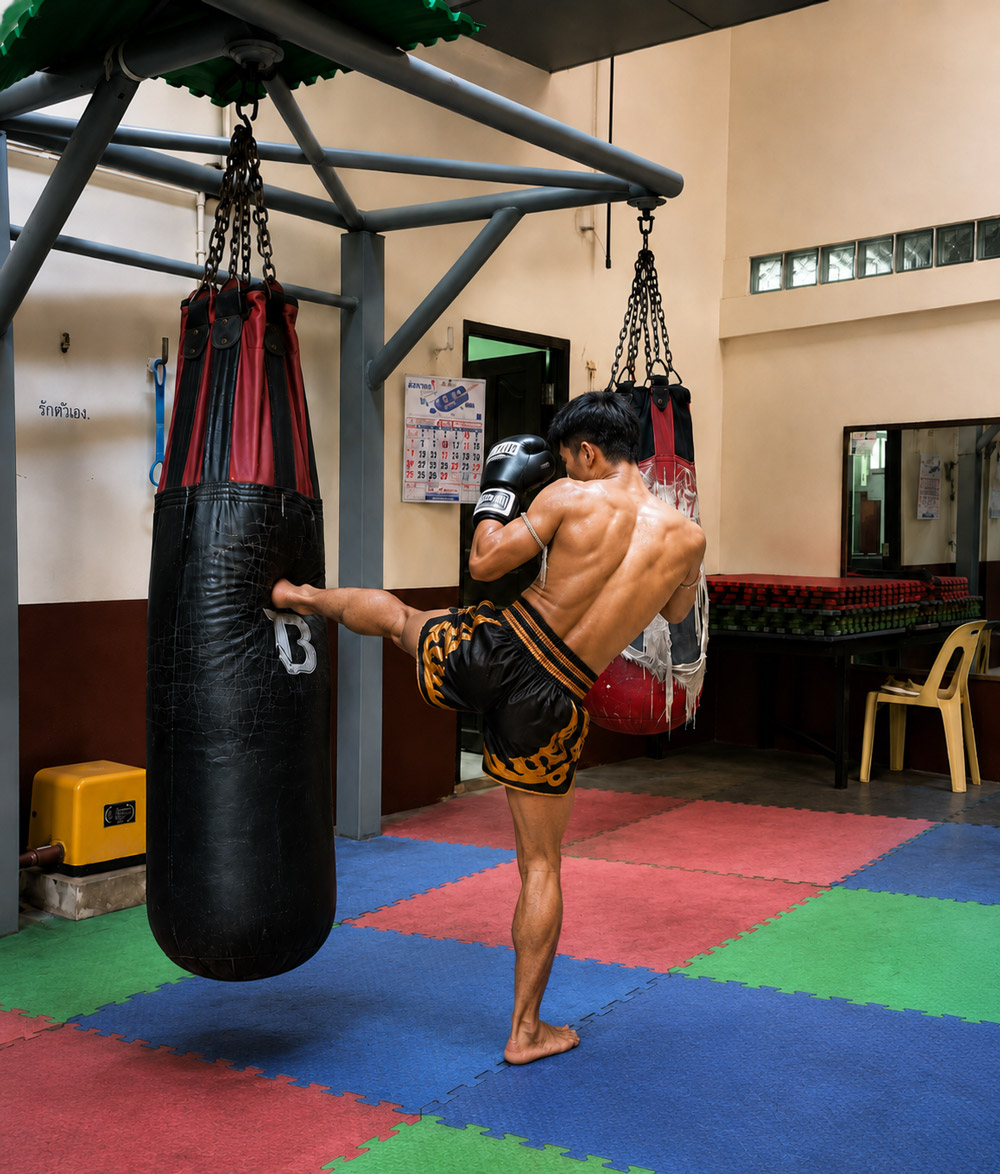
Across much of Thailand, it offers young people opportunities that would otherwise remain beyond their reach. “For some families it provides an important source of income,” he explains. “Even local fighters can earn more than many people in other professions.” As he speaks, one of the boys resumes his training. Several appear to be no older than twelve. “What they learn here stays with them for life,” says Pichai. Discipline. Respect. Perseverance. For these youngsters, the gym is far more than a place to train. It is a community where they learn responsibility. For themselves and for one another. In a city that grows larger and more anonymous each year, Muay Thai continues to fulfil a social role that extends far beyond the boxing ring. As we leave, the rhythmic sound of feet striking leather echoes behind us once more.
PRACTICAL INFORMATION: OLD BANGKOK
Location and getting there
Old Bangkok, also known as Phra Nakhon, lies on the eastern bank of the Chao Phraya River and forms the historic heart of Thailand’s capital. Since the opening of the MRT Blue Line, the district has become easier to reach than ever before. Sam Yot MRT Station is an ideal starting point for exploring the neighbourhood on foot.
The river also remains one of the most enjoyable ways to discover the city. The Chao Phraya Express Boat provides easy access to many of Bangkok’s major attractions while offering a unique perspective on the city’s long-standing relationship with its waterways.
Climate and best time to visit
Bangkok has a tropical climate, with high temperatures throughout the year. The coolest and most pleasant period runs from November to February, when humidity levels are lower and daytime temperatures generally range between 25°C and 32°C. This is the ideal season for exploring the Old City on foot.
From March to May, temperatures frequently exceed 35°C, making sightseeing considerably more demanding. The rainy season usually lasts from June to October. Although heavy downpours are common, they rarely last for long. Afterwards, the city takes on a distinctive atmosphere as rain-soaked streets shimmer in the evening light.
Where to stay
Travellers wishing to stay in the heart of the historic district will find a wide choice of charming boutique hotels housed in beautifully restored heritage buildings. Throughout Phra Nakhon and neighbouring Banglamphu, small-scale accommodation is within easy walking distance of temples, markets and excellent local restaurants.
Along the banks of the Chao Phraya River are some of Bangkok’s finest hotels, many offering superb river views and convenient boat connections to the Old City. For those wanting to experience the character and rhythm of Old Bangkok after the day-trippers have left, staying in Phra Nakhon itself remains the most rewarding choice.