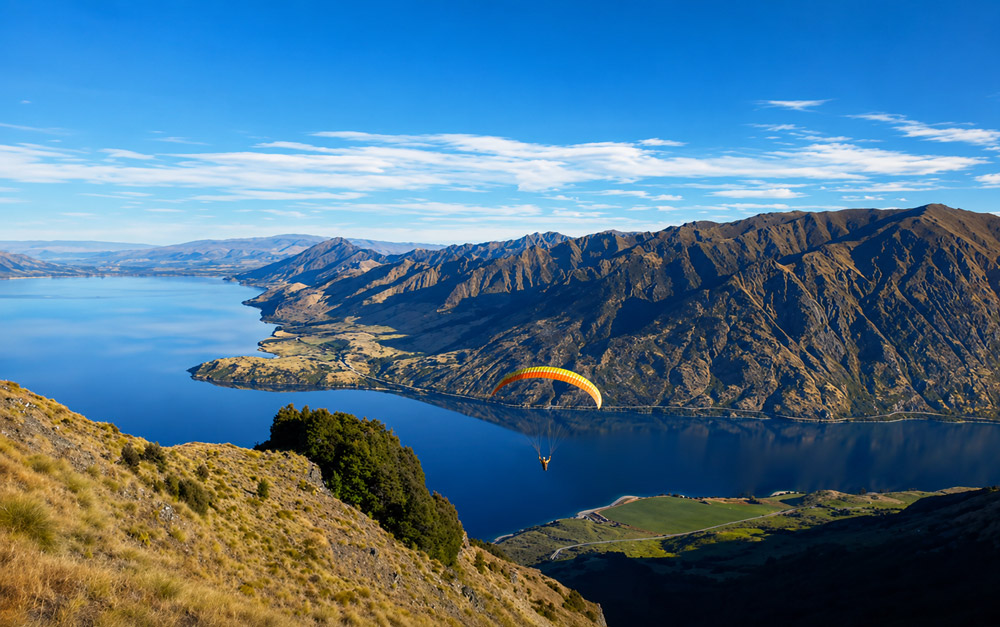
The first thing to disappear is not the ground. It is the sound of the town. High above Lake Wakatipu, only the soft whisper of the wind remains. Queenstown shrinks into a cluster of streets along the waterfront, while the jagged peaks of the Remarkables stand sharply against a cloudless sky. The town has built its reputation on bungy jumps, jet boating and a seemingly endless appetite for adrenaline. Yet paragliding proves to be one of its most memorable experiences. And plenty is happening. There are no engines. No speed. No freefall. Only air, wind and silence.
Waiting for the wind
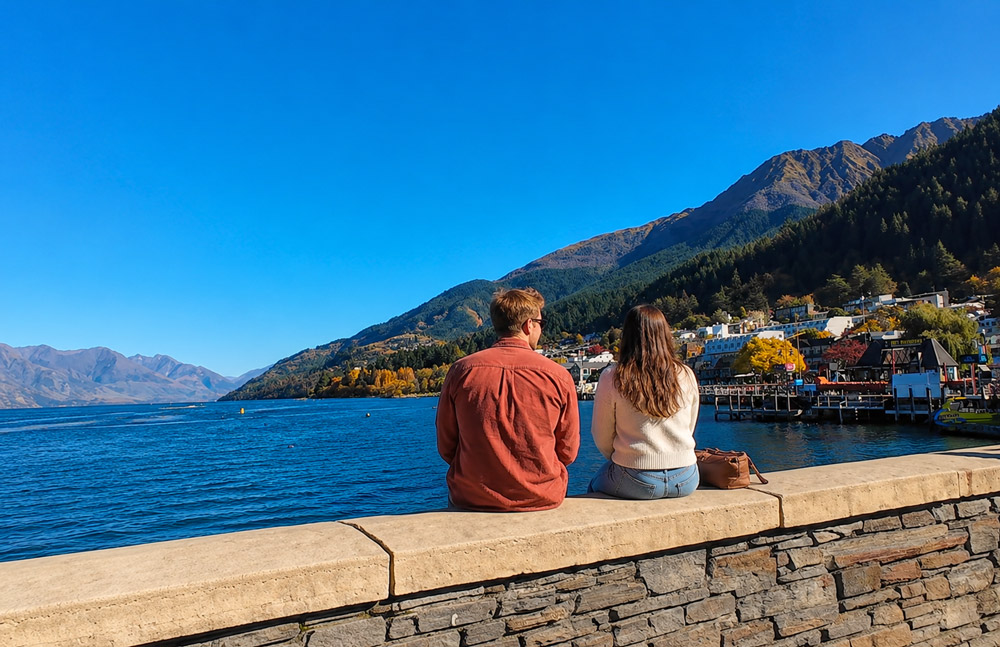
An hour earlier, we are standing on Bob’s Peak. Below us, Lake Wakatipu winds through the landscape like a blue lightning bolt. The morning sun illuminates the water in shifting shades of sapphire, while long shadows still stretch across the hillsides. On the far shore, the Remarkables rise directly from the lake, as though an entire mountain range has been lifted straight from the water.
Beside us, a paragliders pulls at a bundle of brightly coloured lines. “If the wind stays like this, we’ll go soon.” It sounds surprisingly matter-of- fact for something involving no aircraft. There is no runway, only a grassy slope that abruptly gives way to empty air. Yet flying here does not begin with departure. It begins with waiting.
While visitors photograph the view, the paragliders barely glance at the panorama. Their attention is fixed on something that remains almost invisible to us. They watch the windsock, study the air above the slopes and feel the breeze moving across their faces. For them, every flight begins with observation.
Below us, the town is waking up. Cafés along the waterfront are opening their doors. Walkers appear on the promenade. Out on the lake, the first boats leave white trails across the water.
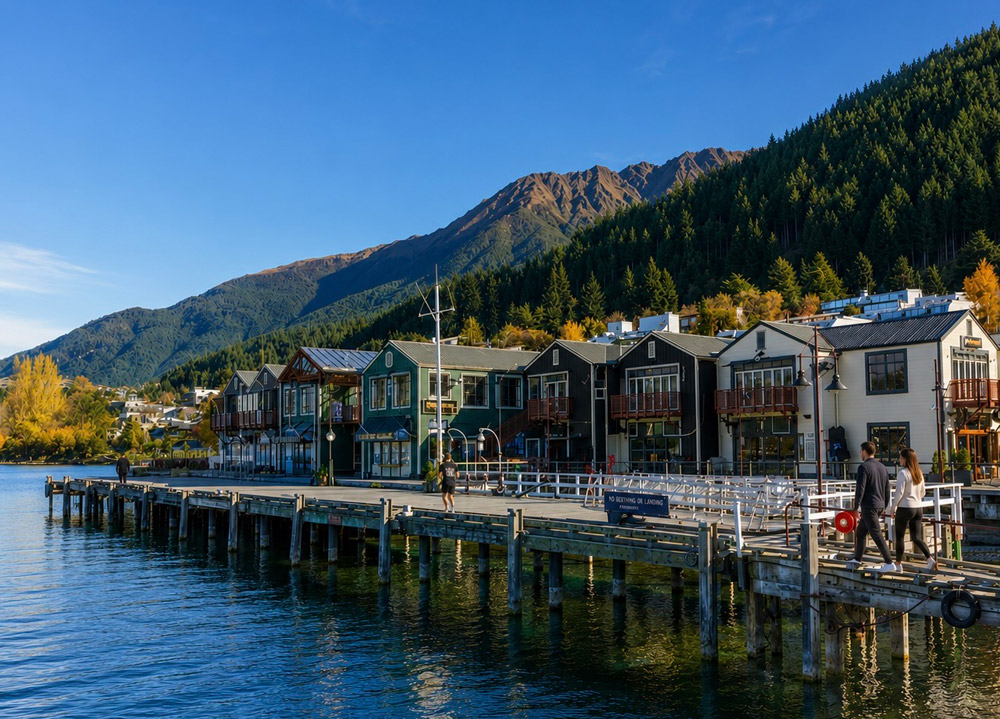
From this height, it becomes clear what makes Queenstown so remarkable. The town does not merely sit among the mountains; it seems to grow from them. Where many destinations add activities to a landscape, here the landscape appears to dictate the activities. In Queenstown, adventure rarely feels manufactured. Instead, it seems the natural consequence of mountains, water and the space between them.
A town between mountains and water
Earlier that morning, we had ridden the Skyline Gondola above the town. The cabins glide silently upwards, gradually revealing more of the landscape. Houses become dots. Roads turn into thin lines. The lake unfolds between the mountains like a map being slowly opened. At the summit, we meet our instructors, Sam and Josh. While visitors marvel at the view, Sam reads the sky. Every so often, he points towards a cloud above a ridgeline or a sunlit slope on the opposite side of the valley. “The landscape stays the same,” he says. “The air changes constantly.”
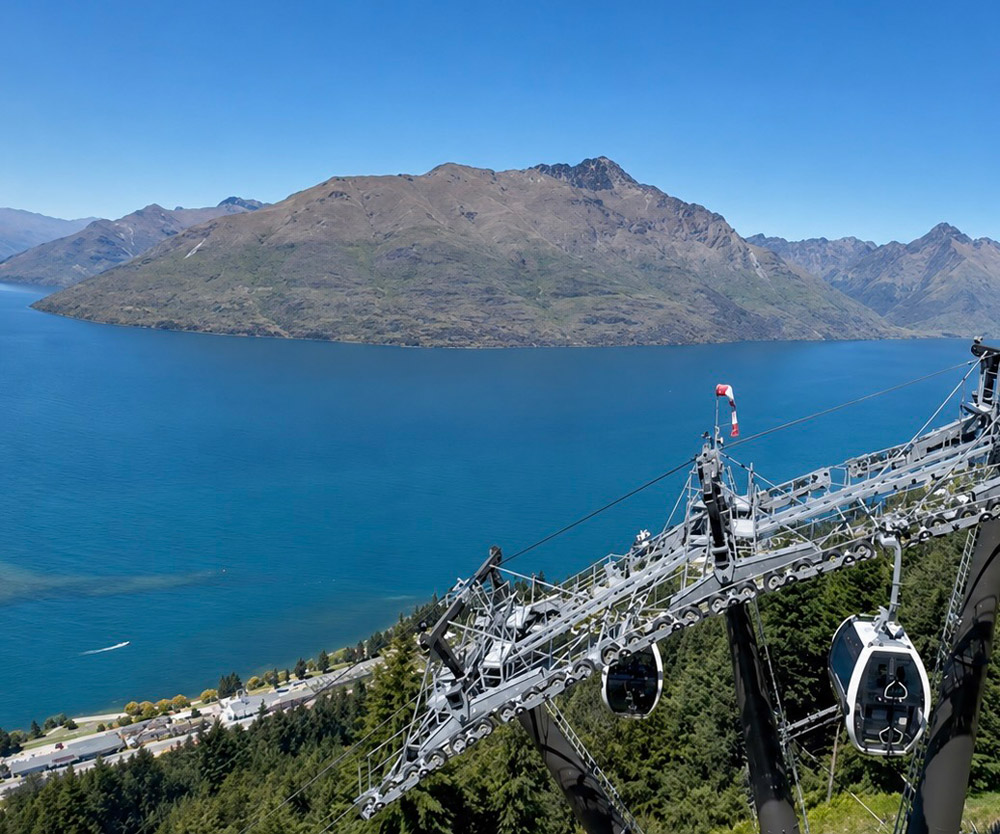
His gaze lingers on places where, to us, nothing appears to be happening. Yet the movement of the wind, the angle of the sun and the temperature of the slopes tell him a story that determines when a flight begins and how long it might last. It is a different way of seeing. Perhaps that is what this experience is really about.
A natural launchpad
It is no coincidence that Queenstown has become one of New Zealand’s best-known paragliding destinations. The town sits at a crossroads of landscapes. The deep waters of Lake Wakatipu, the steep mountain slopes and the region’s relatively predictable thermals create conditions that paragliders have been taking advantage of for decades. As the sun warms the hillsides, pockets of warm air rise from the valleys below. For paragliders, these invisible currents act as a natural lift. Bob’s Peak is therefore much more than a viewpoint.
For paragliders, it is a launch platform overlooking a landscape that is constantly in motion. Wind direction, temperature and cloud cover combine to shape the behaviour of the air. High above the town, paragliders are circling over Queenstown, their canopies shaped like eyebrows. From a distance, they seem almost motionless.
Against the immense backdrop of mountains and sky, they appear surprisingly small. Yet they reveal something important. Wherever they circle, air is rising. Wherever they gain height, thermals are at work. For experienced paragliders, every paraglider in the sky offers a clue. You watch what other paragliders are doing. They often tell you as much as the wind itself.
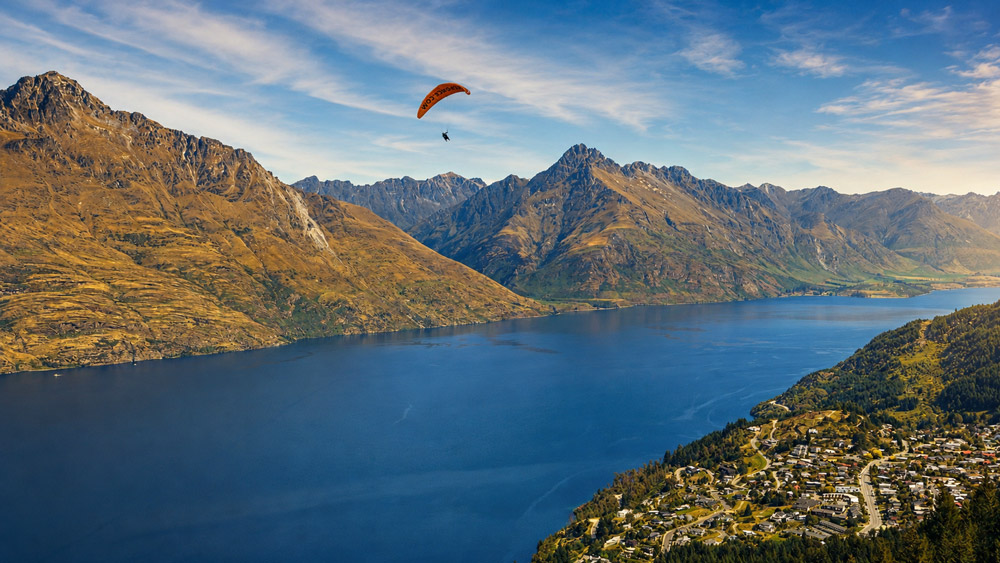
Here, it becomes clear that paragliding is less about steering than about reading. The air ultimately decides what is possible. The paraglider’s task is simply to understand it.
The transition to flight
When Josh takes off first with my travelling companion, it looks deceptively simple. The wing rises overhead. Their footsteps quicken. Then the hillside releases them. There is no jump. No freefall. No single moment when flying suddenly begins. Within seconds they are gliding silently along the flank of Bob’s Peak. Against the vast scale of the landscape, both paraglider and wing appear tiny. For a moment they seem to hover above the slope.
Then they are absorbed into the air above the valley. Soon it is our turn. Behind us, an orange canopy lies spread across the grass. It looks remarkably fragile for something that will shortly carry us hundreds of metres above the landscape. “Keep walking until I tell you otherwise.” That is all the instruction we receive.
When the wind is exactly right, Sam’s voice cuts through the air. “Let’s go.” We move forward. First walking, then faster. Behind us, the wing fills with air. The lines tighten. Then the ground disappears. Not abruptly. It feels more as though someone has quietly removed the landscape from beneath our feet.
Silence above Lake Wakatipu
Almost immediately, something unexpected happens. The height fades into the background. Instead, it is the stillness that stands out. Without a roaring aircraft engine, without vibrations and without a window separating us from the world outside, the air feels remarkably calm. Only the soft rustle of wind across the canopy reminds us that we are moving.
Below, Queenstown stretches along the shoreline. Boats leave white trails across the water. Walking tracks seem scarcely wider than pencil marks. Then an unexpected sound reaches us. Somewhere on a distant hillside, a dog barks. Moments later, voices drift up from the valley. The people themselves are barely visible, yet their sounds travel effortlessly through the mountain air. We are hundreds of metres above the ground, yet fragments of life below continue to reach us.
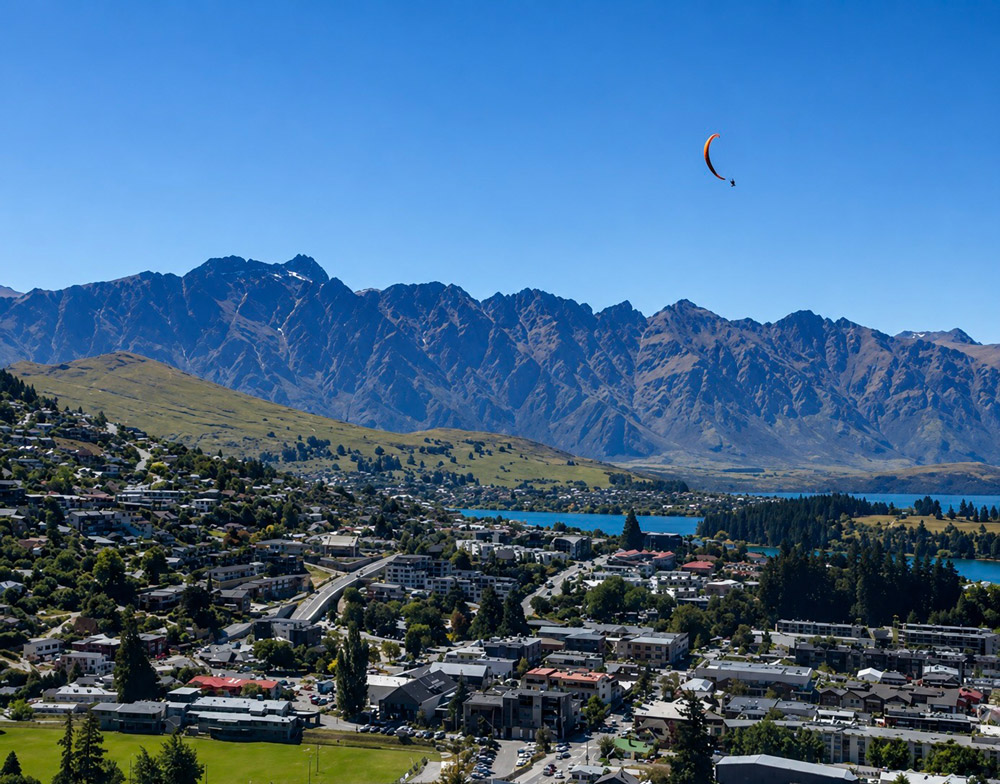
Slowly we spiral upwards along the mountainside. “Most people expect adrenaline,” Sam says. “But what they usually remember is the landscape.” A few moments later, we understand exactly what he means. The longer we remain airborne, the more the landscape reveals itself. Valleys become the scars of ancient glaciers. Mountainsides expose their geological layers. Lake Wakatipu finally reveals its full shape.
What appear to be separate elements from the ground merge into a single, interconnected whole when viewed from the sky.
A guest in the sky
As the sun climbs higher, our own shadow suddenly appears on a grassy hillside far below. For a few seconds, we move together across the mountainside: us high in the air, our shadow hundreds of metres below on the ground. The image lasts only a moment. Perhaps that is why it lingers.
Further away, another paraglider occasionally appears against the backdrop of the mountains. Sometimes above us, sometimes below. Against the sheer scale of the landscape, it disappears from view before reappearing moments later. As we continue to climb along the mountainside, more canopies become visible overhead. What appears occasional from the ground reveals itself as an almost daily ritual from the air. Queenstown is not only waking up at street level.
Then Sam points towards a bird of prey circling above a nearby slope. Without any visible effort, it moves through the same air currents that are carrying us. Warm air rises from the mountainsides in invisible columns. Birds use them. Paragliders do too. Suddenly it becomes clear that air is not empty space. Like rivers, it has currents. Like mountain passes, it has routes of its own. The bird knows how to find them. Sam knows how to read them. We are simply being carried by them. For a brief moment, we are no longer visitors to Queenstown, but guests in a landscape that usually remains hidden from view.
Stories in the landscape
Below us, Lake Wakatipu glitters in the sunlight. From the air, it becomes clear just how deeply the lake is embedded between the mountains. The water follows the contours of a landscape shaped over millions of years by glaciers, landslides and immense tectonic forces. Perhaps that is why one of the region’s best-known Māori legends feels so at home here.
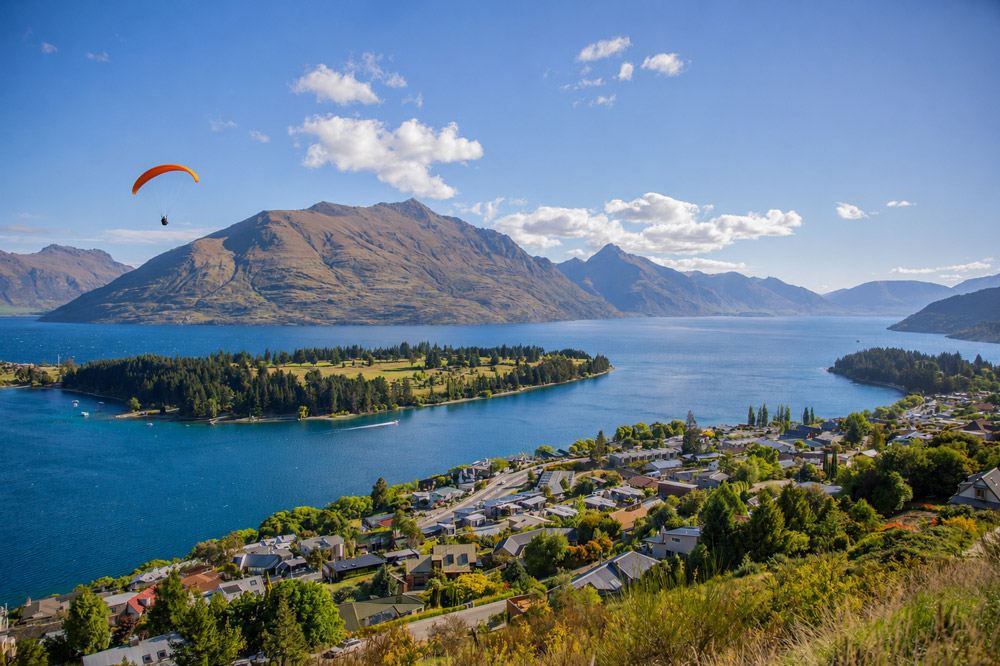
Beneath us lies the lake where, according to Māori tradition, the giant Matau was buried. His heart is said to continue beating beneath the water’s surface, causing the subtle fluctuations in water levels that can still be measured today. From above, the forces that shaped this landscape become visible: valleys carved by ice, mountains thrust upwards by shifting tectonic plates, and wind and water still quietly at work. Here, science and storytelling do not feel like opposites. They are simply different ways of understanding the same landscape.
One last turn
Halfway through the flight, Sam asks whether we would like to experience something extra. His smile suggests he already knows the answer. With a gentle pull on one of the lines, the wing banks sharply. The lake tilts away. The horizon disappears. For a few exhilarating seconds, we spin in a tight spiral above the valley. Queenstown reminds us why it is known as New Zealand’s adventure capital. Then the wing levels out once more. The calm returns immediately. As though the air itself wants to remind us that excitement and tranquillity are never far apart here.
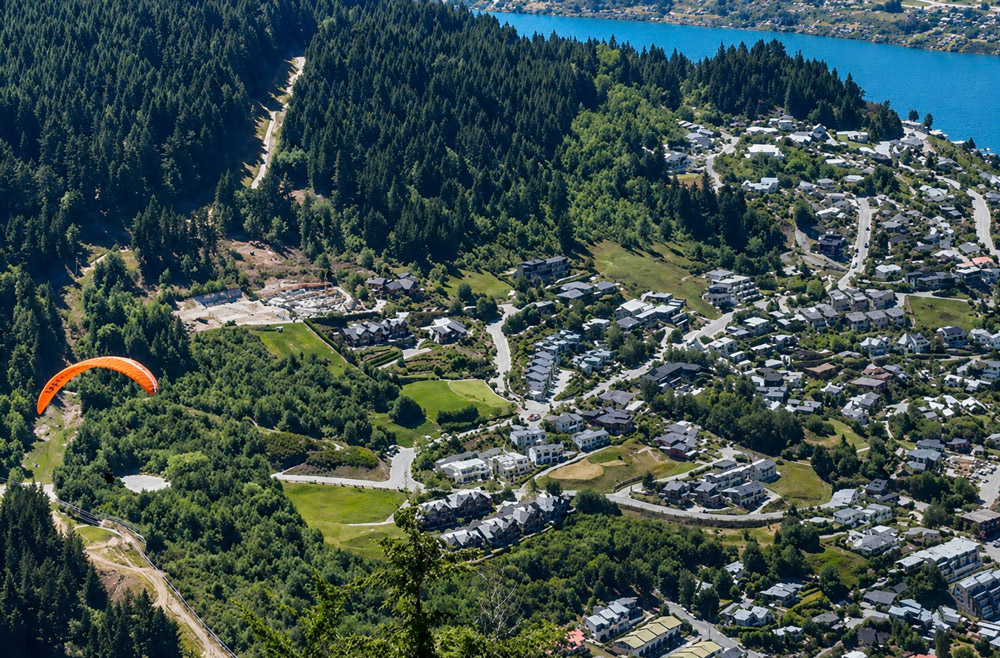
Back on earth in Queenstown
Slowly, Queenstown returns to its normal proportions. Houses become houses again. Cars become cars. People transform from tiny specks into individuals. On the landing field, we can already see Josh and my travelling companion waiting for us. Their canopy lies in the grass like a brightly coloured crescent moon. Sam begins our approach. A few seconds later, our feet touch the ground. That is how simply it ends.
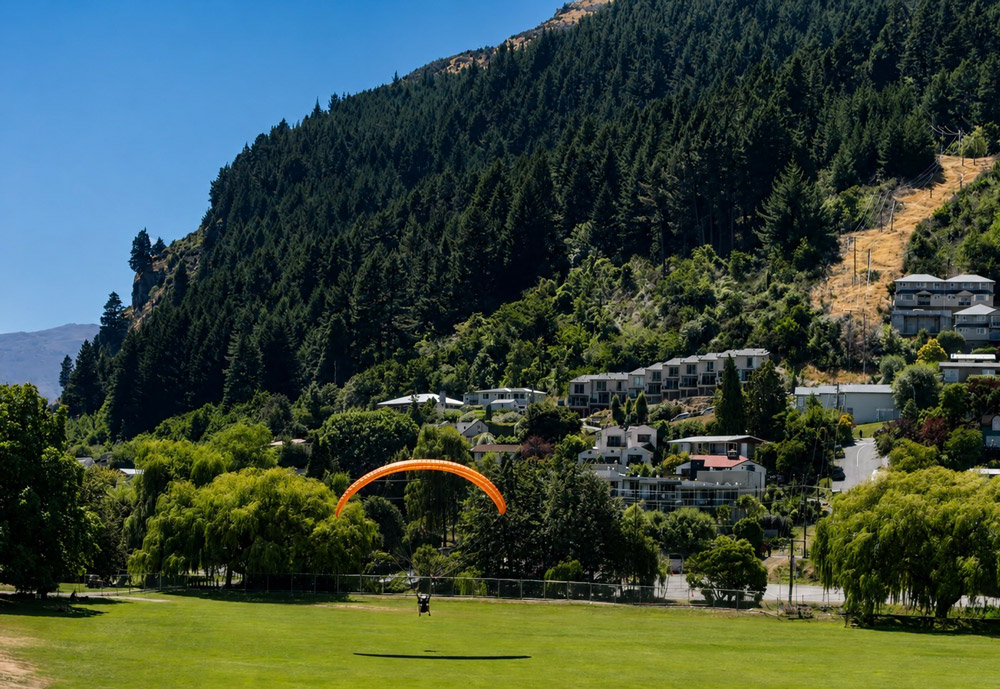
Less than fifteen minutes ago, we were moving through thermals high above the mountainsides. After a short walk from the landing field, we are back among cafés, souvenir shops and busy terraces. In Queenstown, wilderness and everyday life exist remarkably close together. Later that evening, we stroll along the shores of Lake Wakatipu.
The setting sun touches the peaks of the Remarkables, bathing the rocky slopes in warm golden light. Excursion boats depart on their final crossings of the lake. Restaurants along the waterfront fill with diners as the first lights begin to appear in the gathering dusk.
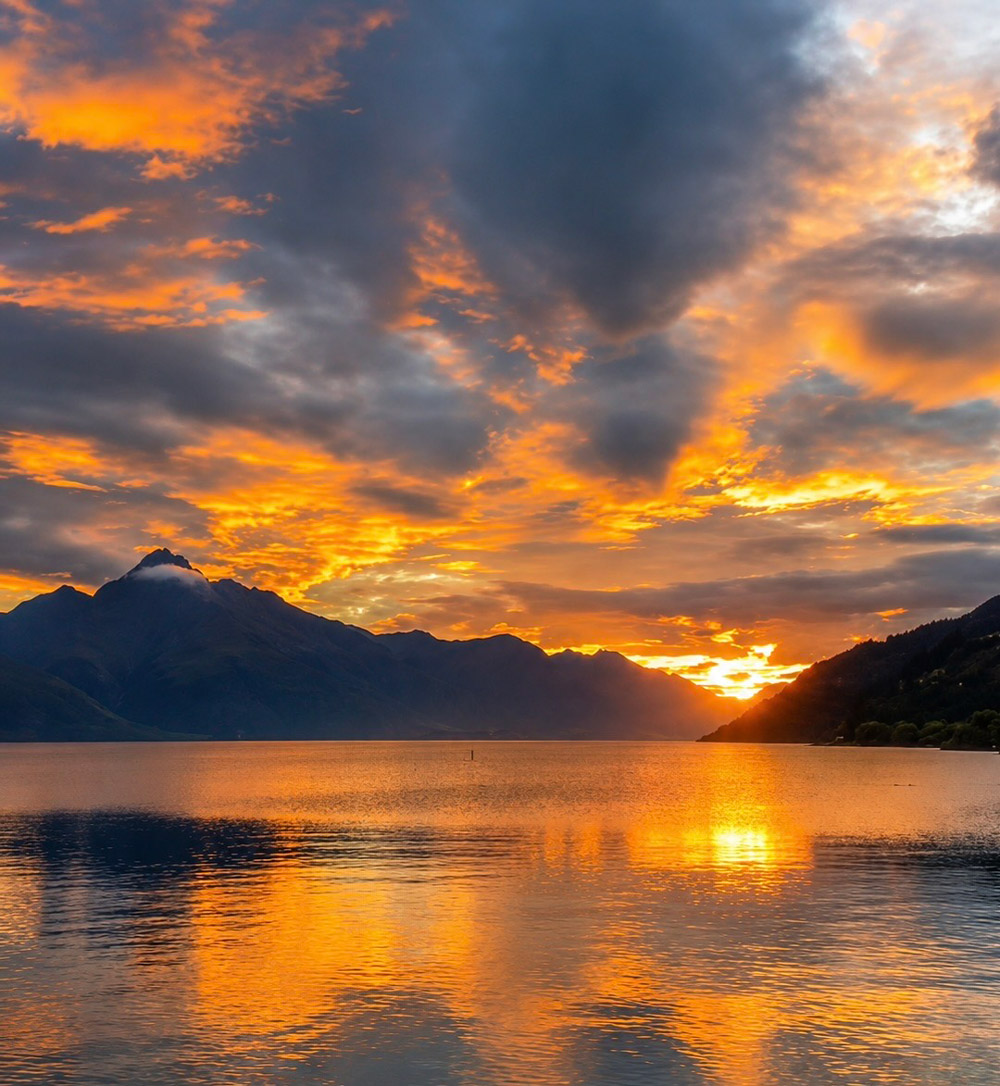
High above Bob’s Peak, a handful of paragliders continue to ride the last thermals of the day. From below, they seem barely to move. Small silhouettes suspended in an invisible wind. Slowly, the mountains fade from gold to blue. High above the ridgeline, a single paraglider remains. For a moment, the canopy appears motionless against the evening sky. Then it turns gently away and disappears behind the mountains. Only now do we fully understand what Sam meant earlier. The flight was never really about flying. It was about seeing.
From the air, Queenstown is no longer a collection of adventure activities, but a landscape where mountains, water, wind and stories have been connected for centuries. The first thing to disappear was the sound.
Now, standing on the shores of Lake Wakatipu, we realise the silence was there all along. Out on the lake, the final white wake of a passing boat slowly fades. Then only the dark blue water remains.