
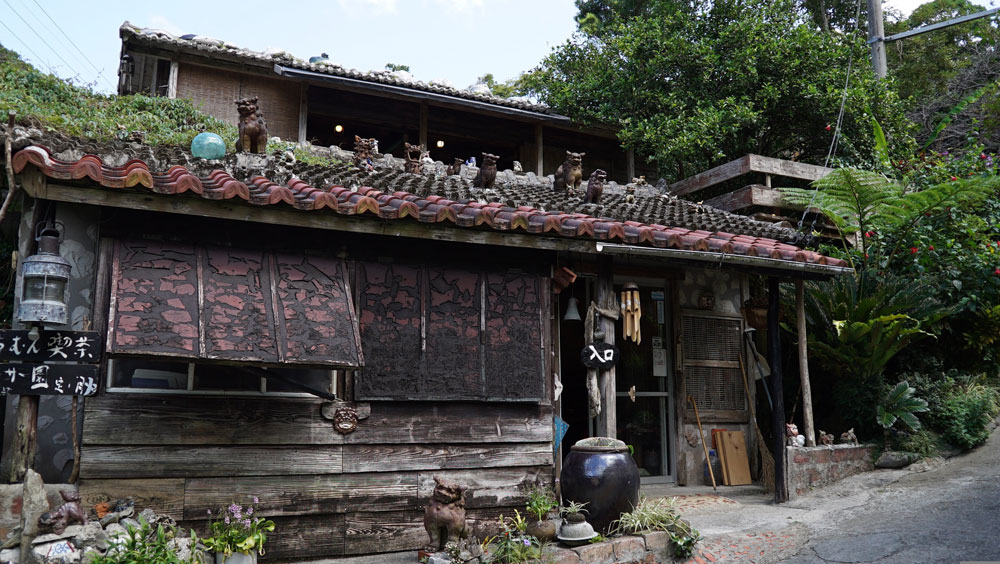
In Japan’s southern islands, longevity is not pursued. It unfolds, quietly, through the rhythms of daily life
 We arrive in Okinawa expecting answers. What we find, instead, is a shift in pace.
At the shoreline, the East China Sea moves in slow, deliberate cadence, folding itself onto pale sand. The water shifts from translucent turquoise to a deeper cobalt as clouds drift overhead. We stand for a while without speaking. Nothing here demands urgency. There are no raised voices, no sense of elsewhere pulling us forward. Only the steady presence of the moment.
It is here, on Japan’s southernmost islands, that we begin to understand that longevity is not something pursued directly. It is something that accumulates. Quietly and almost incidentally, through the way life is lived.
Okinawa is one of the world’s five recognised “Blue Zones”, regions identified by researchers for their unusually high concentration of centenarians. On the main island, particularly in the rural north and in places such as Ogimi, people have historically lived longer. With lower rates of chronic disease than in many industrialised societies. Yet what becomes clear, almost immediately, is that there is no single secret waiting to be uncovered. Instead, there is a pattern. Subtle and consistent, woven through daily life.
It begins, as it often does, with food.
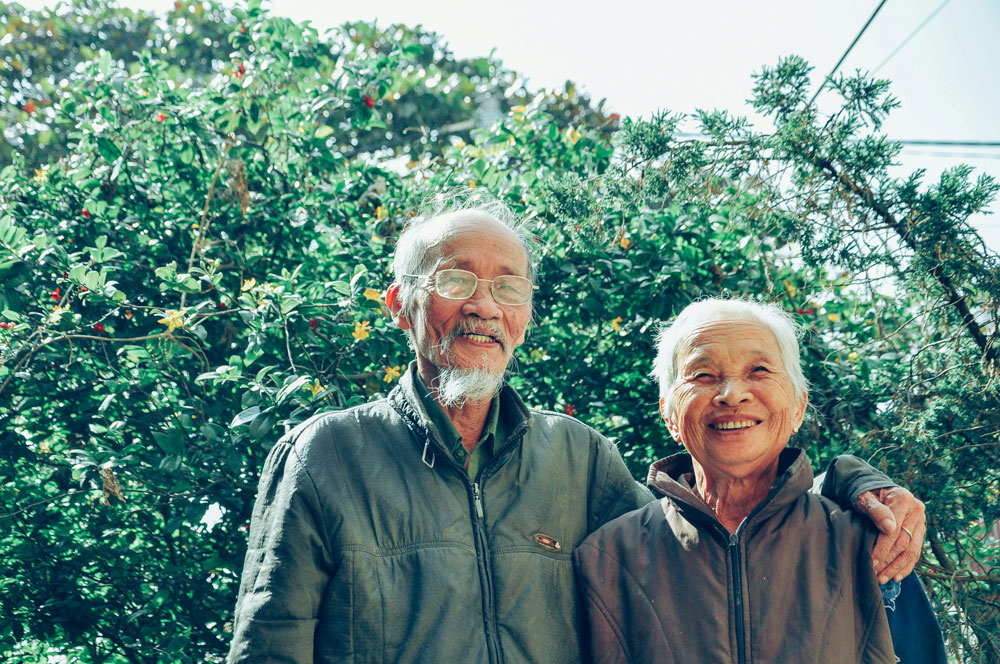
In a small, family-run restaurant just outside Naha, we are shown to a low table by a woman who introduces herself as Sachiko. She moves with an ease that feels both practised and unhurried. When we ask what she recommends, she smiles and simply says, “Today’s food.”
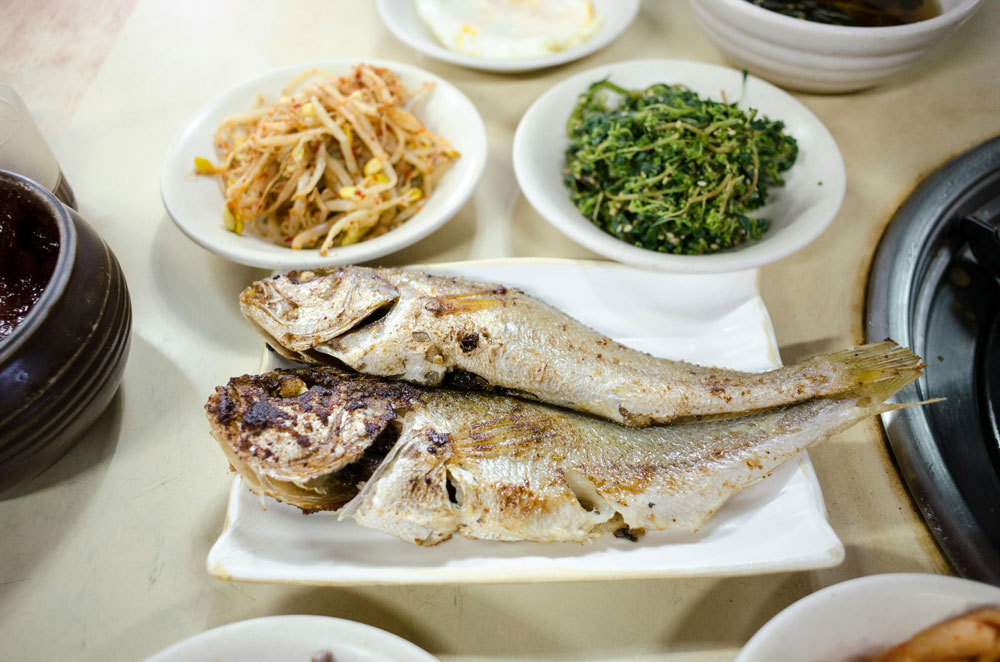
What arrives is modest: grilled fish, its skin lightly crisped; a bowl of miso soup; tofu; seaweed dressed with sesame; and seasonal vegetables prepared without embellishment. Portions are small and flavours are clean.
Sachiko lingers for a moment, watching us take the first bites.
“Not too much,” she says gently, placing her hand just above her stomach. “We stop before we are full.”
She is describing hara hachi bu, a principle often cited in discussions of Okinawan longevity: eating until around 80 per cent full. It is not framed as restriction, but as awareness. A way of maintaining balance over time. Meals stretch, conversations unfold and eating becomes something shared rather than consumed.
Historically, the Okinawan diet was centred on sweet potatoes, green vegetables, tofu and small amounts of fish. Low in calories, and largely plant-based. While contemporary diets have shifted, particularly among younger generations. Traces of this older pattern remain, especially in rural communities.
The following morning, we travel north, where the landscape opens into dense subtropical forest. The beginning of the Yanbaru region, a UNESCO-listed wilderness known for its biodiversity. Here, the air feels thicker, the pace slower still.
In a small village near Ogimi, we come across a communal garden where several elderly women are already at work. One of them, Keiko, waves us over with a gloved hand. She tells us she is in her eighties, though her posture suggests otherwise.
Without ceremony, she presses a handful of freshly picked herbs into our palms.
“Smell,” she says, smiling.
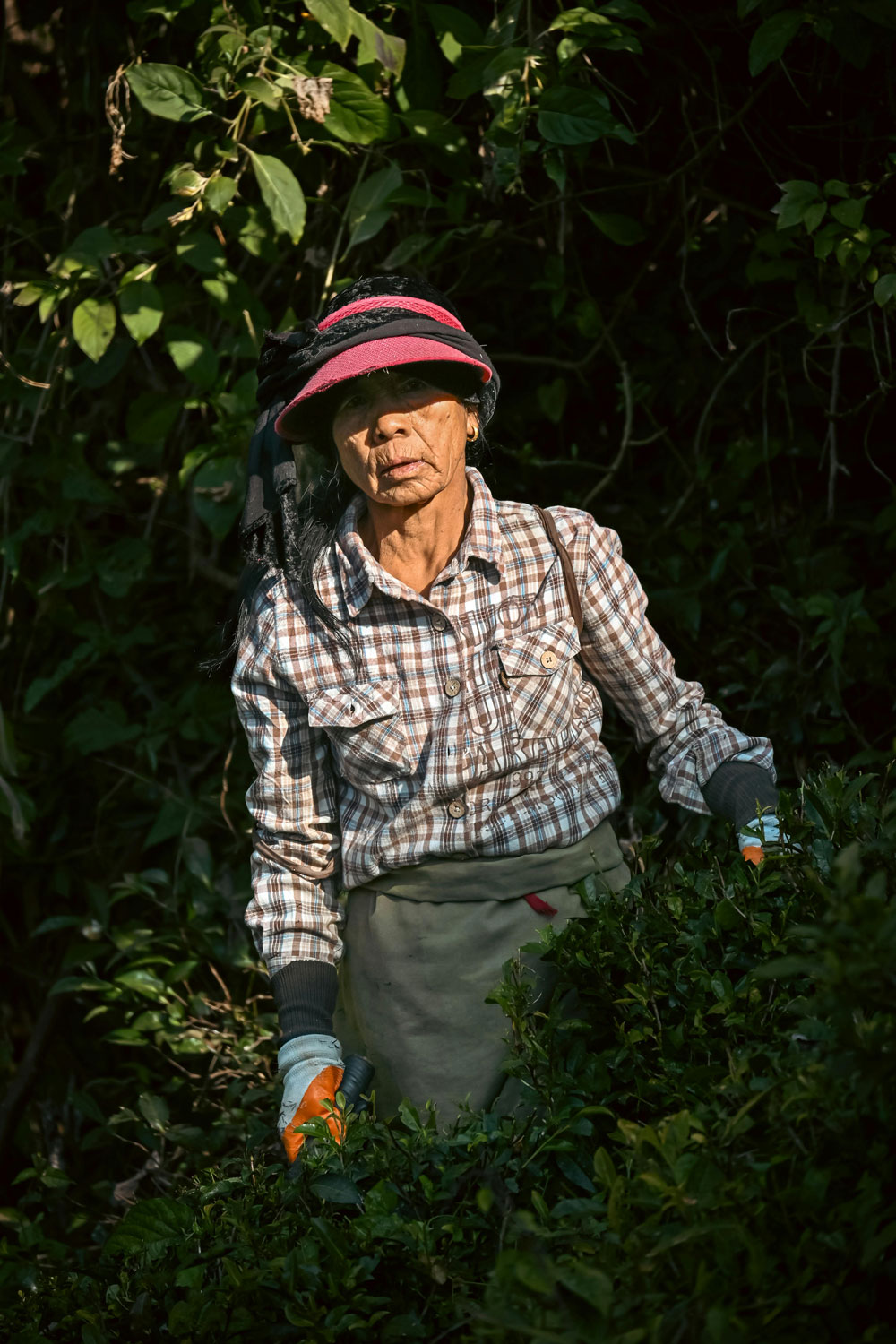 We spend the next hour moving slowly between rows of vegetables. The women show us how to pull weeds, how to recognise when something is ready to harvest. Their movements are fluid. Stooping, lifting and standing again. Performed without strain.
“This is our gym,” Keiko says, laughing, tapping the earth lightly with her foot.
Researchers often point to this kind of low-intensity, continuous movement as a key factor in longevity. In Okinawa, physical activity is not something scheduled; it is something embedded. Gardening, walking, cooking and cleaning. These actions accumulate, sustaining strength and mobility without the need for structured exercise.
Before we leave, Keiko insists we take a small bundle of produce with us. “For your strength,” she says, as though it requires no explanation.
Later that week, we are introduced to Hiroshi, a retired teacher in his nineties who now spends his mornings practising calligraphy. His home is modest, its sliding doors open to let in light and air. He sits on the floor, brush in hand, a sheet of paper laid carefully before him.
We watch as he works, each stroke deliberate. When he finishes, he leans back slightly, considering the result. “Not bad,” he says quietly. We ask him why he continues to practise every day. He pauses, then smiles. “Because tomorrow, I can do it better.”
The word ikigai, often translated as “a reason for being”, surfaces frequently in Okinawa. It is not necessarily grand or career-driven. It might be tending a garden, caring for family or practising a craft. What matters is continuity. A reason to begin each day.
In Hiroshi’s case, it is the quiet pursuit of improvement. Not perfection, but progression.
In the afternoons, we are invited to sit with a small group gathered beneath a tiled roof at the edge of the village. There are five of them, all in their seventies and eighties, seated in a loose circle with cups of tea. They introduce themselves as a moai, a lifelong social group.
One of the women, Yumi, explains that they have known each other since childhood. They meet regularly, sharing news, offering support, and, as she puts it, “making sure no one is alone.”
The conversation moves easily, punctuated by laughter and long, comfortable pauses. At one point, Yumi reaches across to adjust a scarf at her friend’s neck. It’s a small, instinctive gesture of care.
Studies of Okinawan communities often highlight these strong social networks as a protective factor against stress and isolation. In a world where loneliness is increasingly recognised as a public health concern, the moai system offers a quiet counterpoint: connection, sustained over a lifetime.
And yet, Okinawa is not untouched by change.
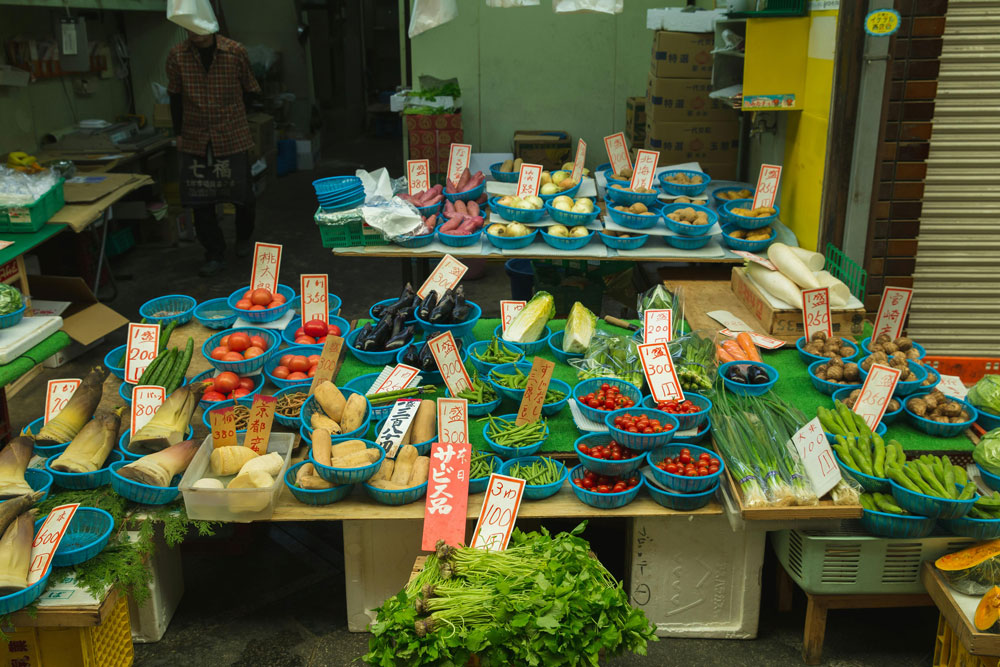
In Naha, convenience stores and fast-food chains sit alongside traditional markets. Younger generations are adopting more Westernised diets, and rates of obesity and lifestyle-related illness have risen in recent decades. Some researchers note that the exceptional longevity once seen in Okinawa has begun to shift as a result.

This tension, between tradition and modernity, is visible, if understated. It lends the island’s story a degree of fragility. What we are witnessing may not be static, but transitional. One evening, as the light fades, Hiroshi tells us about his childhood during the war. Okinawa was the site of one of the Pacific’s bloodiest battles, and the memory remains close to the surface.“It was difficult,” he says, his voice calm. “But life continues.”
There is no bitterness in his tone. Only a quiet acceptance. This resilience, an ability to absorb hardship without becoming defined by it, is often cited as another thread in the fabric of longevity here.
Throughout our time on the island, nature remains ever-present. The sea frames the horizon. Inland, the forests of Yanbaru give way to cultivated land, where food is grown with care. Even in more urban spaces, there is an openness. Windows that invite in air and light, a permeability between inside and outside.
We find ourselves adapting almost without noticing. We walk more. We pause more. We begin to pay attention; to the texture of leaves, the rhythm of footsteps and the way light shifts across the water.
On our final morning, we return to the shoreline. The scene is much the same. The same gentle movement of the sea, the same quiet stretch of sand, but something in us has shifted.
We think of Sachiko, reminding us to stop before we are full. Of Keiko, laughing in the garden, her hands in the soil. Of Hiroshi, practising the same strokes, day after day. Of Yumi and her friends, sitting together, sustaining one another through the simple act of presence.
It would be easy to reduce Okinawa’s longevity to a set of principles: eat moderately, move naturally, live with purpose, stay connected. But what we have experienced resists that kind of simplification. These are not isolated habits. They are expressions of a broader way of living. One that values balance over excess, continuity over intensity, and community over independence.
As we leave, the tide continues its slow pulse. Nothing has changed, and yet everything feels slightly recalibrated.
Longevity, we realise, is not simply about adding years to life. It is about the texture of those years. Their depth, their steadiness, their connection to others.
In Okinawa, that texture is shaped not by ambition, but by attention. And that, perhaps, is the quiet lesson we carry with us.