Limpopo, South Africa. An African safari is rarely rushed. It asks for time. To travel, to wait and to notice. And yet, even within a narrow window a 44-hour stopover in Johannesburg, something meaningful can unfold.
We head north of Kololo Game Reserve, set within the malaria-free Waterberg region of Limpopo. At first, it feels like a compromise: a safari compressed into a weekend. But as the road unspools into open veld, the idea of “too little time” begins to loosen its grip.
Kololo borders the larger Welgevonden Game Reserve, part of the Waterberg Biosphere. One of only two UNESCO-recognised savannah biospheres on the continent. Once fragmented farmland, this region has untouched nature, but something arguably more complex: a landscape rebuilt. “Twenty-five years ago, this was cattle,” our guide tells us. “Now the animals are back, because the land has value again.”
The quiet alternative
Welgevonden is home to the Big Five: lion, leopard, elephant, buffalo and rhinoceros. Yet, it remains overshadowed by Kruger National Park. The difference is immediate. There are no queues of vehicles, no sense of spectacle competing for attention. Sightings unfold without urgency.
Around 65 mammal species live here, along with more than 300 bird species. But what distinguishes the reserve is not just biodiversity, it is the ongoing effort to sustain it. Anti-poaching patrols operate daily and the Waterberg now supports one of South Africa’s more significant populations of both black and white rhinoceros, a species still under persistent threat. Each encounter carries an awareness that it is neither guaranteed nor permanent.
The road in
We leave Johannesburg before dawn, passing through Modimolle and Vaalwater as the lights spreads across the landscape. The highway gives way to gravel. The air changes. We begin to look differently, scanning for movement rather than direction. A zebra flickers between trees. Impala scatter. The transition from transit to attention is almost physical. By the time we reach Kololo, the shift is complete.
First encounters
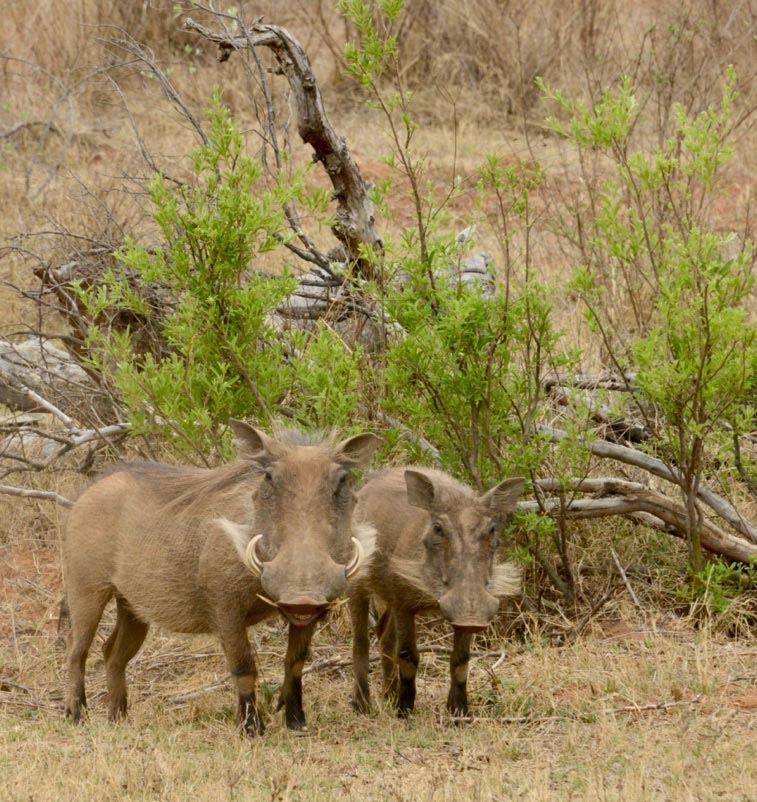
A family of warthogs greets us at the entrance, tails raised as they disappear into the bush. Impala leap across open ground; wildebeest stand watch in the distance. Nothing announces itself. It simply happens.
Our guide, Khyle, gestures towards the warthogs. “Bush antennas,” he says, referring to their upright tils. “It’s how they keep track of each other.” It is a small observation, but it changes how we look. Behaviour becomes narrative. Movement becomes meaning.
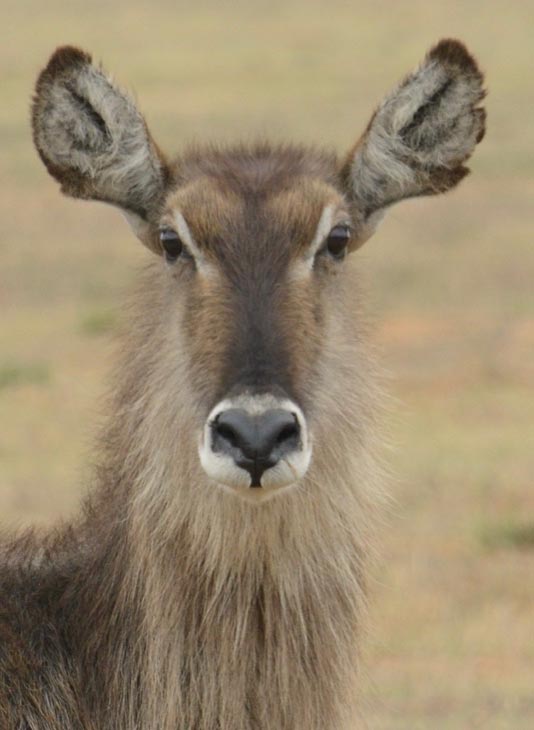
Kololo itself is understated: thirteen chalets set among trees, designed to blend rather than impress. From our veranda, we look out over Sterkfontein River. Waterbuck graze nearby. Further off, two rhinos move slowly across the hills, their outlines dissolving into distance. We are told that Kololo operates under Fair Trade principles, with revenue supporting local employment and community initiatives. It is not presented as a selling point. Just part of how things are done.
Walking the bush
Unlike many reserves, Kololo allows walking safaris. Without large predators, the bush feels accessible, though no less alive. We move slowly. Guineafowl lift their heads from the grass. Weaver birds stich hanging nests into a Seringa tree. A giraffe crosses our path, pausing briefly before continuing with deliberate calm. An eagle lands on an acacia branch with precise control, as if guided. Birdsongs fills the air. Safari, we realise, does not begin with the Big Five.
Into Welgevonden
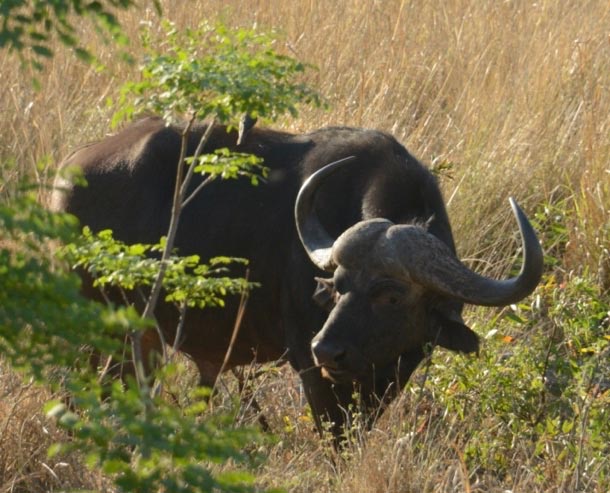
The following morning, we enter Welgevonden in an open-sided vehicle. Within minutes, our guide veers off the track. She has seen something. Not the animal itself, but signs: tracks pressed into sand, fresh dung and disturbed grass. Then we see him. A Cape buffalo stands ahead, broad and immovable. Nearly 800 kilograms of muscle and horn. We hear his breath before we fully register his presence. “Buffalo are unpredictable,” our guide says sofly. “They remember.” The moment holds, then breaks. He turns and disappears into the bush.
What follows is a sequence of encounters that resist neat ordering. Zebra gather in small groups, oxpeckers perched along their backs. The relationship is mutual. Parasites removed in exchange for vigilance.
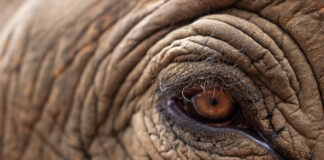
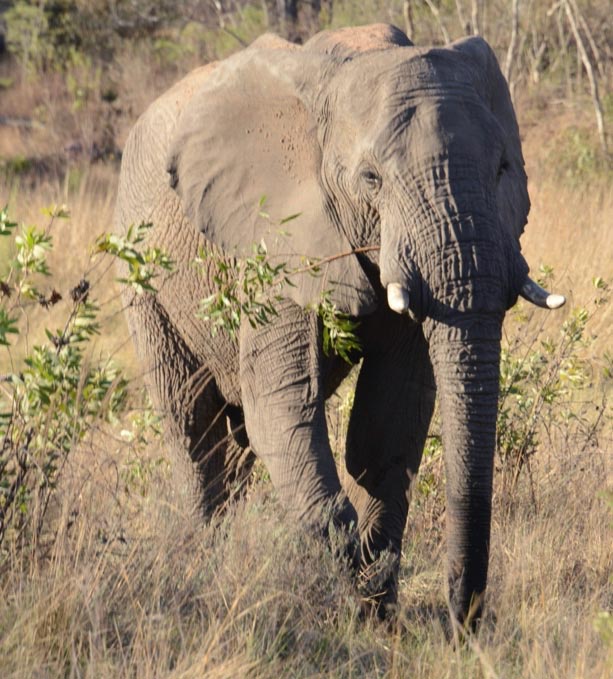
Nearby, an elephant stands beside the track, feeding. His trunk moves with precision: lifting, sensing and testing. A hippo surfaces in a muddy pool, yawning wide enough to reveal the scale of its power. By late afternoon, the light begins to change.
Sundowner
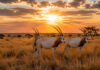
We stop on a ridge overlooking the valley. From the back of the vehicle, drinks appear. A simple ritual. The sun lowers, turning the landscape from gold to amber to muted rose. The hills of the Waterberg recede into shadow layer by layer. It would be easy to see this as timeless. But it is not. Landscapes like this persist through active protection. Through management, funding and constant negotiation between use and preservation. We drink to the view, aware that it exists because it is maintained.
Night jackal
On the return to Kololo, a jackal crosses the track, pausing briefly in the headlights before slipping into darkness. At the reserve gate, an anti-poaching unit prepares for patrol. Their presence is quiet but constant. Without it, we are told, the story of this place would be very different.
Dinner is shared with other travellers. Stories of sightings overlap and compete, but the tone remains measured. No one feels the need to exaggerate. Above us, the Southern Cross holds steady in a sky that feels unusually deep.
Dawn and lions
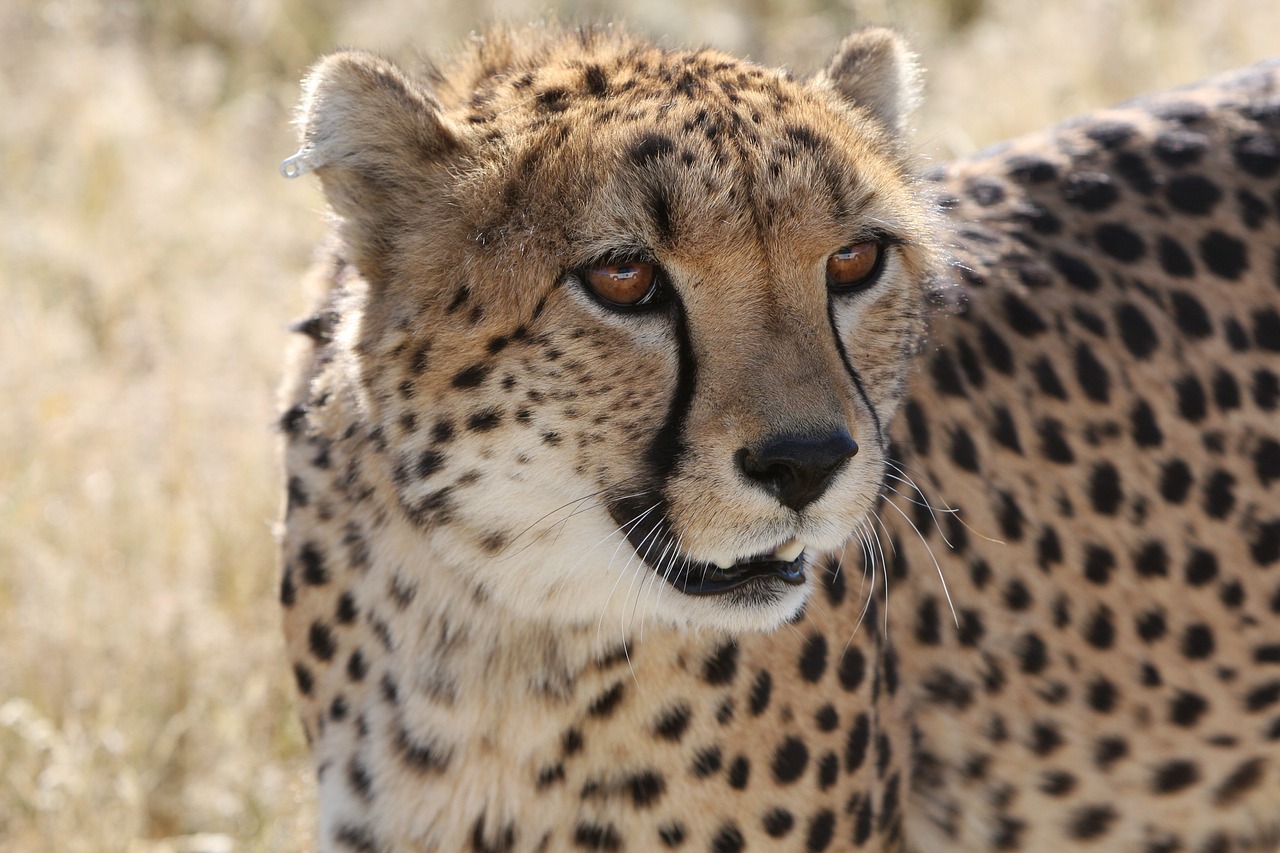
We leave before sunrise. The cold is sharper than expected. Safari is not only warmth and dust; it is also breath visible in the morning air. “Goeiemôre,” our guide says. We are looking for predators, but we understand by now thatthis is not something we control. Then… movement. A cheetah crosses the road ahead of us. She moves without hesitation, her body aligned with purpose. For a moment, she is fully visible. Then she is gone. Our guide smiles. “They choose when you see them.” It feels less like luck than permission.
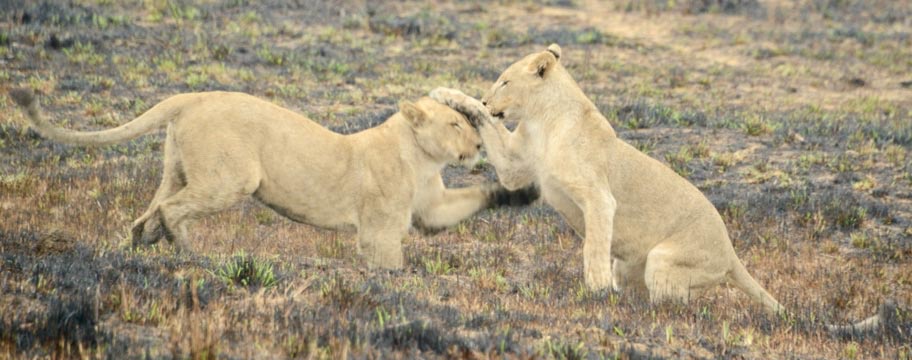
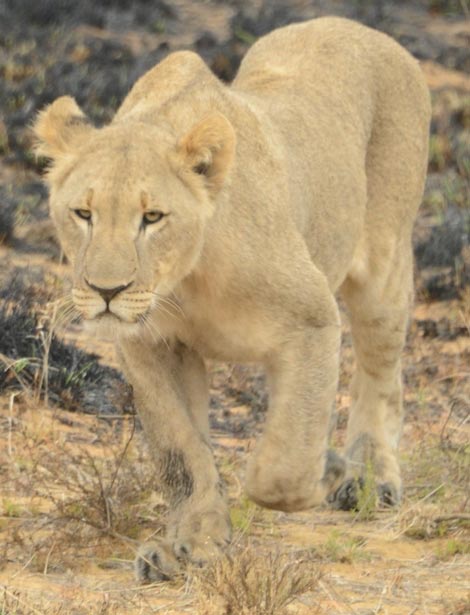
Later, we find them: five lionesses moving through tall grass. They are focused, coordinated, yet unhurried. One passes close to the vehicle, near enough to register the strength in her movement. She does not look at us. In this environment, the vehicle is neither threat nor interest.
Just part of the landscape.
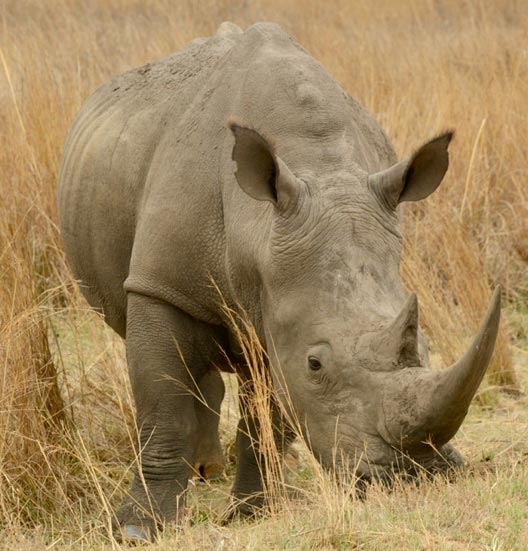
A white rhino grazes nearby, its movement steady, repetitive. Fourteen hours a day, we are told, are spent feeding. Nearly 100 kilograms of grass consumed. Its existence is both ordinary and precarious.
Perspective
As the drive continues, something shifts. Animals that felt remarkable at first; zebra, wildebeest and impala, become part of the background. Not diminished, but integrated. The impulse to catalogue gives way to observation. We stop noticing what we see and begin noticing how it fits together.
Within 44 hours, we complete four game drives. We have seen more than expected, but what remains is not a tally of sightings. It is a sense of context.On the flight back, the moments return in fragments: the stillness of the buffalo, the brief presence of the cheetah and the slow persistence of the rhino. Each encounter feels intact, but also connected. Part of a system that depends on ongoing care.
We had expected spectacle. What stays with us is something more subdued. This landscape endures not because it is remote, but because it is protected. By rangers, by communities and by a model that places value on keeping it intact. It is a fragile balance, one that could shift again. The thought lingers.
Returning is no longer just about experience. It Is about staying connected to a place that exists through effort and recognizing that, in some small way, we are part of that equation. Baie welkom.