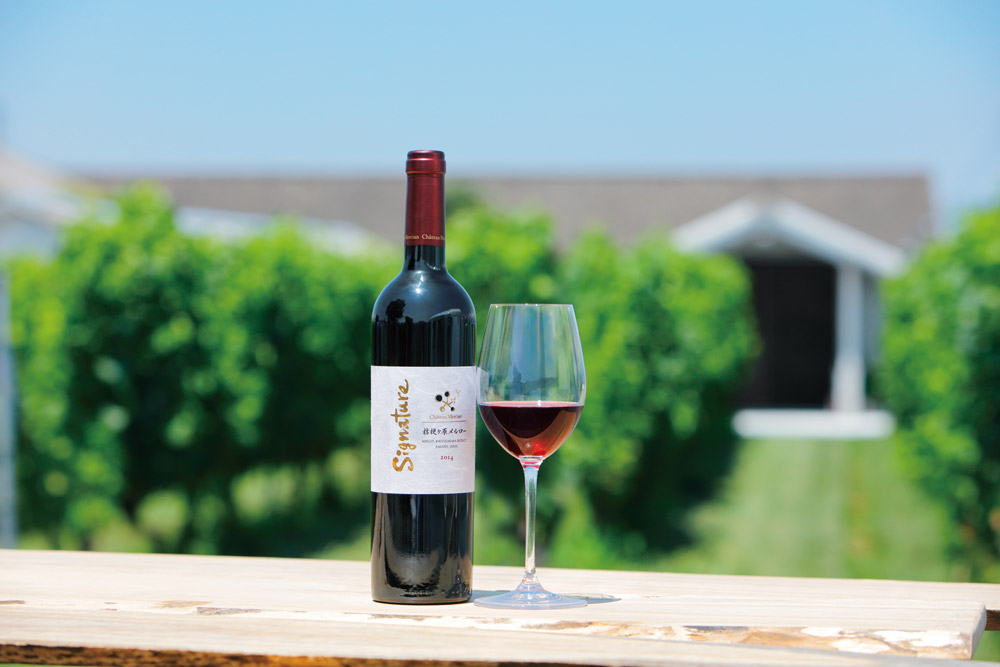
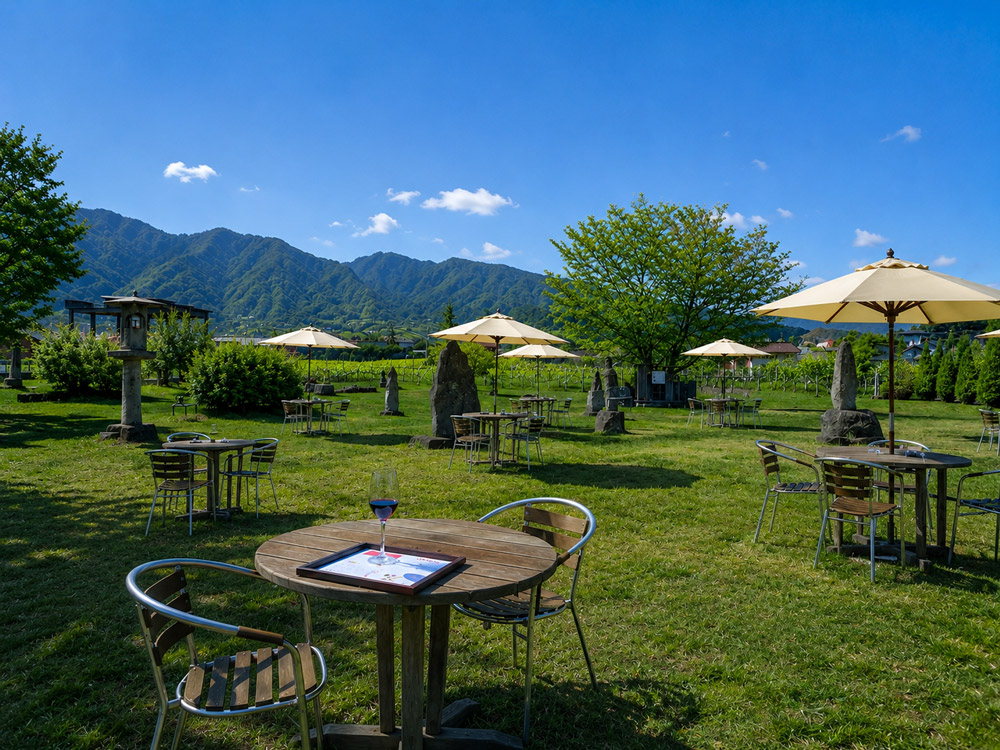
Long overshadowed by sake and whisky, Japanese wine is quietly earning international attention. In Yamanashi Prefecture, beneath the slopes of Mount Fuji, we discover how generations of growers have adapted to a challenging climate to create a wine culture that is no longer looking to Europe for validation.
From city rhythm to vineyard rows
Less than an hour earlier, Tokyo had still felt close. Station announcements echoed across crowded platforms, trains arrived to the minute and apartment blocks pressed against the railway line. Yet somewhere west of the capital, the city began to loosen its grip. Buildings thinned. The horizon widened.

Then Mount Fuji appeared. Its summit hovered above a veil of morning haze, detached from the landscape below in a way that made it seem almost suspended. We stepped off the train at Katsunumabudokyo Station and began walking. The road towards Château Mercian passes orchards, vegetable plots and newly awakened vines. Spring has settled across Yamanashi Prefecture. Fresh leaves catch sunlight. Blossom drifts across garden walls. An elderly resident trims flowering shrubs outside a wooden house before looking up to offer a brief nod.
Ahead, Fuji remains fixed above the valley. Nothing about the scene immediately suggests one of Japan’s most established wine-producing regions. And that is precisely what makes it interesting.
A wine region hidden in plain sight
Outside Japan, wine rarely occupies the same place in the imagination as sake, whisky or green tea. Yet Yamanashi Prefecture has stood at the centre of Japanese wine production for generations. The vineyards surrounding Katsunuma occupy a basin enclosed by mountains, creating conditions that have long favoured grape cultivation. Even so, success has never been straightforward. Summer humidity, seasonal typhoons and disease pressure continue to challenge growers.
Before reaching the winery we stop at Cru Coffee, a small café among the vines. A tasting flight of coffees arrives in delicate glass cups. One carries floral aromas. Another reveals citrus notes. A third offers hints of cocoa and roasted nuts. The exercise feels unexpectedly relevant. Not because coffee resembles wine, but because both reward attention.
Outside, rows of vines stretch beneath overhead trellises. The growing season is only beginning, yet workers are already moving between the plants. Harvest remains months away. The work has already started.
Learning to work with the climate
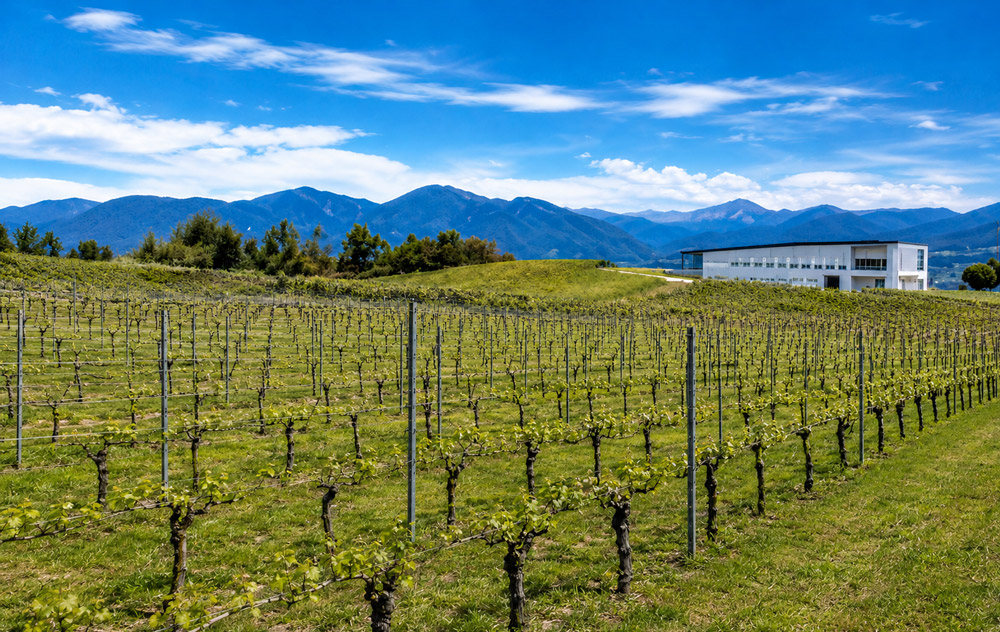
At Château Mercian, Takashi waits beneath a canopy of vines. Before introducing himself, he reaches overhead and gently lifts a young shoot between his fingers. “Most visitors want to talk about grapes,” he says. The shoot bends easily. Then he points towards the mountains surrounding the basin. “We spend more time talking about weather.”
Around us, the vineyard appears calm. Yet almost every decision made here is shaped by climate. Humid summers encourage disease. Typhoons arrive with little regard for growing cycles. Heavy rainfall can transform a promising season into a difficult one. Above us, the vines spread across a traditional overhead trellis system known as tana. Rather than growing in exposed vertical rows, they form a broad green canopy designed to improve airflow and protect fruit from the region’s conditions. The effect is immediate. Beneath the leaves, the air feels noticeably cooler.
Takashi looks across the vineyard. “For years, people thought success meant becoming more like France,” he says. He pauses. “Eventually we realised the landscape wasn’t interested in that.” The remark quietly reframes everything we have seen so far. The story of Japanese wine is not really about importing European knowledge. It is about discovering where that knowledge stops being useful.
When imitation stopped being the goal
The history of modern Japanese wine is often traced to 1877, when two young men from Yamanashi, Masanari Takano and Ryuken Tsuchiya, travelled to France to study viticulture and winemaking. They returned with techniques, ideas and ambitions for a domestic wine industry. Yet standing among the vines, another interpretation emerges. The challenge was never learning how France made wine. The challenge was understanding why those methods did not always work here.
The Kofu Basin stretches towards distant mountains. In the spring sunshine, the region appears serene. Yet every growing season remains a negotiation with the elements. Wine, in Yamanashi, is shaped as much by adaptation as by tradition.
The grape that found a home
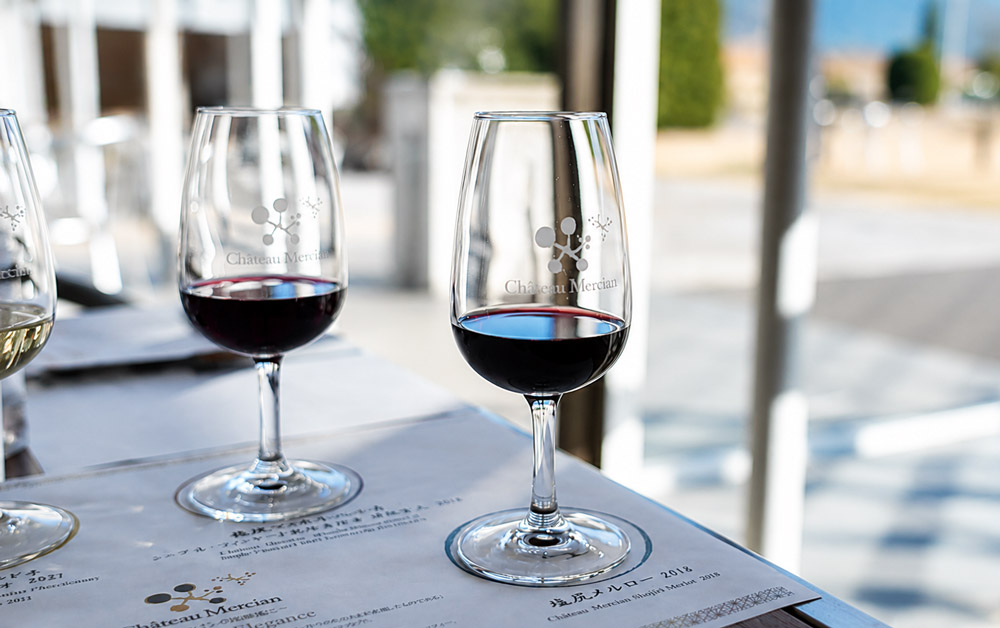
Inside Château Mercian’s original winery building, preserved today as a museum, dark timber beams frame a collection of presses, bottling equipment and tools from earlier generations. The machinery tells a story of experimentation rather than certainty. The first Japanese winemakers knew grapes could grow here. Whether Japan could produce wines capable of competing internationally remained an open question. At the centre of that story stands Koshu, the variety most closely associated with Japanese wine.
Genetic studies suggest its ancestry may trace back to grape varieties that moved eastwards along historic trade routes before becoming established in Japan centuries ago. Today, it has become the country’s defining wine grape. We pause beside a display of historic bottles. The labels evolve gradually over the decades. Early designs appear tentative. Later vintages carry themselves differently. Confidence rarely arrives all at once.
In the cellar, identity takes shape
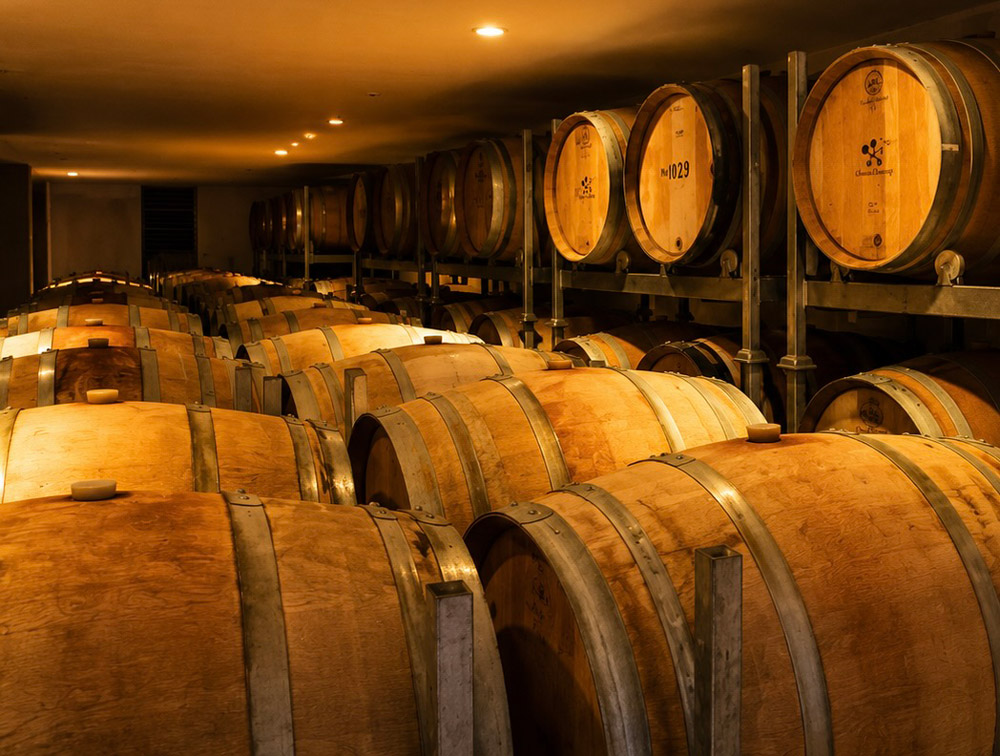
From the museum, we continue into the production facility. Towering stainless-steel tanks line one side of the winery. Nearby, French oak barrels disappear into the dimness of the cellar. Innovation and tradition occupy the same space without competing for attention. The winery itself sits between seasons. Barrels continue shaping previous vintages while tanks await fruit that has not yet formed. From a distance, winemaking often appears romantic. In practice, it is an exercise in timing. The decisions made today may not reveal their consequences for months or even years.
Tasting a distinctly Japanese style
Lunch is served overlooking the vines. Grilled fish, seasonal vegetables, rice and tamagoyaki arrive in carefully arranged bento boxes. Alongside them sits a glass of Koshu. The pairing explains more about the wine than any technical tasting note. Nothing dominates. The wine complements the meal rather than competing with it.
Later, inside the underground Ortus Room tasting salon, Takashi pours a series of estate wines. Conversation naturally softens. One Koshu, grown at higher elevation, shows notes of citrus peel and white blossom. Another presents greater texture and weight. Muscat Bailey A, one of Japan’s distinctive red varieties, reveals delicate fruit and surprising elegance. Neither style seeks power. That appears entirely intentional. The place leaves its marks. Not always immediately obvious, but unmistakable once recognised.
Still proving itself to the world
Outside, workers continue moving between the rows, adjusting wire structures and monitoring the health of the vines. The tasks appear routine. Yet each contributes to something larger than a single harvest. “If the land isn’t healthy,” Takashi says, “there is no wine.”
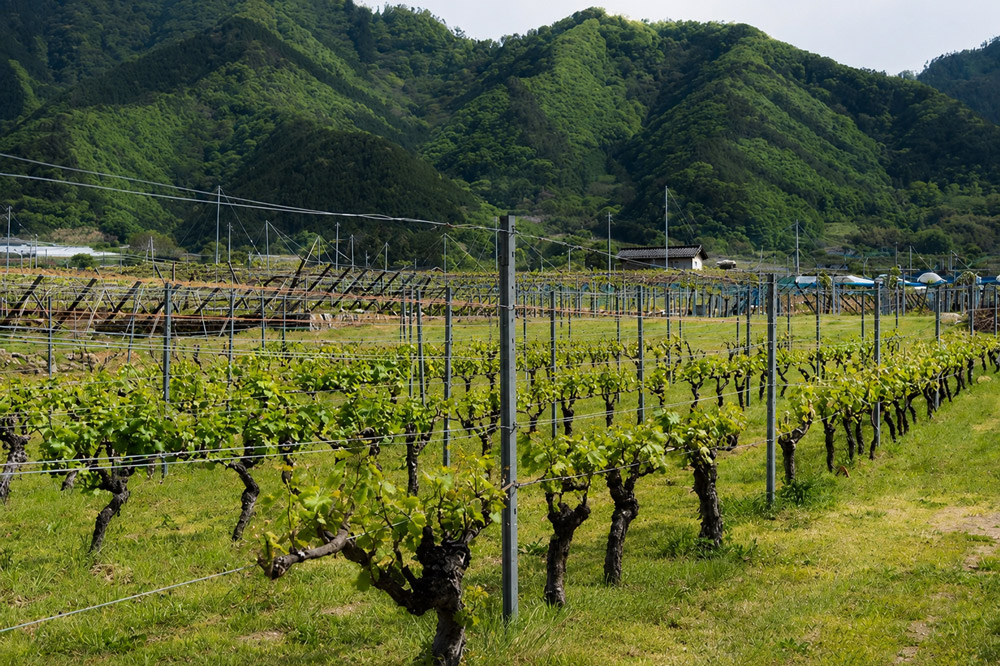
Recognition is growing. Japanese producers have earned increasing attention at international competitions in recent years, while vineyards such as Château Mercian’s Mariko site have received international acclaim. Yet imported wines still dominate much of the domestic market. For producers here, the challenge is no longer proving that quality wine can be made in Japan. It is persuading drinkers to rethink where fine wine belongs. Even after nearly 150 years, the story feels less like an arrival than an evolution.
Another season begins
Later that afternoon, we walk through the vineyard once more. A local train glides across the valley floor before disappearing behind a stand of trees. Around us, the season’s first leaves remain young and almost translucent. Months from now, they will shelter ripening fruit. Mount Fuji has almost disappeared by the time we leave. Only its upper slopes remain visible above the haze.
Behind us, workers continue moving between the vines. New shoots sway lightly beneath the wire constructions, their growth almost imperceptible from one day to the next. Yet this region has always rewarded a longer view. By autumn, the vines will carry fruit. Harvest will begin. Another vintage will take shape. For now, spring is enough. The valley settles into the fading light and, beneath the outline of Fuji, Japan’s wine story continues to grow into something unmistakably its own.