A return to Singapore reveals a quieter rhythm; where picnics, parks and chance encounters offer space to breathe in one of Asia’s most dynamic cities
We are halfway through a picnic when the rain arrives. It comes without warning, as it often does in Singapore. A sudden, drenching downpour that sends families scrambling for shelter and musicians clutching their instruments. We hesitate for a moment, then stay put, balancing cartons of laksa and paper cups of iced kopi on our knees as the storm passes as quickly as it came. Minutes later, the air shifts. The scent of wet earth rises, frangipani sharpens in the humidity and somewhere across the water a violin resumes mid-phrase.
It is a small moment, but it captures what keeps drawing us back to this city: not just its precision and polish, but the ease with which nature folds itself into everyday life. They call it the Garden City, and the name holds. Across the island, greenery presses insistently against the urban grid. Arching rain trees, flowering shrubs and pockets of shade that feel almost accidental. Some of these giants are formally recognised under the National Parks Heritage Tree Scheme, but many more simply exist, quietly shaping the rhythm of the city.
We return to Singapore often, and each time we find ourselves gravitating towards the same ritual: stepping out of the density and into the green, seeking out places where the city exhales. More often than not, that means a picnic.
The living heritage of the Singapore Botanic Gardens
We begin at the Botanic Gardens, where history lingers in the shade. Established in the 19th century and now a UNESCO World Heritage Site, it remains one of the few places where the city feels almost unhurried.
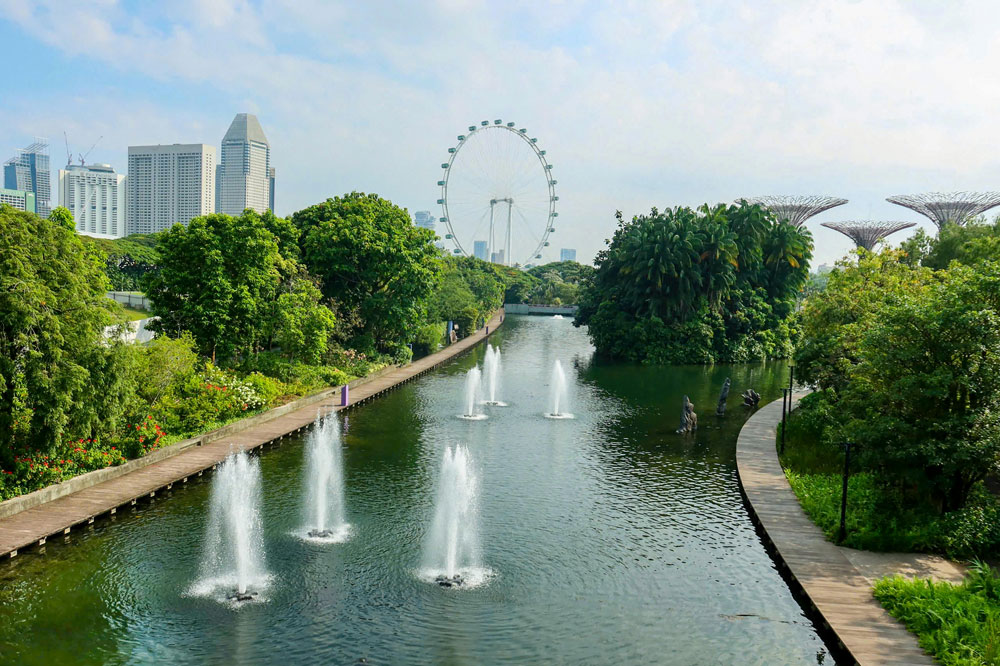
We settle on the grassy slope near Symphony Lake, unpacking a modest spread-kaya toast wrapped in paper, pandan chiffon cake and chilled kopi from a nearby stall. Beside us, Mei Lin, a retired teacher, arranges her lunch with quiet precision. She notices our interest and offers us a piece of homemade kueh, soft and fragrant. “You must sit long enough,” she tells us. “Otherwise you miss the best part.” She is right. As the afternoon deepens, the light turns liquid, the air cools almost imperceptibly and the gardens reveal themselves not asa backdrop but as a living presence.
Island rhythms and quiet escapes on Sentosa Island
On Sentosa Island, the mood shifts almost imperceptibly. What begins as a polished island playground gradually reveals something softer, more human, if you are willing to wander beyond the obvious.
At Palawan Beach, the sand is warm and the sea a gentle blue and the atmosphere unhurried. Especially on weekday afternoons when the crowds thin and the island exhales. We arrive with little more than a takeaway and curiosity, and end up sharing both with a couple from Melbourne who had optimistically brought nothing but sunscreen. In exchange, they offer stories of postponed plans, long journeys and the realization that travel is often about moments like this rather than destination alone.
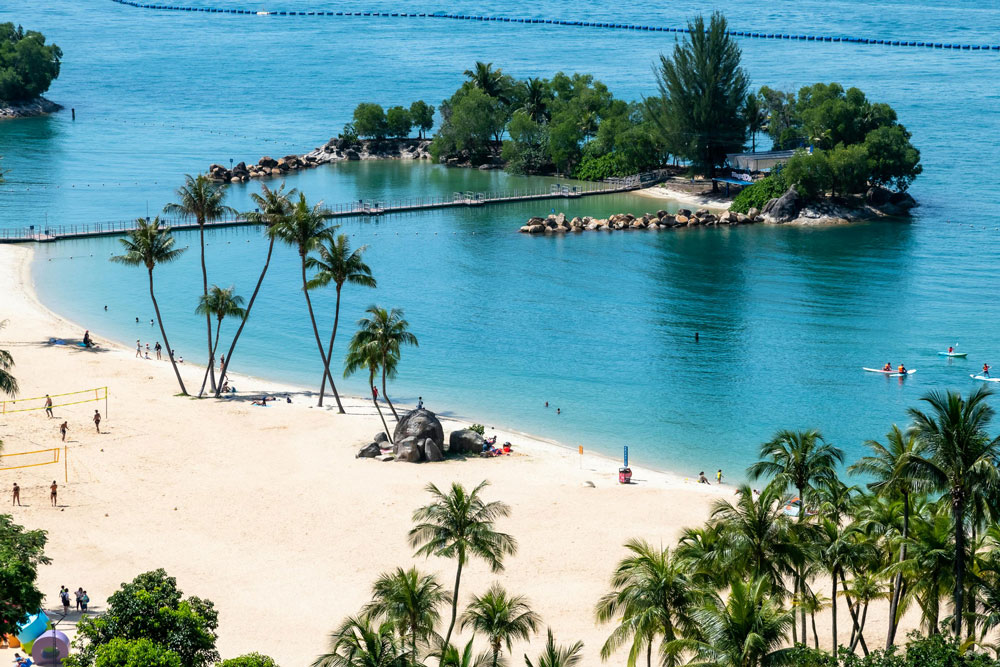
A little further along, between Siloso Beach and Tanjong Beach, the pace slows even more. Music fades, the crowds disperse and the sea becomes the focal point.
We meet Daniel, an expat from London, who watches the tide edge closer. “I came for two years,” he says smiling. “That was five ago.” He shrugs, smiling. “It’s the balance. You don’t find it easily.” Nearby, Sofia, a digital nomad from Barcelona, closes her laptop as the light begings to shift. “This is my reset,” she tells us. “Every day, if I can.”
Later, a local family unfolds an elaborate picnic. Containers of nasi lemak, cut fruit, iced drinks and, without hesitation, offers us a share. The gesture is effortless an entirely disarming.
As dusk settles, Sentosa transform once more. Lights flicker on, music drifts across the shoreline and the skyline of Singapore glows faintly in the distance. Yet even then, it is possible to hold on to a peaceful moment, sitting side by side, watching the last swimmers leave the water. The day dissolving gently into evening.
Where the city slows at Kallang Riverside Park
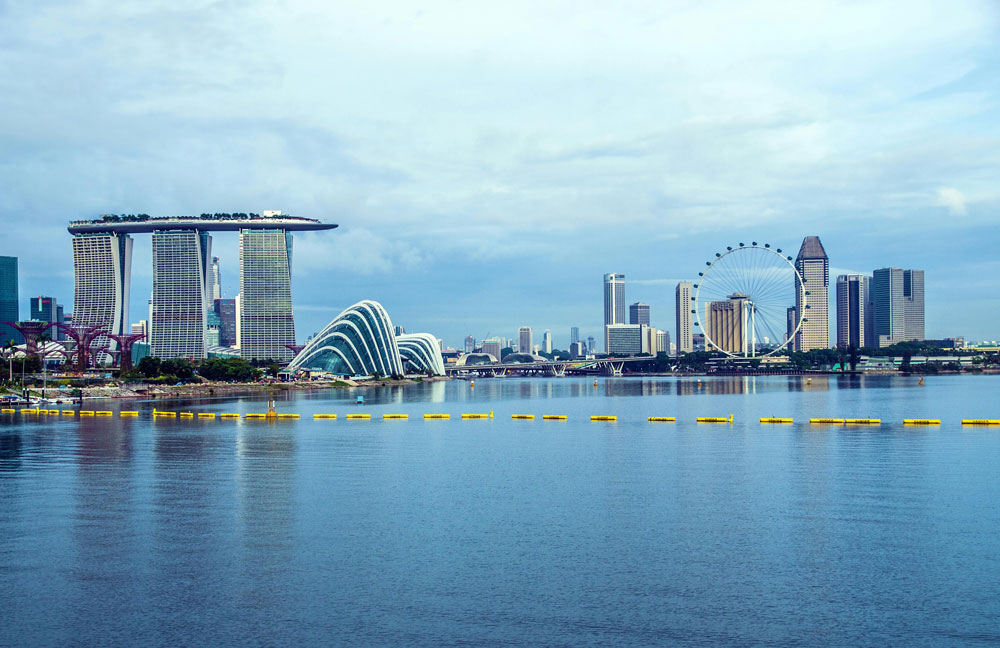
At Kallang Riverside Park, the skyline reasserts itself, reflected in the slow-moving water. Kayakers cut through the surface, their movements unhurried.
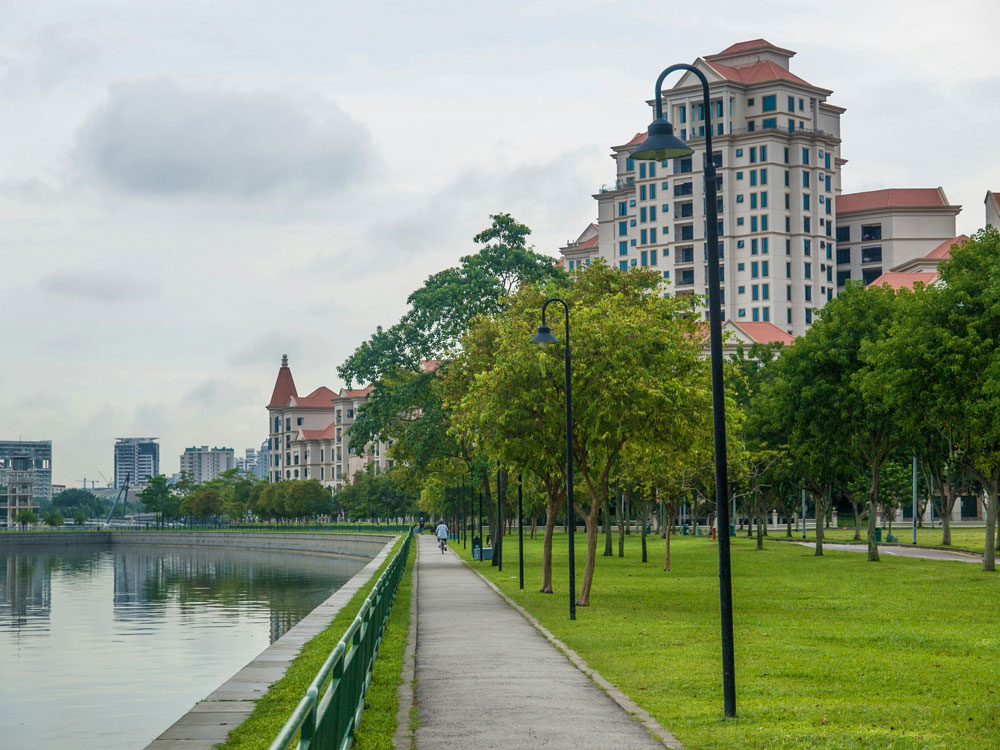
We sit close to the edge with takeaway boxes, chilli crab buns and crisp curry puffs, watching the interplay between motion and stillness. A runner named Arjun pauses nearby, catching his breath.
“I come here when I need space,” he says. “Not physical space, just … space.” It is a distinction that feels particularly relevant in Singapore.
Gathering at Marina Barrage
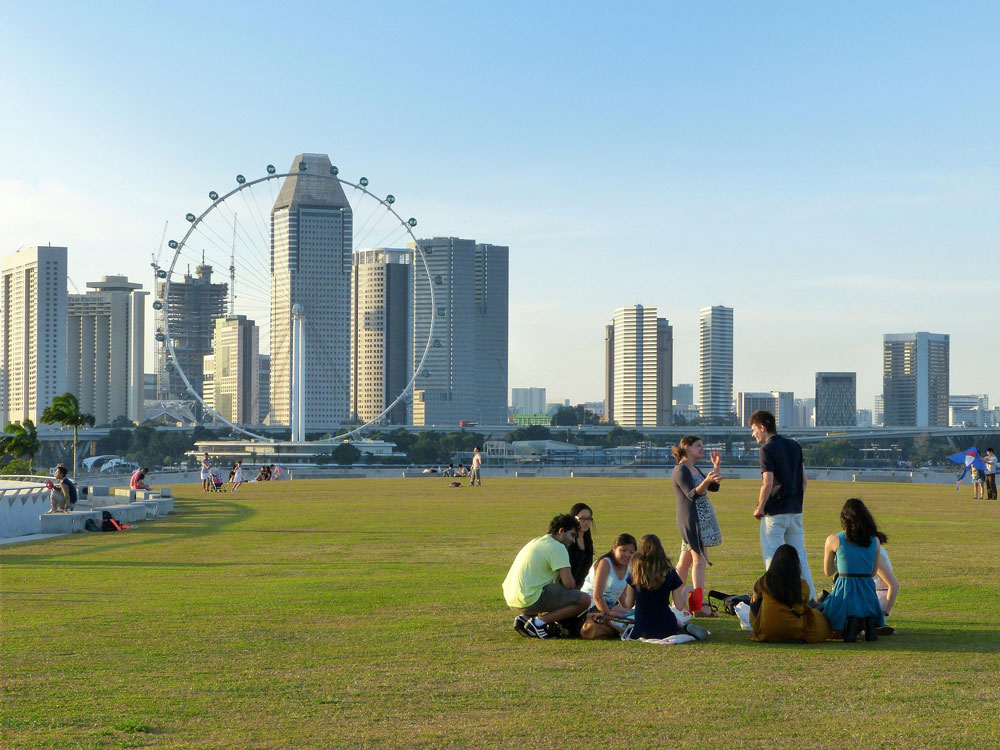
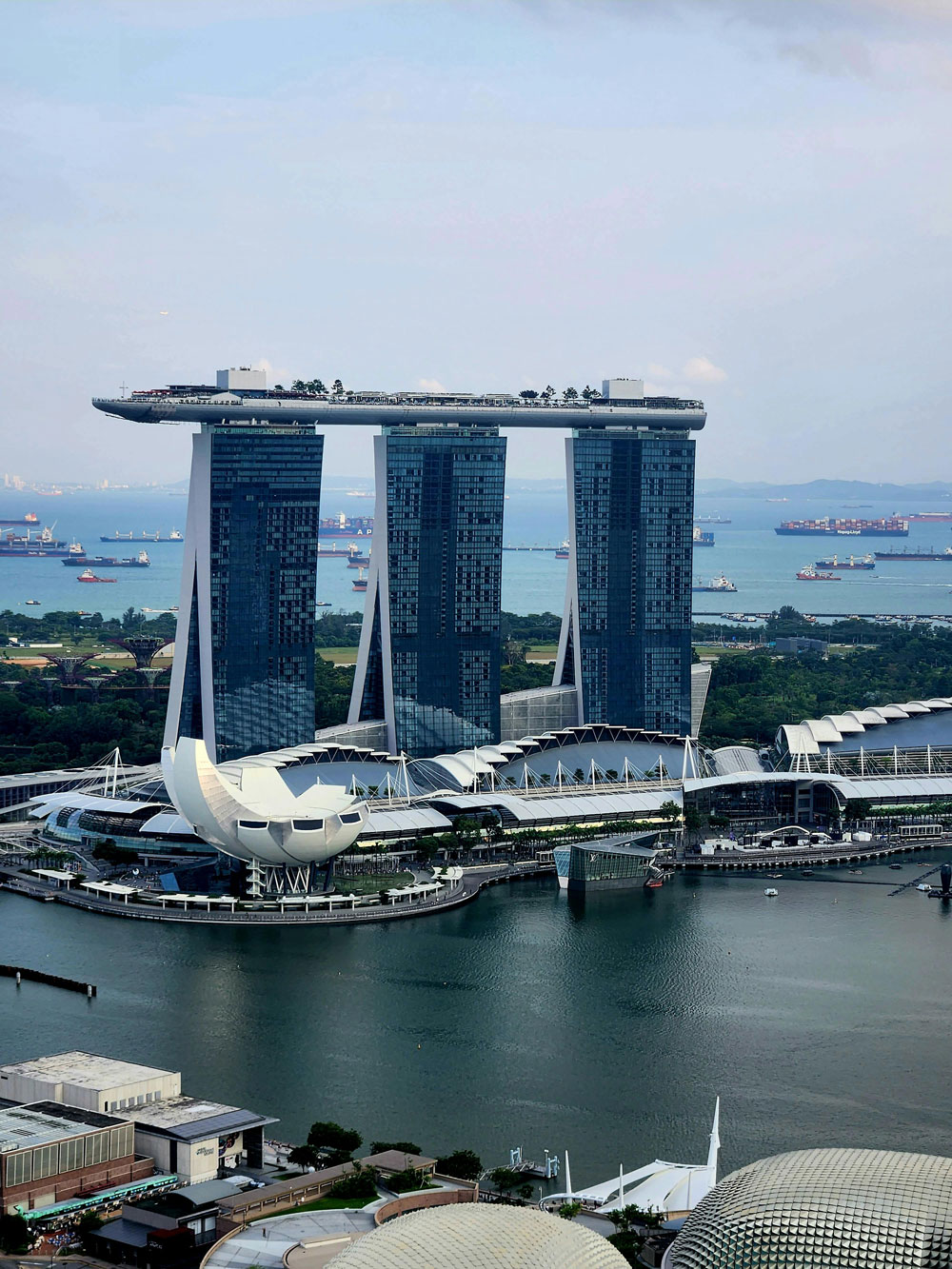 If Kallang is contemplative, Marina Barrage is communal. The rooftop lawn fills steadily towards evening. Families, couples, groups of friends are all drawn by the same expansive view. We help a father and daughter untangle a stubborn kite, working together until it finally lifts into the steady breeze.
The girl’s laughter cuts through the low hum of conversation, and for a moment, the crowd feels connected. Across the bay, Marina Bay Sands catches the fading light, its silhouette both iconic and oddly reassuring in its familiarity.
Wildness at the edges of Jurong Lake Gardens
Further west, the city softens. Jurong Lake Gardens trades spectacle for subtlety: wetlands, grasslands and quiet pockets where nature is allowed to lead. We meet Mr Tan, binoculars in hand, who points out a kingfisher we would otherwise have missed. “Too many people rush,” he says gently. “They see, but they don’t observe.” Later, as we sit with slices of mango and iced tea, a monitor lizards slips into the water, barely leaving a ripple.
Echoes of the past at Fort Canning Park
At Fort Canning, the past feels close enough to touch. We picnic beneath threes that have witnessed centuries, kingdoms, colonization and independence. Nearby, a yoga class unfolds with quiet focus. The instructor, Chloe, tells us she brings her students here deliberately. “It reminds us that the city, didn’t begin with glass towers,” she says.
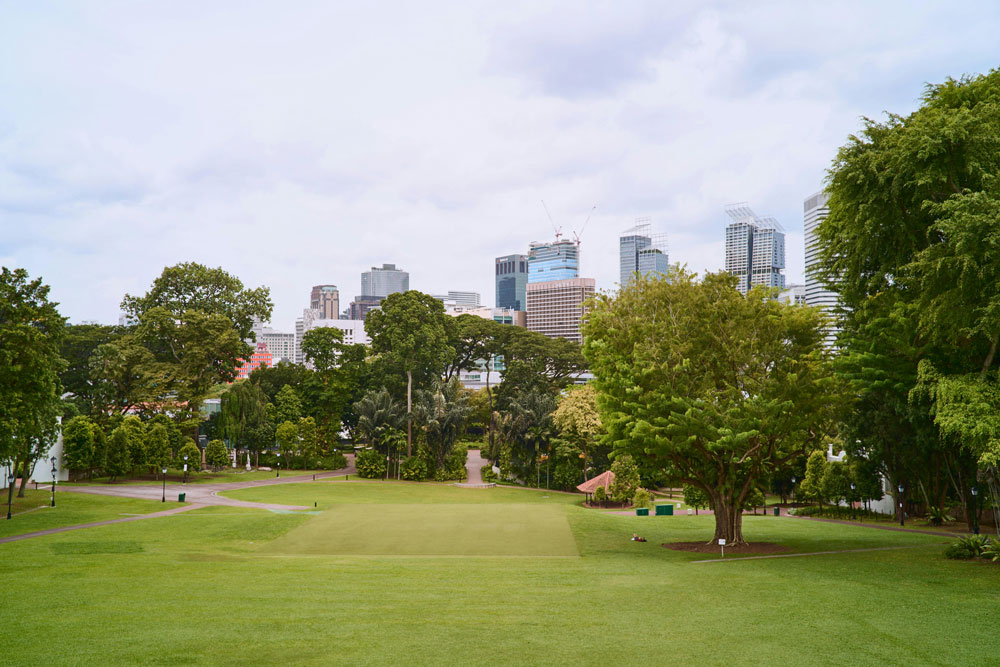
A couple poses for wedding photographs nearby, their laughter echoing across the lawn. A reminder that history here is not static, but layered into the present.
The long horizon of East Coast Park
We rent bicycles and follow the coastline at East Coast Park, the pedalling cadence that sets the pace. The scent of salt lingers, mingling with smoke from nearby barbecues. A group of students beckons us over, insisting we try their homemade snacks: spicy sambal sandwiches, still warm. “End of exams,” one explains. “We celebrate like this.”
We ride on until we find a tranquil stretch of beach. As the sun sets over the Singapore Strait, cargo ships hover on the horizon, suspended between sea and sky.
A hidden pause at Pearl’s Hill City Park
Behind Chinatown, Pearl’s Hill City Park offers something rarer: near silence. The climb is enough to deter most visitors. At the top, we find a caretaker sweeping leaves into neat piles. He pauses to talk, telling us he has worked here for decades. “Not many people come,” he says. “But those who do, they remember.” We sit beneath tembusu trees, breathing in the faint sweetness of frangipani and understand why.
Returning for something rarer
We have been to Singapore more than once, and yet it continues to shift: subtle, layered and impossible to fix in a single narrative. It is a city that moves quickly, but insists in quiet ways, that you do not have to. And so we return, again and again. Not in search of the new, but for something rarer: the feeling of space, found unexpectedly in one of the most densely built places on earth.